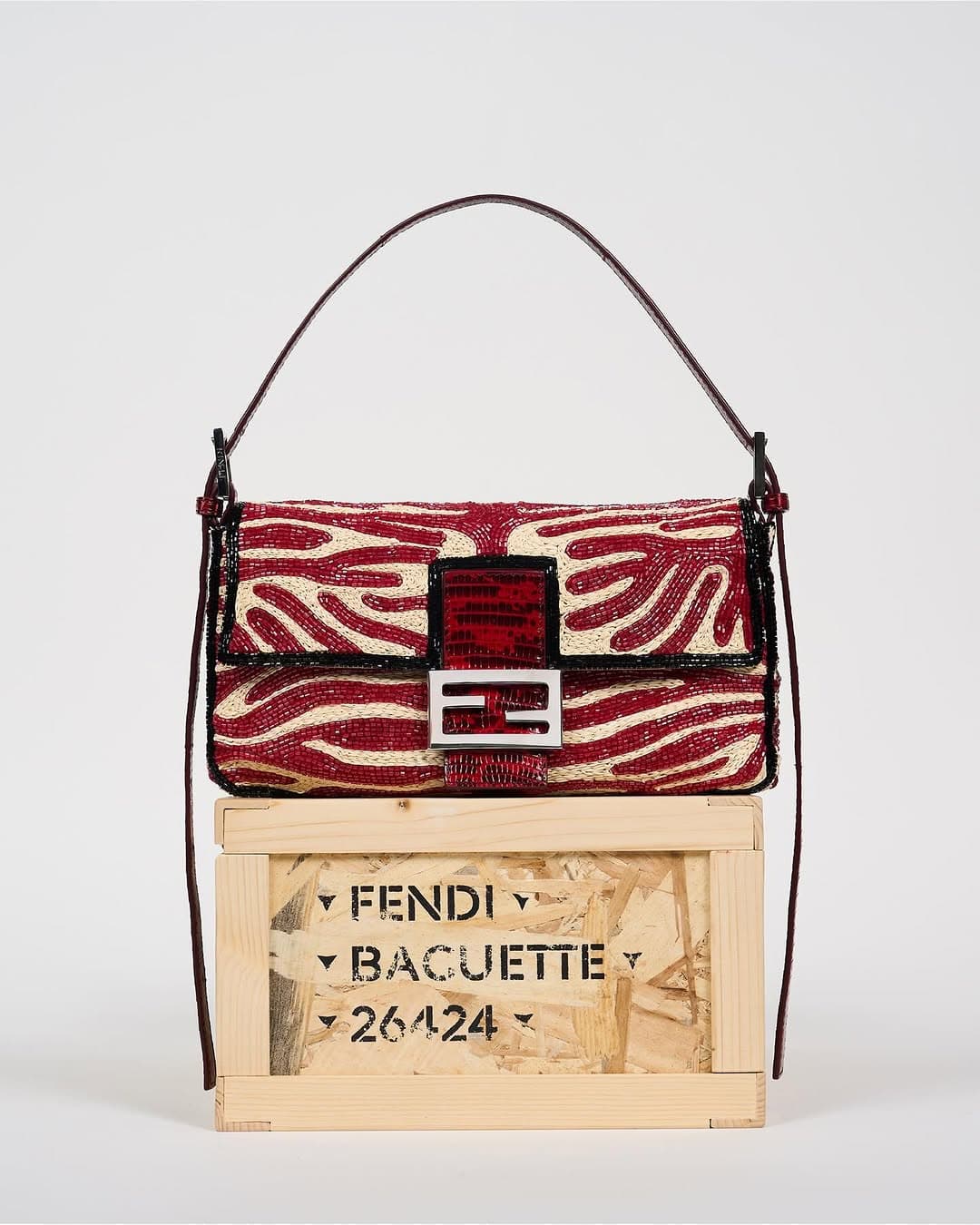
The Fendi beaded Baguette 26424 Re-Edition doesn’t so much enter a room as it catches light—then holds it, stubbornly, like a secret. Imagine a summer evening in Rome: golden air, a terrazzo floor still warm underfoot, aperitivo clinking somewhere just out of frame. That’s the mood this bag bottles. And yes, it’s tiny. That’s the point. The modern Baguette has always been a little audacious about scale—why carry your life when you can carry an idea?
For anyone who’s watched “quiet luxury” flatten style into polite beige, this is a welcome rebuttal. Raffia over organza. 22,600 beads. Seventy hours of craftsmanship. It’s not trying to be invisible; it’s trying to be exquisite. And honestly, fashion could use more of that kind of nerve.
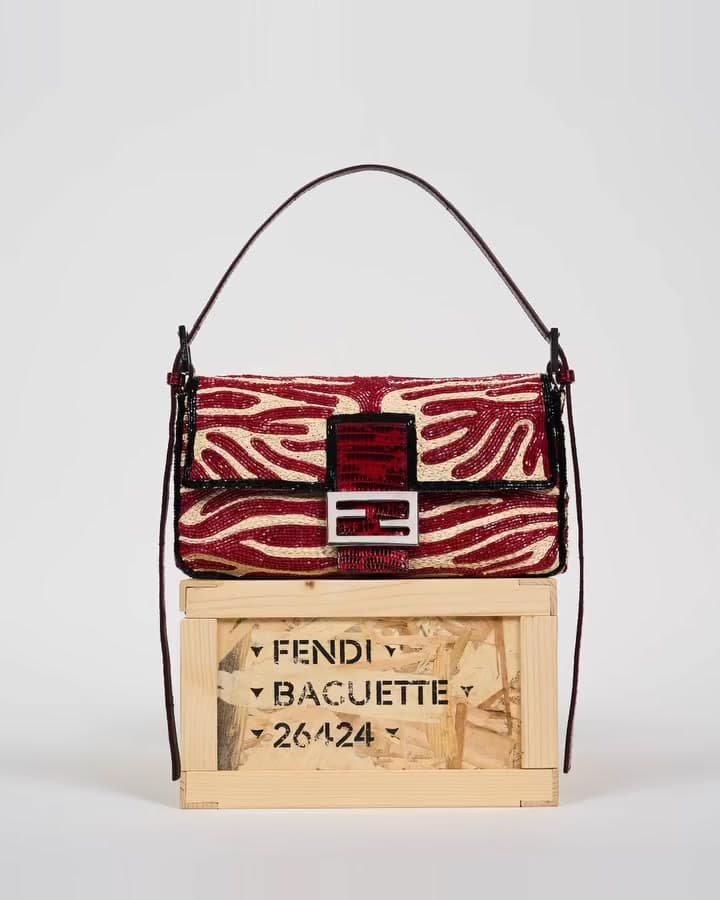
Inside the Fendi Beaded Baguette 26424 Re-Edition
The headline numbers are almost indecently specific: 22,600 beads stitched into raffia laid over organza, a process that takes 70 hours. Not “crafted,” not “inspired”—worked. The surface reads like sunlit sand seen through a glass of champagne: matte and glinting at once, with the raffia’s dryness playing beautifully against the beads’ crisp shine.
Fendi knows the Baguette is more than a bag; it’s a character. Ever since the late ’90s—when it became a shorthand for a certain kind of city-girl confidence—the silhouette has invited reinvention without losing its bite. If you need a cultural timestamp, the bag’s pop-culture immortality is practically footnoted at Wikipedia’s entry on the Fendi Baguette. (Yes, a handbag with homework.)
Raffia, organza, beads: why this mix feels so current
Raffia has been everywhere lately—runways, resort edits, the best kind of airport outfits—often made to behave like a humble beach accessory. Here, it’s treated with couture seriousness. Organza gives the raffia a buoyant veil, while the beadwork brings a jewelled precision that reads evening-ready, not artisanal-for-artisanal’s-sake. The result sits in that sweet spot between holiday and heirloom.
If you’ve been collecting texture instead of logos (a very 2020s instinct), you’ll recognize the appeal. Consider it the glamorous cousin to the pieces we’ve been loving in our summer raffia accessories edit, only this one expects candlelight.
The Handwork Renaissance—And Why It Matters
Seventy hours is not a marketing number; it’s a stance. In an era where algorithmic trend cycles can make last month feel antique, a bag that demands time insists on a different value system. Handcraft isn’t nostalgia—it’s resistance. It’s also, frankly, what luxury should still be good at.
Fendi has long treated craft as a language, not a footnote. The maison’s history—Roman to the core, and famously fur-forward in its Karl Lagerfeld years—has always balanced playfulness with discipline. If you want the official lineage, start with Fendi.com; then, for broader context, the Fendi history overview is a quick rabbit hole.
What the Baguette says in 2026
The Baguette’s power is its punctuation. It finishes a look. It suggests you’ve edited. This re-edition, in particular, sidesteps the current fixation on “stealth wealth” and declares something more interesting: pleasure. Not loudness for its own sake, but the confidence to be decorative—an increasingly radical choice.
- For day: crisp white poplin, sun-warmed skin, flat leather sandals, and a single bold lip. Let the bag sparkle like a private joke.
- For night: liquid satin, minimal jewellery (the beadwork is doing the work), hair slicked back or left air-dried and glossy.
- For travel: a linen set and oversized sunglasses—pair it with the kind of luggage that doesn’t shout.
If you’re leaning into the new evening mood—less “micro-trend,” more “make an entrance”—you’ll appreciate how this fits alongside the silhouettes in our statement bags worth the investment roundup. The difference is that this one feels like it was made for close range, for the people who notice.
Is It an Investment Piece—or a Collectible?
Let’s be candid: bags like this aren’t bought for practicality. They’re bought for sensation—the way they shift under light, the tactile pleasure of bead against bead, the tiny shock of joy when you catch your reflection and it’s giving “I have plans.” The craftsmanship makes it worthy of the word “collectible,” but the styling possibilities make it wearable now. That’s the sweet spot: not museum, not disposable.
And if you’ve ever rolled your eyes at the notion that a bag can be “emotional,” this is the kind that changes your mind. It’s a reminder that fashion is allowed to be indulgent—and that restraint isn’t the only kind of sophistication.
Photo Credits
Cover image courtesy of Fendi. Additional images courtesy of their respective owners.