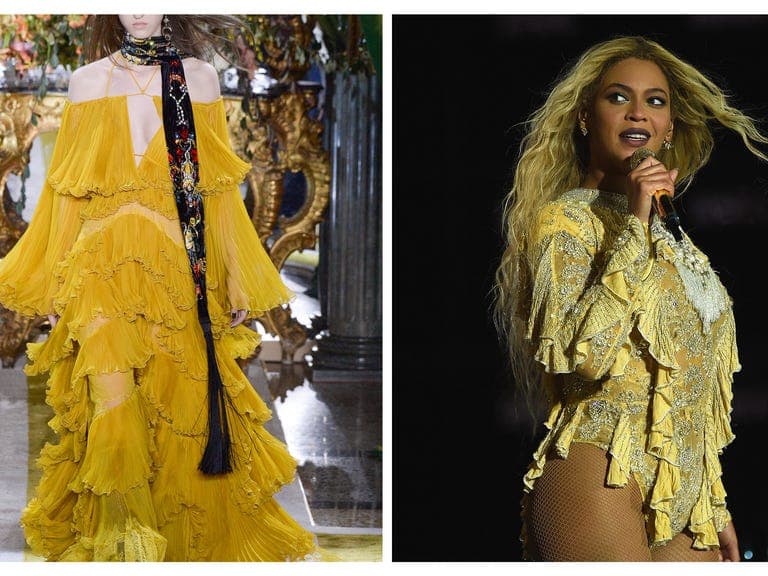
There are fashion moments, and then there are scenes you can still hear. The click of heels on wet pavement. The hiss of fizz as a bottle meets concrete. The sweet, sharp violence of a smile that says, try me. Ten years after Lemonade electrified the culture, Beyoncé’s yellow revenge dress remains the closest thing the internet age has to a modern myth—one ruffled, mustard-bright Roberto Cavalli gown that turned heartbreak into choreography.
The memes were inevitable (and, honestly, frequently funny). But reducing that “Hold Up” sequence to a reaction image misses the point. The dress wasn’t just a look; it was a manifesto with a swing. It made the old revenge-dress trope—traditionally a glossy, post-breakup red-carpet mic drop—feel quaint, even passive. Beyoncé didn’t arrive to be admired. She arrived to do damage (symbolic, cinematic, deliciously cathartic damage).
Beyoncé’s yellow revenge dress: why it still matters
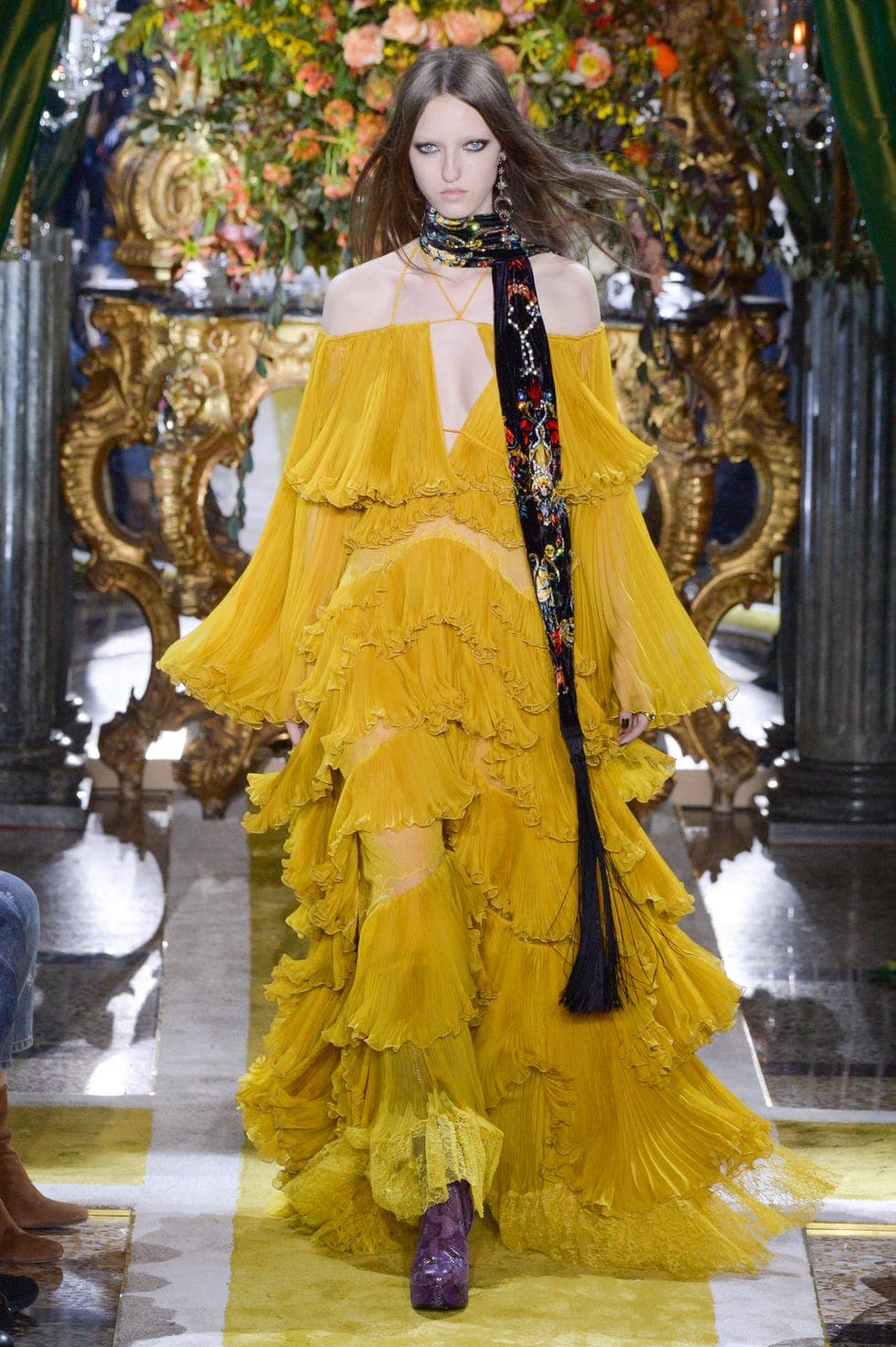
Let’s talk about the dress itself: a bohemian, tiered ruffle Roberto Cavalli gown conceived under then–creative director Peter Dundas, chosen for the video by stylist B. Åkerlund. It’s all movement and volume, like marigold smoke. The color reads as sunlit joy until you clock the context—then it becomes caution tape, a flare, a warning shot. That is the genius of it: softness that doesn’t ask permission.
Dundas has spoken about the look’s duality—fluid, fragile, almost romantic, yet undeniably commanding. He’s right, and the paradox is precisely why it lasts. The revenge isn’t the point; the agency is. In that one dress, “revenge” gets upgraded from attitude to action: a woman taking up space, claiming the street, rewriting the scene in real time.
The new silhouette of power: sweetness with teeth
Fashion has always loved its archetypes: the ingénue in white, the vamp in black, the avenger in a tight dress engineered for the paparazzi flash. Beyoncé’s yellow revenge dress refuses the obvious. It’s not bodycon. It’s not minimal. It doesn’t need to be “flattering” in the narrow, punishing way that word is often used. Instead, it’s big—proudly, theatrically big—making the body a moving center of gravity rather than a fixed object for appraisal.
And that’s why it felt so modern in 2016, and even more relevant now. We live in an era that fetishizes “quiet luxury,” but there are moments when quiet is simply not the mood. The Cavalli gown is loud in the way protest is loud, in the way a brass band is loud. It’s joy with intent.
The “Hold Up” sequence and the fashion of controlled chaos
The “Hold Up” chapter of Lemonade remains one of pop culture’s most exquisitely styled contradictions: Beyoncé smiling like a child on summer holiday while her bat becomes an extension of her will. The dress moves with her—ruffles catching air, hemline flirting with puddles—so the whole thing reads as ballet-meets-riot. That’s not an accident. Costume design at this level is narrative design.
If you want a masterclass in why clothes matter in visuals, revisit the video with fresh eyes (or rewatch it and pretend it’s research). The color registers first; then the silhouette; then the emotional whiplash. Costume becomes character. It’s the kind of styling that makes you think about other iconic screen wardrobes—Audrey’s Givenchy, Diana’s “revenge” LBD, Cher Horowitz’s plaid logic board—only this time the heroine isn’t dressing for the gaze. She’s dressing for the plot.
For more on how a single outfit can shape an entire narrative, consider our deep dives on celebrity style moments that defined the decade and the best red carpet dresses of all time—because yes, one look can recalibrate an era.
From “revenge” to reclamation
The classic revenge dress is built on optics: Look what you lost. Beyoncé’s yellow revenge dress is built on ownership: Look what I am. That shift matters, especially as celebrity narratives have become increasingly flattened into soundbites and scandal cycles. Lemonade refused to be reduced. It insisted on complexity—rage and tenderness, spectacle and intimacy—and the dress carried that complexity in its seams.
In the years since, we’ve seen the revenge-dress concept echo across social media: breakup fits, “soft launch” glow-ups, the algorithm’s endless appetite for reinvention. But most of it still clings to the idea that transformation is performance for someone else. Beyoncé made it something closer to ritual. The audience is secondary. The catharsis comes first.
The internet can’t let it go—because it shouldn’t
Aesthetic culture is ruthless; yesterday’s “iconic” is tomorrow’s cringe. Yet the yellow revenge dress keeps resurfacing, not just because it’s memeable, but because it’s emotionally legible. Anyone who’s ever walked out of a situation with their dignity intact (or fought to get it back) understands the fantasy: stepping into daylight and turning pain into motion.
It also helps that Cavalli—known for high-octane glamour—found a beautifully unhinged romance here. If you’re curious about the house’s legacy beyond this moment, start at the source: Roberto Cavalli. And if you want a broader fashion-history frame for the “revenge dress” idea, Vogue’s take on Princess Diana’s original defining moment is essential reading.
Ten years on, the look still feels like a thesis statement—about celebrity, womanhood, spectacle, and the power of clothes to carry narrative the way music carries sound. If anything, the dress has aged better than the discourse around it. What people called “revenge” looks increasingly like something else entirely: self-authorship.
And perhaps that’s the lasting trick of Beyoncé’s yellow revenge dress: it doesn’t freeze her in heartbreak. It lets her move.
If you’re in the mood for more fashion-as-storytelling, you’ll want to bookmark our edit on how to build a capsule wardrobe with personality—because the best clothes aren’t just worn; they’re wielded.
Photo Credits
Images courtesy of their respective owners.