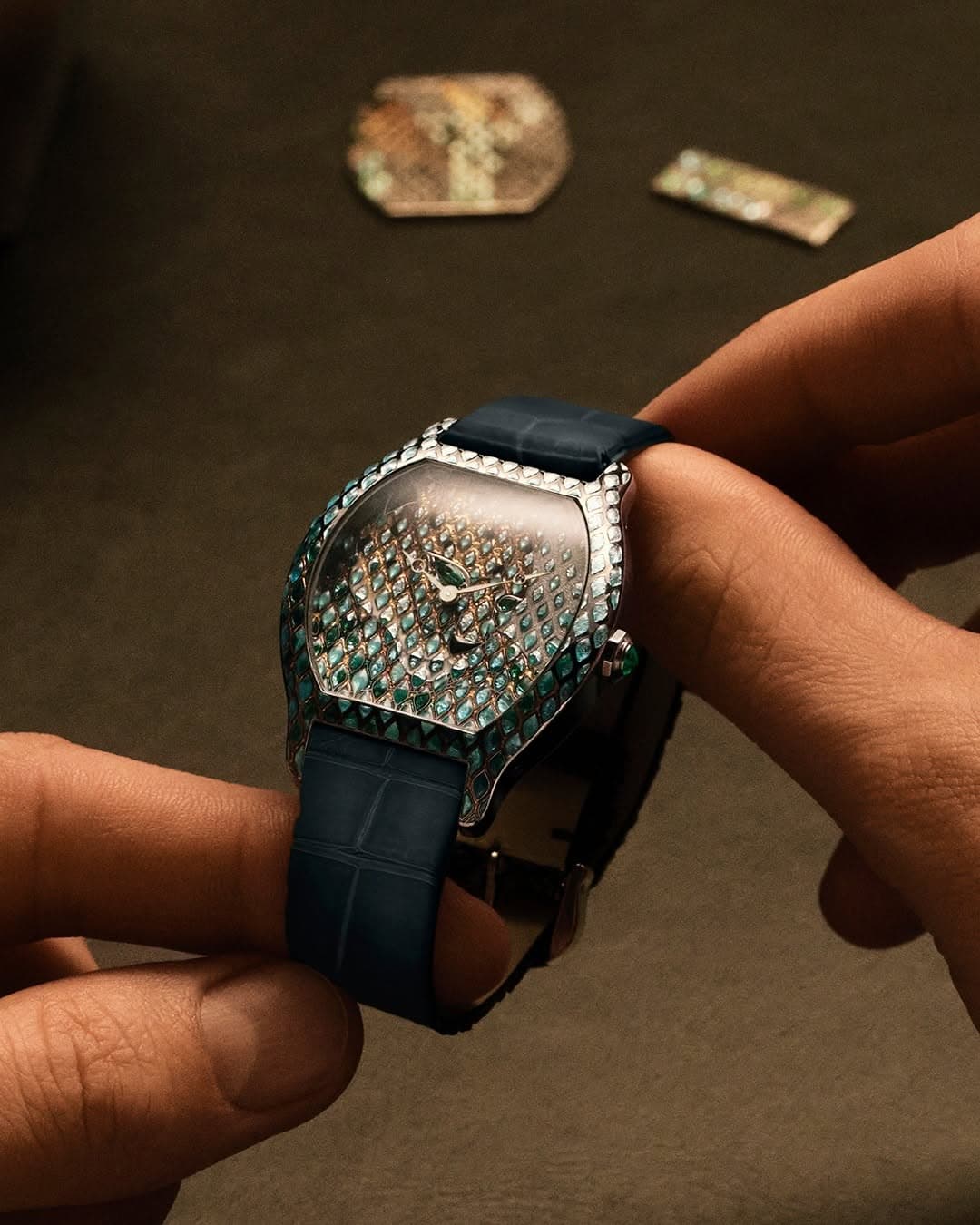
The Cartier Tortue Panthère Métiers d’Art watch is the sort of object that makes you lean in, then lean in again, as if proximity might explain the trick. At first glance, it reads like weather, a dial glazed with soft, slightly domed rain drops. Then the panther arrives, not announced, not centered for applause, but there, beneath the surface, as if the animal has always belonged to this particular downpour. It is an elegant merging of two Cartier emblems that could have felt busy in lesser hands. Here, it feels inevitable.
This is what happens when the artisans of the Maison des Métiers d’Art and Cartier’s design studio commit to a single, cinematic idea and refuse to dilute it. The result comes in two limited editions of 100 pieces each, restrained in number, expansive in atmosphere. If you come to Cartier for clarity of line, and for that unmistakable poise the Maison has practiced for more than a century, this watch reminds you that Cartier is also, quietly, a master of mise en scène.
Inside the Cartier Tortue Panthère Métiers d’Art watch
The setting is the Tortue case, that gently curved silhouette introduced in 1912 and still one of the most charismatic shapes in contemporary watchmaking. It has always had a certain old world suppleness, a form that suits wrists the way a well cut jacket suits shoulders. On this canvas, Cartier stages the panther with a new kind of intimacy. You do not meet its gaze across a dial. You catch it through rain.
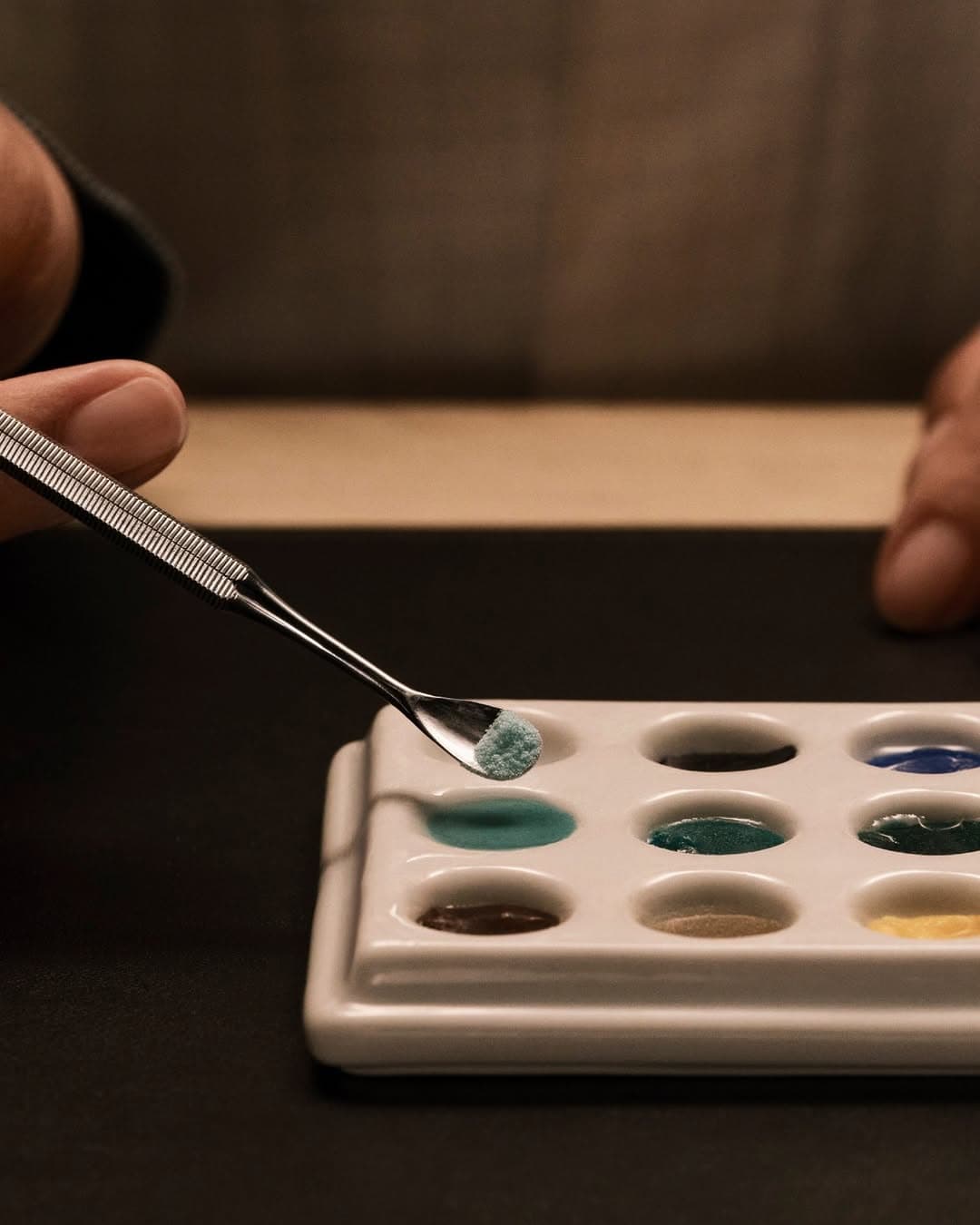
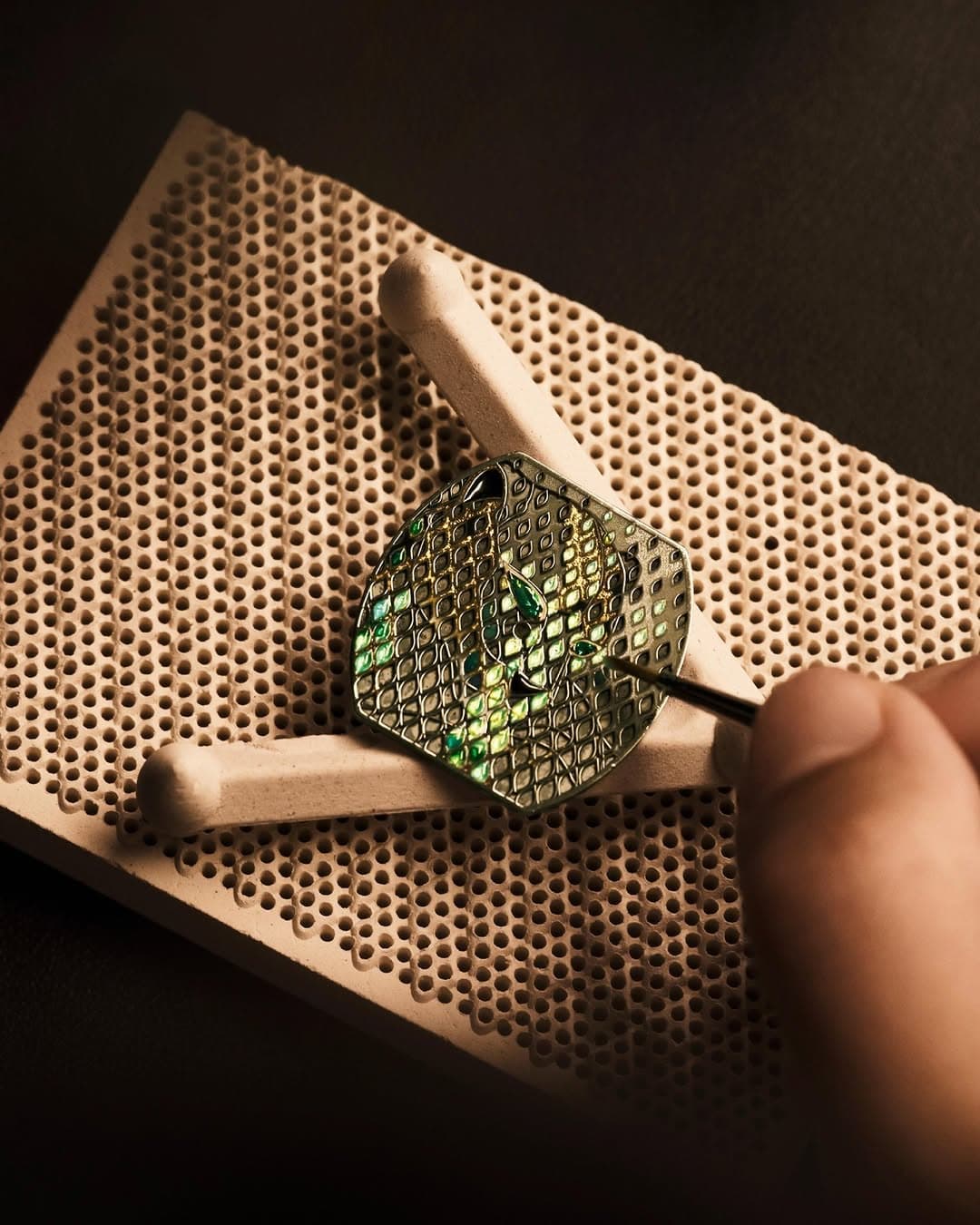
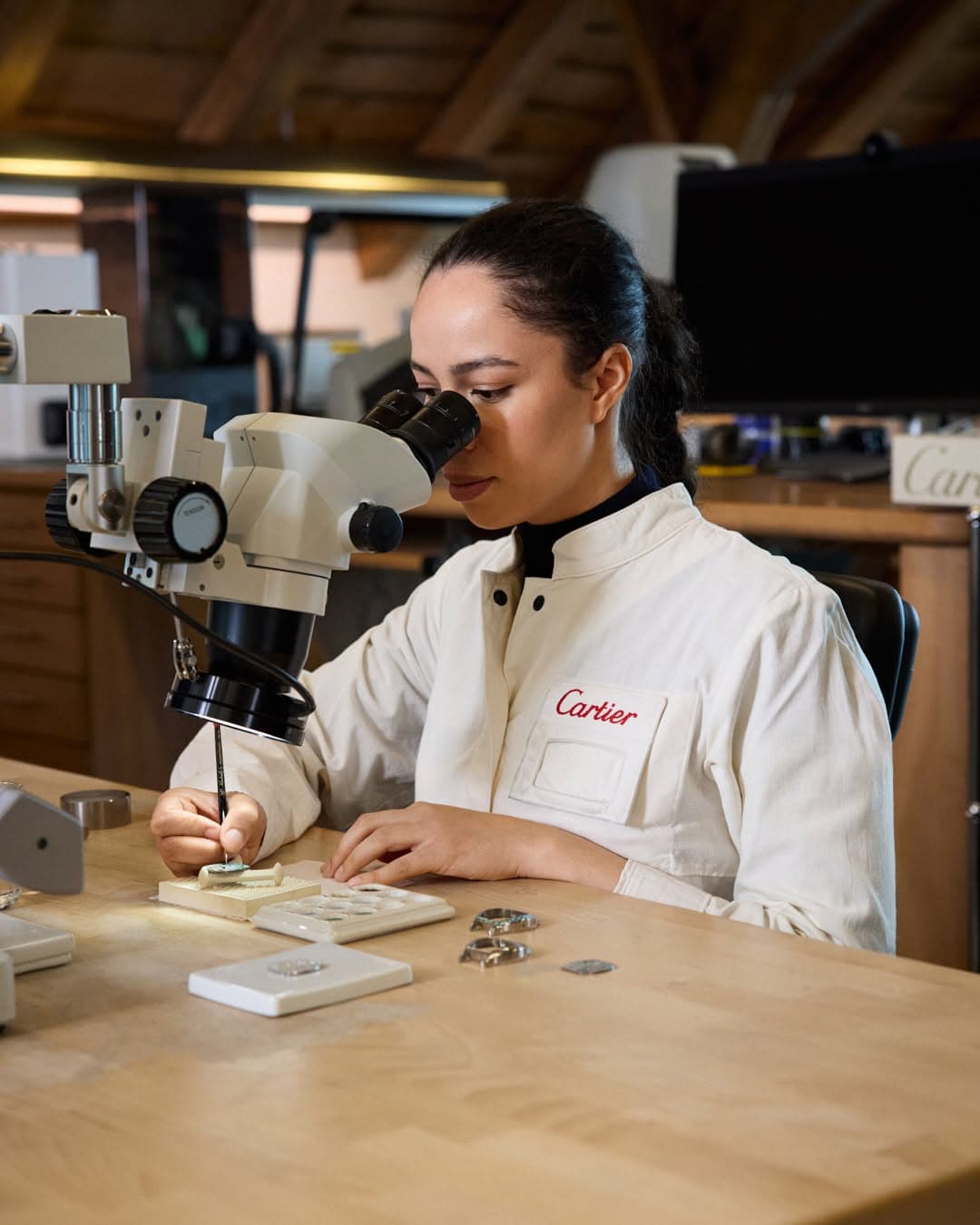
The illusion hinges on champlevé enamel, a technique that asks for patience and nerve. The artisan hollows out areas of metal, creates tiny cells, then fills them with enamel before firing. Repeat, calibrate, repeat. For this dial, over 15 different tones were required, and more than 36 separate firings. Those numbers are not window dressing. They describe risk. Each firing is a small wager against cracking, clouding, or color shift. The discipline is practical, yes, but it is also aesthetic, because the final impression is not simply color. It is depth, humidity, and a kind of suspended movement.
Rain drops you can almost feel
Cartier’s rain drops are not a graphic pattern. They read as moisture. Slightly domed, they catch light the way real droplets do, bright along one edge, darker at the center, never identical. The effect is tactile in the mind, like the memory of cool glass after a storm. Beneath them, the panther feels properly Cartier, sleek, watchful, and a touch theatrical. It is the Maison’s feline icon rendered with discretion, more insinuation than roar.
Why the panther still matters, culturally and visually
Cartier’s panther is one of the few luxury symbols that has managed to stay sharp across decades of imitation. It has lived as jewelry, as a motif, as a mood, and it has never been merely decorative. Part of that is history, part is design intelligence. The panther is not cute. It is sensual, restless, and slightly dangerous, which is why it continues to feel modern. In the Tortue Panthère Métiers d’Art, that modernity is expressed through restraint. The cat is present, but it does not perform for you.
If you follow the broader language of the brand, this watch sits neatly alongside Cartier’s ongoing fascination with pure form and graphic impact. It is worth seeing it in context on Cartier, and, for those who like to place a piece within the wider conversation of high watchmaking, against the currents documented by outlets like Hodinkee and the long lens view offered by FH Swiss. The Tortue Panthère does not chase trends. It makes its own weather.
What the Métiers d’Art approach adds, beyond rarity
Limited to 100 pieces in each of two editions, the watch has the scarcity collectors understand. But the more persuasive argument is craft. Métiers d’Art, at its best, is not about ornament for ornament’s sake. It is about translating an image into matter, then letting the material do what paint cannot. Champlevé enamel has a particular authority because it is unforgiving. The dial becomes a small architecture of color, fired and refired until it holds.
There is also something quietly emotional in this kind of work. You can sense the hours, not as a statistic but as a density. The dial holds time twice, once as the function of the watch, and again as the accumulated time of making it. It is the same appeal that draws readers to the most tactile corners of luxury, from the ateliers behind Luxury to the cultural codes that make objects desirable in the first place, which we often explore in Culture. And for those who collect with a connoisseur’s eye, this piece belongs in the ongoing story of Watches, where finishing and feeling matter as much as mechanics.
How it wears, and how it reads from across a room
Some watches announce themselves at a distance. The Cartier Tortue Panthère Métiers d’Art watch does something more interesting. From across a room, it reads as a refined Tortue, its dial softly animated. Up close, the narrative reveals itself, the panther emerging behind the rain like a thought you cannot quite shake. It is a watch for people who like their luxury intelligent, not loud.
There is also an unexpected softness to the romance here. Not sentimental. More like cinema. The rain gives the panther a setting, a temperature. It suggests a city at dusk, a window fogged by weather, the quiet thrill of noticing something watchful in the corner of your vision. That is the piece’s real accomplishment. It is not just a merging of emblems. It is a mood, executed with technical discipline and a curator’s sense of what to leave unsaid.
Photo Credits
Cover image courtesy of Cartier Official. Additional images courtesy of their respective owners.