There’s a particular kind of glamour to airport light—the cold gloss of departures, the espresso perfume of lounges, the soft panic of gate changes. And then there’s the private ritual: a watch nudged forward one hour, as if you’re coaxing the world into compliance. The GMT-Master II second time zone function is built for that exact moment—quietly confident, almost smug in its competence.
Rolex has never needed to shout about cleverness; it prefers the sort of engineering that looks effortless from across a room (like a perfectly cut Alaïa dress). Integrated into the GMT-Master II’s calibre 3285, this is the brand’s second time zone function done with the kind of restraint that feels, frankly, luxurious. Local time sits in a familiar 12-hour format, while a second time zone tracks in 24-hour time—side by side, clear as a well-written itinerary.
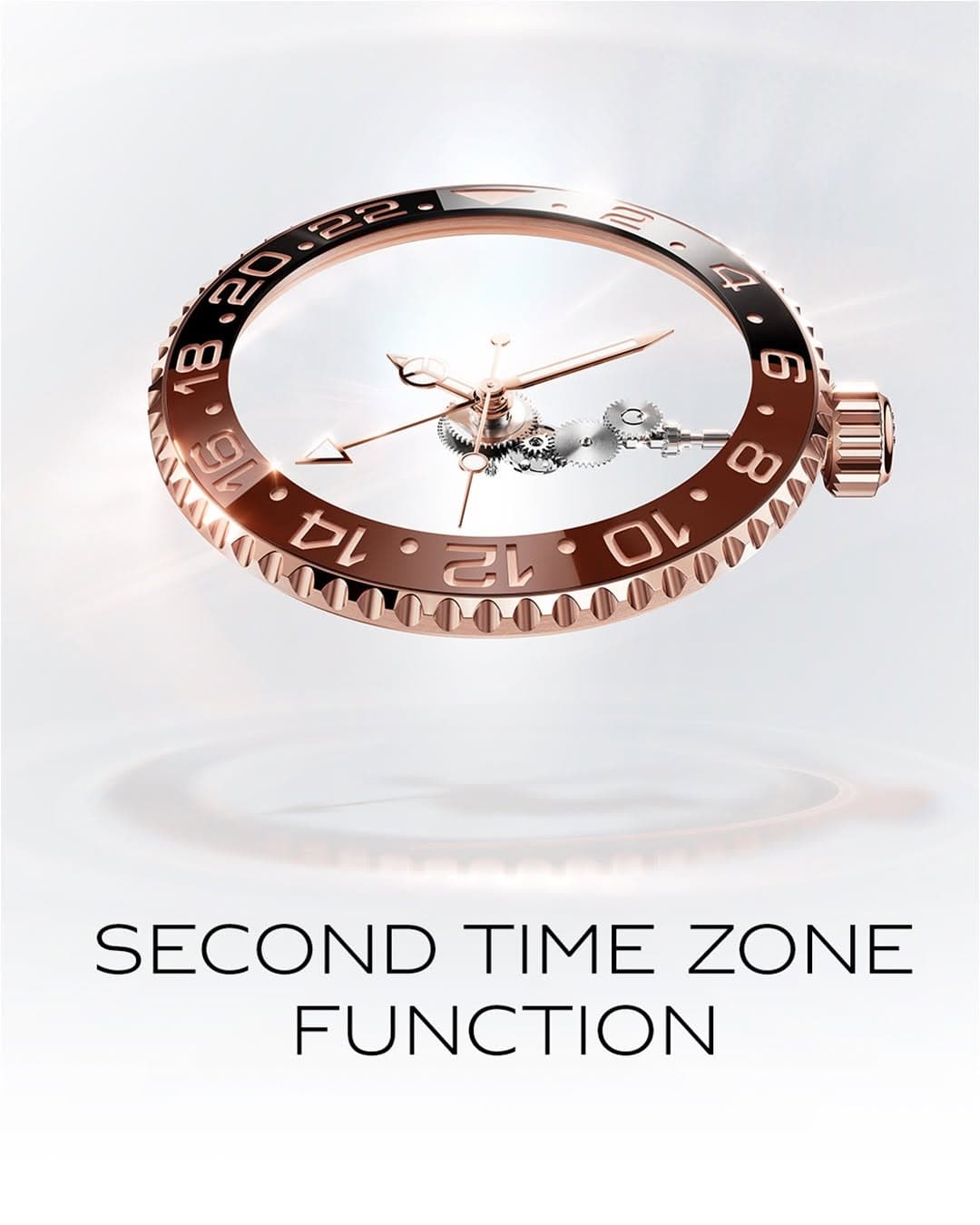
GMT-Master II second time zone function: the travel complication that behaves
Some travel watches want applause. Bezels scream, dials get busy, the whole affair turns into a cockpit. The GMT-Master II—particularly with calibre 3285—keeps its poise. The point isn’t to overwhelm you with information; it’s to keep you tethered to home, even when you’re ordering late-night room service in Tokyo and your phone insists it’s still “yesterday” in Toronto.
Here, the magic is practical: the winding crown lets you set local time in single-hour jumps, independently, without disturbing the second time zone. It’s the horological equivalent of stepping onto a plane and emerging new—same person, different city, no messy recalibration of your inner life.
Two time zones, two moods
- Local time (12-hour): the time you’re living in—meetings, martinis, museum reservations.
- Second time zone (24-hour): the time you’re anchored to—home, family, the office you’re pretending not to check.
Rolex’s genius is that it doesn’t ask you to choose between beauty and usability. The GMT hand does its steady, 24-hour sweep, while local time can be nudged hour by hour—precise, clean, and oddly satisfying.
The calibre 3285’s unsung heroes: a star wheel and a jumping spring
Under the romance, there’s hard logic. The mechanism controlling local time is built with a minimal number of components—an editorial choice as much as an engineering one. Complexity can be impressive, yes, but it can also be temperamental. Rolex opts for simplicity that travels well.
The two key elements are wonderfully specific: a four-toothed star wheel and a patented jumping spring. Together, they deliver crisp, hour-by-hour shifts—no vague “almost” clicks, no drama. It’s the kind of tactile precision that makes you trust the object instantly, the way you trust a well-made leather bag at the baggage carousel.
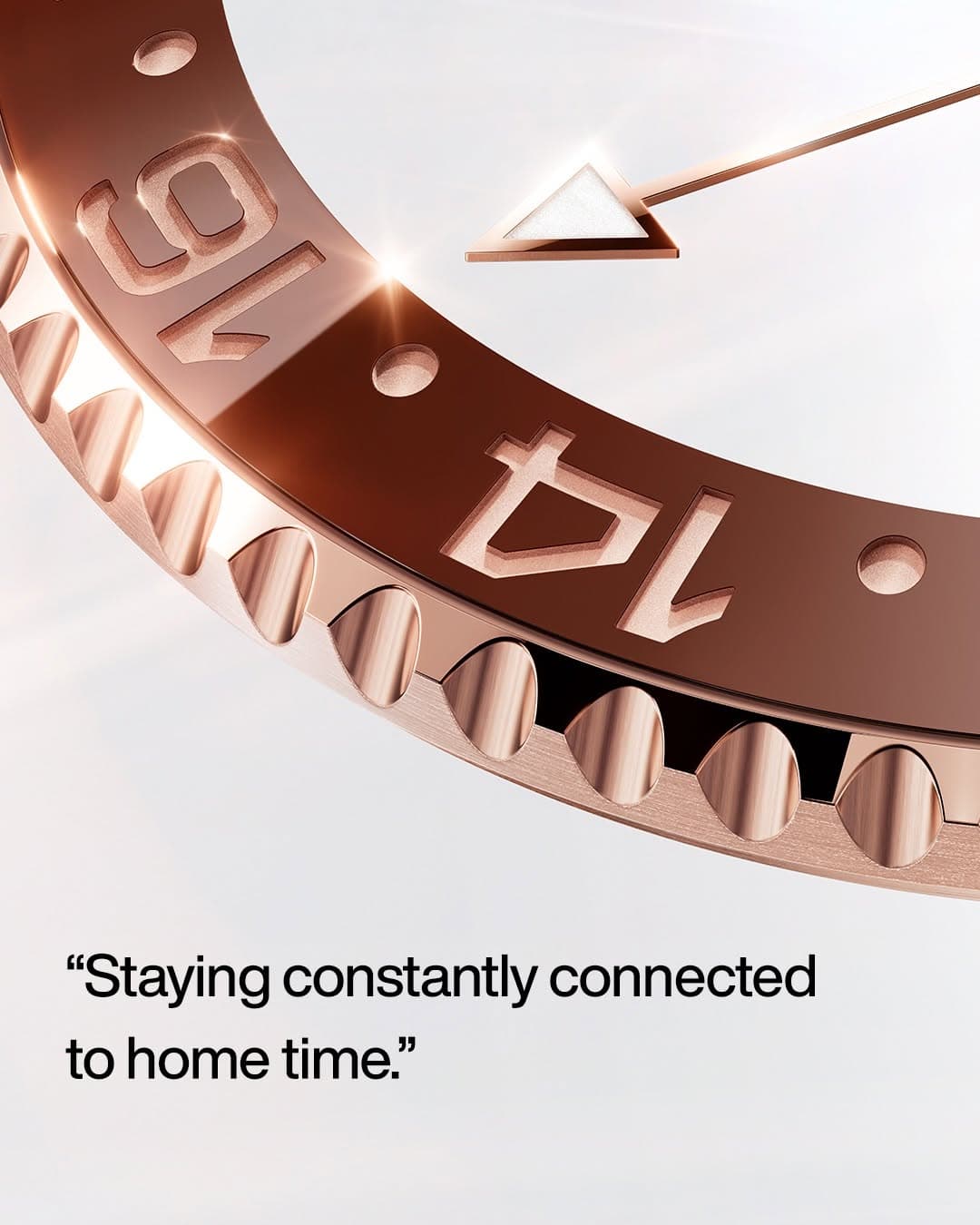
And because the system is designed for reliability, you can adjust it whenever you like—mid-flight, mid-taxi, mid-life—while staying constantly connected to home time. That’s the real luxury: not the complication itself, but the lack of fuss around it.
Why 24-hour time still matters (even if you refuse to use it in emails)
A 24-hour display doesn’t just look “professional.” It removes ambiguity when you’re crossing borders and negotiating phone calls with people who think 7 p.m. is a reasonable time to schedule anything. Day or night becomes instantly legible—especially when paired with the GMT-Master II’s rotating bezel, a design lineage born from aviation and refined into cultural shorthand.
If you want the historical context, it’s worth revisiting the story of the Rolex GMT-Master and how it became the watch of jet-age fantasy—pilots, financiers, and, eventually, anyone with a passport and opinions about airports.
How it wears, culturally: the watch that signals you’ve been places
The GMT-Master II doesn’t beg for attention the way some “travel” pieces do; it simply reads as capable. It’s the difference between a logo suitcase and discreet hand luggage in cashmere-grey. In a decade when quiet luxury has become a social language, the GMT’s second time zone function feels aligned with the mood: functional elegance, no theatrics.
For those building a wardrobe of objects—not just outfits—this is also why the GMT-Master II remains such a stalwart in the conversation about modern collecting. If you’re in that rabbit hole, our editors have thoughts on quiet luxury accessories, the art of choosing pieces that don’t date themselves. And if your day-to-day is split between cities, you’ll appreciate our guide to travel wardrobe essentials that work as hard as you do.
Setting it: the joy is in the click
There’s a small, sensory pleasure in the act—thumb and forefinger on the crown, that decisive little jump as the hour hand advances. It feels engineered, not fragile. It’s also a reminder that the best design is often the least obtrusive: a complication that disappears into your routine until you need it, and then it performs like a devoted assistant.
If you’d like the brand’s own language on calibre 3285 and the GMT-Master II, start with Rolex’s GMT-Master II page. And for a wider look at why the GMT complication became such a modern obsession, the overview of Greenwich Mean Time (GMT) is a surprisingly grounding read—especially when you’re jet-lagged and negotiating your body clock like a contract.
Ultimately, the GMT-Master II second time zone function isn’t about showing off that you travel. It’s about traveling well—keeping your bearings, keeping your promises, keeping your sense of self intact. Not everything in luxury needs to be a spectacle. Sometimes it just needs to be right.
For more horological perspective with taste (and a little attitude), see our ongoing coverage of modern watch collecting—because if you’re going to invest in time, you might as well do it with discernment.
Photo Credits
Cover image courtesy of ROLEX. Additional images courtesy of their respective owners.