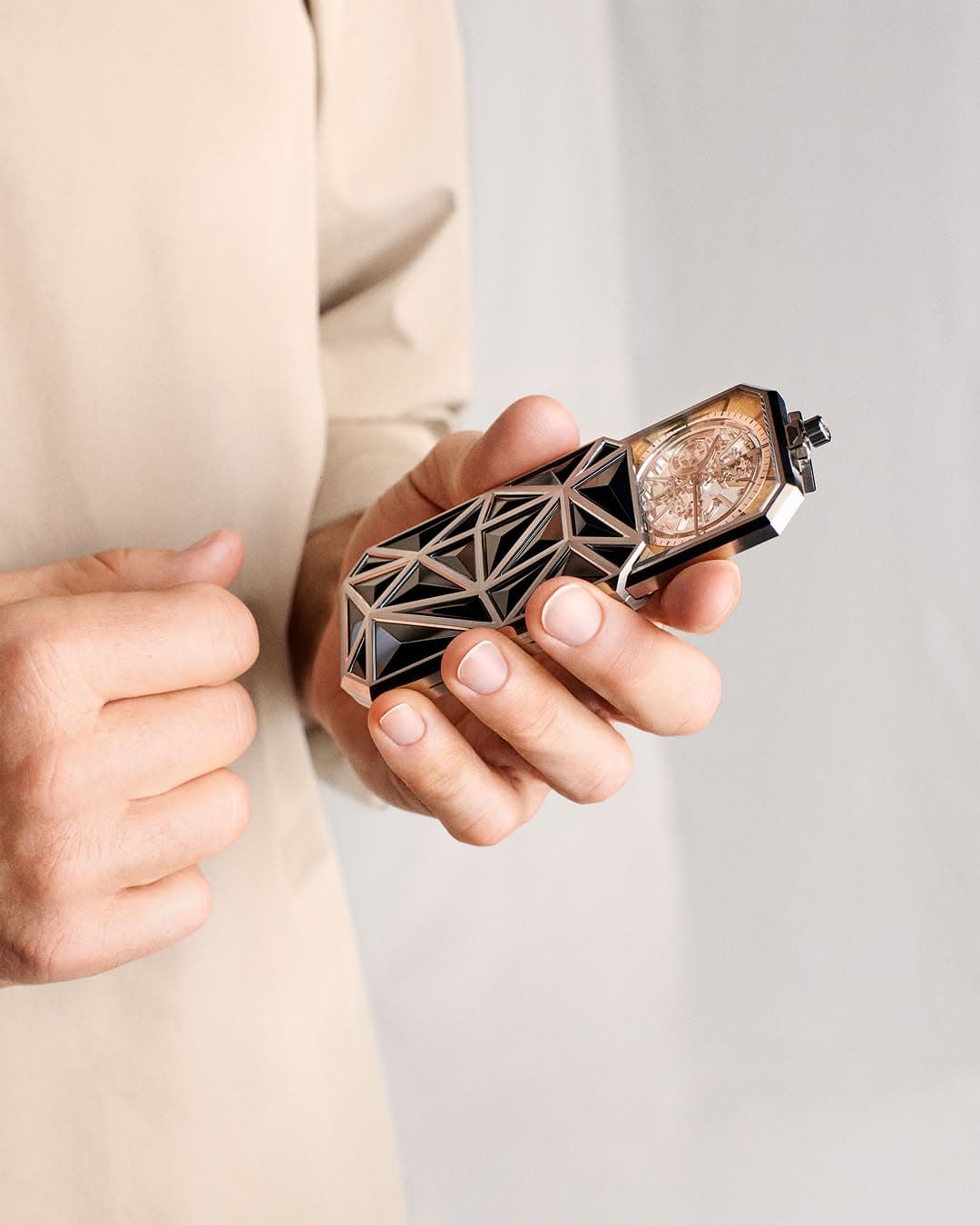
There’s a particular kind of luxury that doesn’t shout—it changes its posture. The Audemars Piguet Établisseurs Nomade is that rare object: a multifunctional timepiece that slides, with the nonchalance of old money, from pocket watch to desk clock to pendant. Not a gimmick, not a party trick. A small, impeccably engineered insistence that beauty should be allowed to move.
We’ve spent a decade fetishising permanence—heirlooms, hard-to-get watches, museum-grade scarcity. And yet the most modern impulse might be versatility done with seriousness. The Nomade understands that the same day can demand different forms of elegance: something discreet in the palm, something architectural on the desk, something intimate at the throat (because a pendant close to the skin hits differently, doesn’t it?).
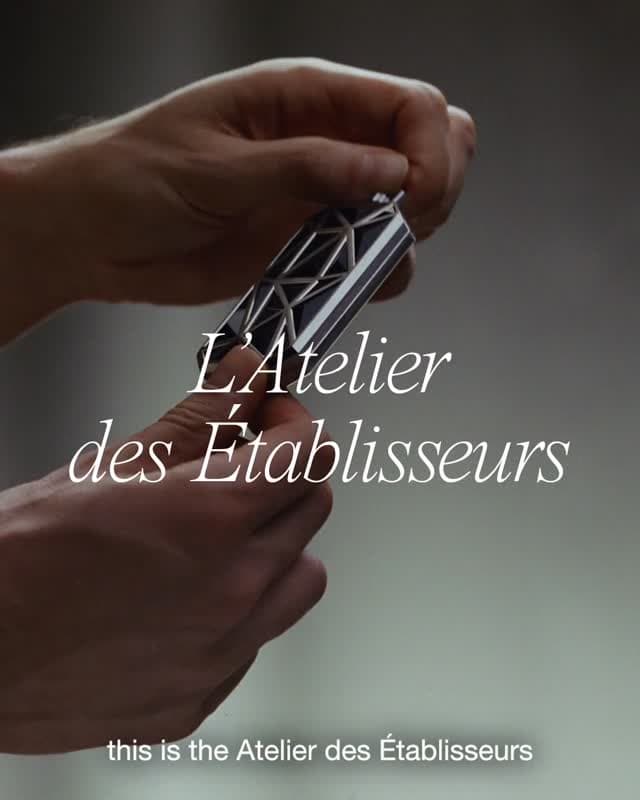
The multifunctional timepiece, reimagined by Audemars Piguet
Audemars Piguet frames the Établisseurs Nomade as a tribute to the établissage era—when Swiss watchmaking was a constellation of specialist hands rather than a single monolithic manufacture. It’s a clever, culturally literate reference, and more importantly, it’s visible in the object. The piece is “encased within an architectural mesh of metal and stone,” and that phrasing isn’t marketing haze; it’s accurate. Faceted metal catches light in crisp flashes, while natural stones bring a quieter, mineral depth—cool to the eye, almost tactile in imagination.
This is the kind of design that feels at home in a Paris salon but also on a collector’s desk in Hong Kong: cosmopolitan, slightly audacious, and engineered with the confidence of a house that’s been making its own rules since the nineteenth century. (If you need a reminder of just how singular the brand’s position is, Audemars Piguet’s official site makes the case with disarming restraint.)
Three expressions, one idea: portable ritual
As a pocket watch, the Nomade feels like a rebuke to the compulsive wrist-checking of our era—slower, more deliberate, a private ritual. As a desk clock, it becomes sculpture with a pulse, the sort of object that turns a worktable into a set. As a pendant, it’s the boldest move: jewellery that happens to tell time, a wink at the Belle Époque without cosplay.
And yes, there’s a point of view here: I’ll take a timepiece that can shapeshift over yet another “sport-luxe” iteration any day. The Nomade doesn’t chase a trend; it sidesteps it.
Inside Calibre 7501: light, symmetry, open space
At its core, the hand-skeletonised Calibre 7501 plays with negative space like a well-cut suit plays with shoulder and waist—structure, then ease. Skeletonisation can tip into theatricality (we’ve all seen it), but here it reads as disciplined, almost architectural. Audemars Piguet notes the craft has been treasured since the 1930s, and you can sense that lineage: the bridges pared back, the geometry sharpened, the movement turned into a study in light.
If you’re curious about the broader lineage of skeleton watches—how the aesthetic moved from technical demonstration to pure adornment—the history is neatly contextualised on Wikipedia’s skeleton watch entry. The Nomade sits at the more rarefied end: less “look what we can do,” more “look how quietly we can do it.”
Lapidary precision: when stones behave like architecture
The natural stones aren’t there to soften the engineering; they sharpen it. The lapidary work—cut and alignment—must be immaculate for the facets to meet metal without visual noise. Think of the best haute joaillerie ateliers where a seam is a scandal. The Nomade’s stones feel selected for their calm authority rather than loud colour, which is precisely why the piece reads expensive, not flashy.
It brings to mind the current resurgence of objets d’art—collectible design with function—seen at fairs like PAD Paris and in the vitrines of Place Vendôme maisons. Here, though, it’s watchmaking leading the dance.
The Atelier des Établisseurs and the romance of the specialist
There’s something refreshingly romantic about Audemars Piguet leaning into the établissage story: the idea that mastery is communal, that excellence is an ecosystem. In an age where brands are obsessed with vertical integration as a flex, celebrating the specialist—stone-setters, engravers, lapidaries, movement finishers—feels almost subversive. For context on the brand itself and its place in Swiss watchmaking culture, Wikipedia’s Audemars Piguet overview is a useful primer.
If you’ve been tracking how the luxury world is re-enchanting craft—quietly, deliberately—you’ll recognise the same sensibility in our recent coverage of haute horlogerie’s new mood, and the growing appetite for collectible design objects that earn their place in a home rather than merely decorate it. The Nomade belongs in that conversation: not just something to own, but something to live with.
Who is it for?
- The collector bored of predictable grails—and hungry for narrative and form.
- The design obsessive who wants their desk to look intentional, not accidental.
- The jewellery person who likes a little mechanics with their glamour.
In other words: someone with taste, and a tolerance for complexity—the good kind.
Audemars Piguet’s Établisseurs Nomade doesn’t try to replace the wristwatch. It simply reminds us that time can be carried differently—held, displayed, worn—depending on who we are that day. And that, frankly, is the most luxurious proposition of all.
Photo Credits
Cover image and additional images courtesy of their respective owners.