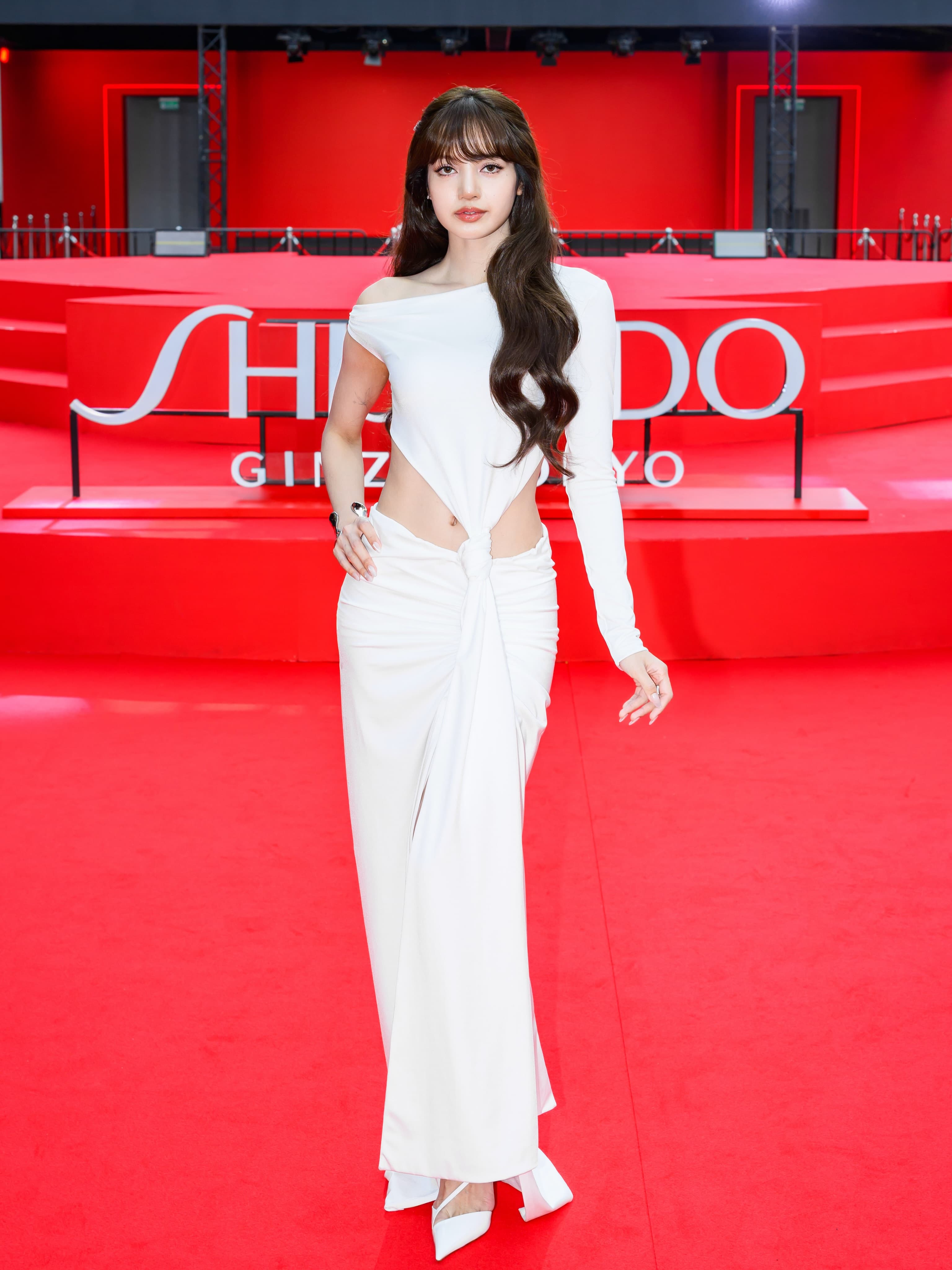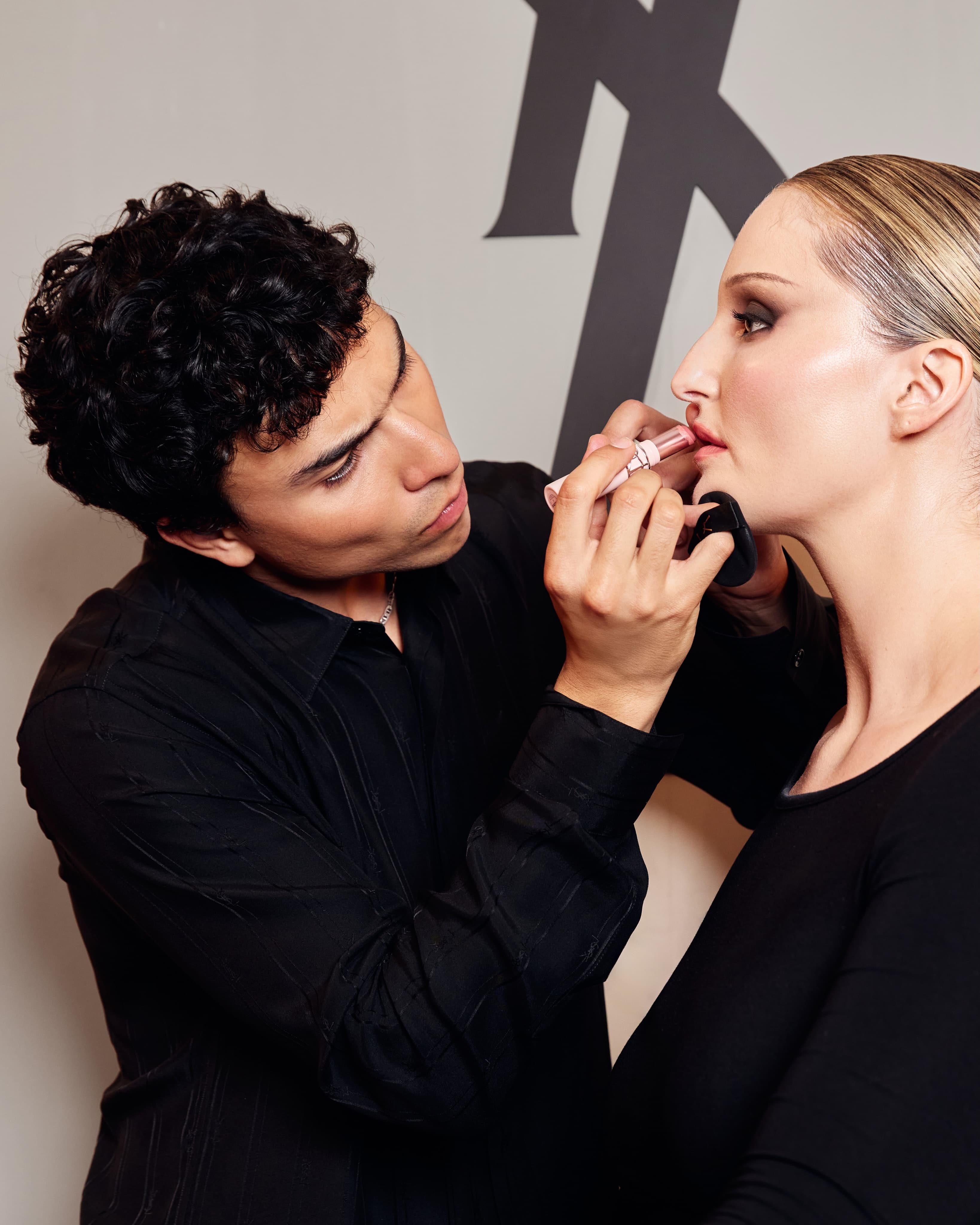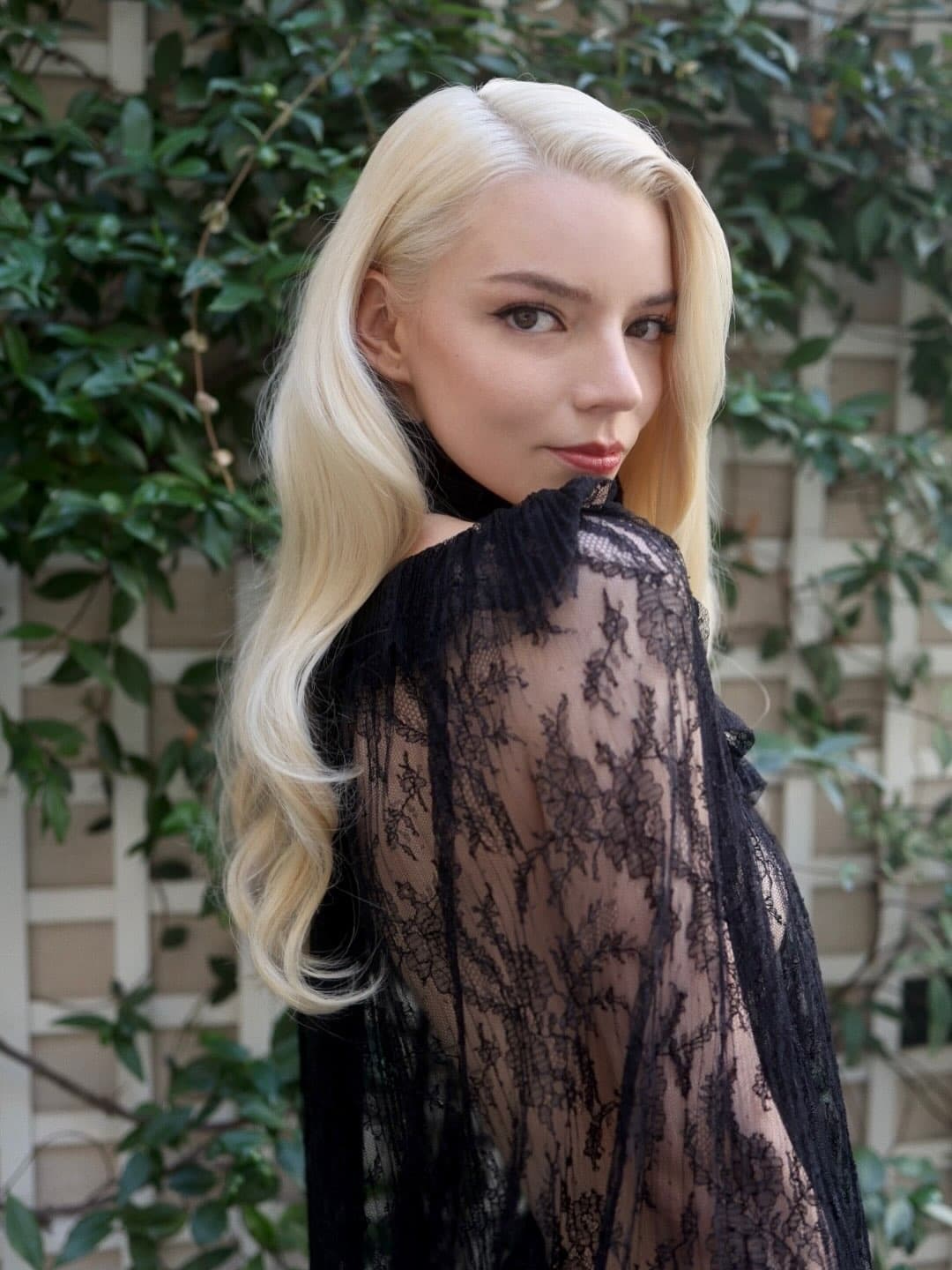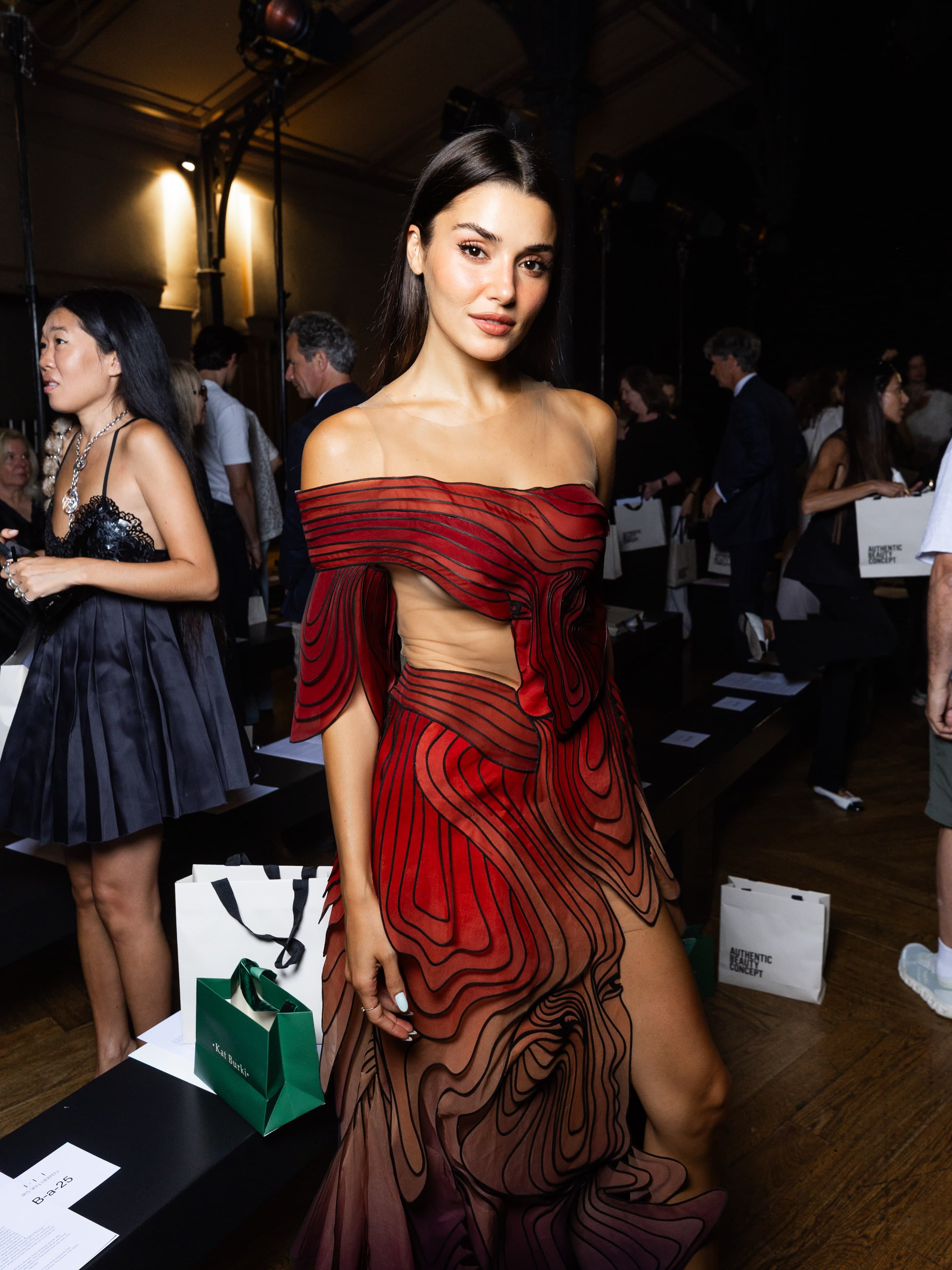
There is a particular electricity to an Iris van Herpen haute couture show in July Paris, the kind that makes even seasoned guests stop adjusting their sunglasses and look up. In the posts circled around this season’s couture calendar, @handemiyy appears at van Herpen’s show with “Visuddhi UNG” credited, a small line that hints at the way couture now travels: not only through ateliers and editors, but through friends with cameras, captions, and an eye for texture.
Inside an Iris van Herpen haute couture show in July Paris
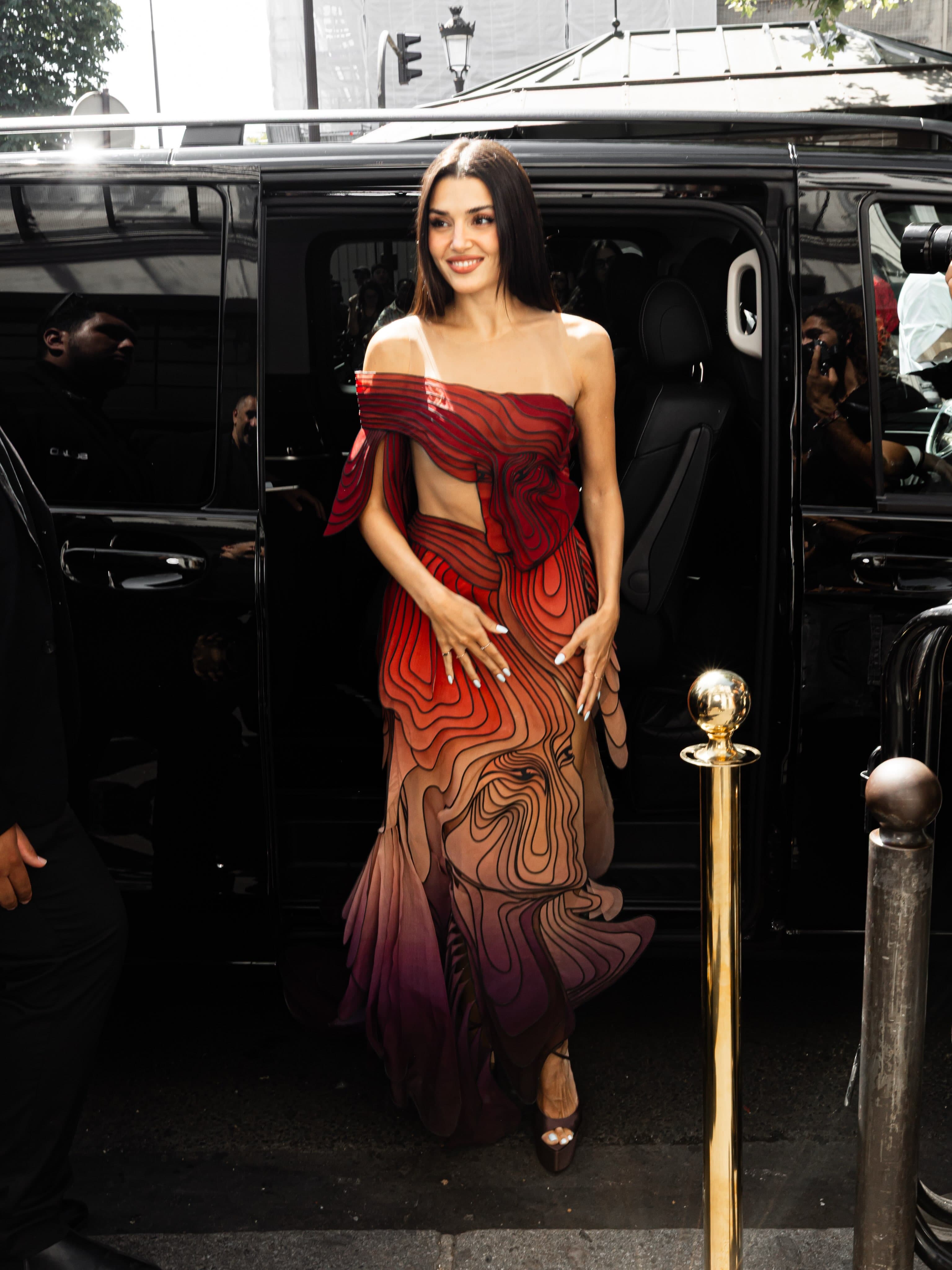
Van Herpen’s couture presentations have become a reliable draw during Paris Haute Couture Week, in part because they refuse the usual fashion-week speed. The garments insist on being seen up close, because their impact often sits in construction and material behavior rather than in a logo or a hemline. That is why the images matter here. A guest’s view can catch what runway footage edits out: the proximity, the way a look reads in real light, and the social choreography of arrivals.
What we can verify from the brief is the setting and the anchor names: Iris van Herpen, Paris in July, a haute couture show, and the attendee tag @handemiyy. For official reference on the house and its couture practice, the brand’s own site is the cleanest fixed point. See Iris van Herpen.
The front row has become part of the collection
Couture used to be documented primarily by magazines and agencies. Now the front row does its own publishing in real time, and the story becomes a braid of perspectives. When a post names an individual credit like “Visuddhi UNG,” it signals authorship and access, even if the wider context is intentionally minimal. In other words, the couture object is still the centre, but the image economy around it is a second stage, with its own cast list.
That shift is not a lament, it is simply the current format. For a designer like van Herpen, whose work is frequently discussed in terms of technique and experimentation, guest imagery can widen the audience without flattening the point. You do not need to know every stitch name to understand that the experience is designed to be witnessed, then re transmitted.
What the caption tells us, and what it refuses
The caption is spare: “@handemiyy at @irisvanherpen haute couture show, July Paris,” followed by “Visuddhi UNG.” No collection title, no venue, no look credits. Rather than invent what is not present, it is more accurate to treat this as a snapshot of couture’s present tense: the social proof of being there, and the visual record moving faster than the press release.
Why Iris van Herpen remains couture’s provocation
Even when the details arrive late, an Iris van Herpen haute couture show tends to lodge in memory because it disputes what people think couture is for. Not simply ceremonial clothes for photographs, but garments that behave like objects, challenging the way fabric can hold, float, or articulate space around a body. That is why July Paris feels like an apt container for the brand. With the couture calendar in motion, van Herpen’s work reads as a reminder that the point of couture is not nostalgia, it is possibility, engineered by hand and imagination.
If you want to follow the formal structure of the week that frames these shows, the Fédération de la Haute Couture et de la Mode publishes the official Paris Haute Couture Week schedules and context via its main site: FHCM.
For now, this is the story those posts allow: a July Paris night, an Iris van Herpen haute couture show, and a front row moment that turns into an artifact the second it is shared.
Photo Credits
Images courtesy of their respective owners.