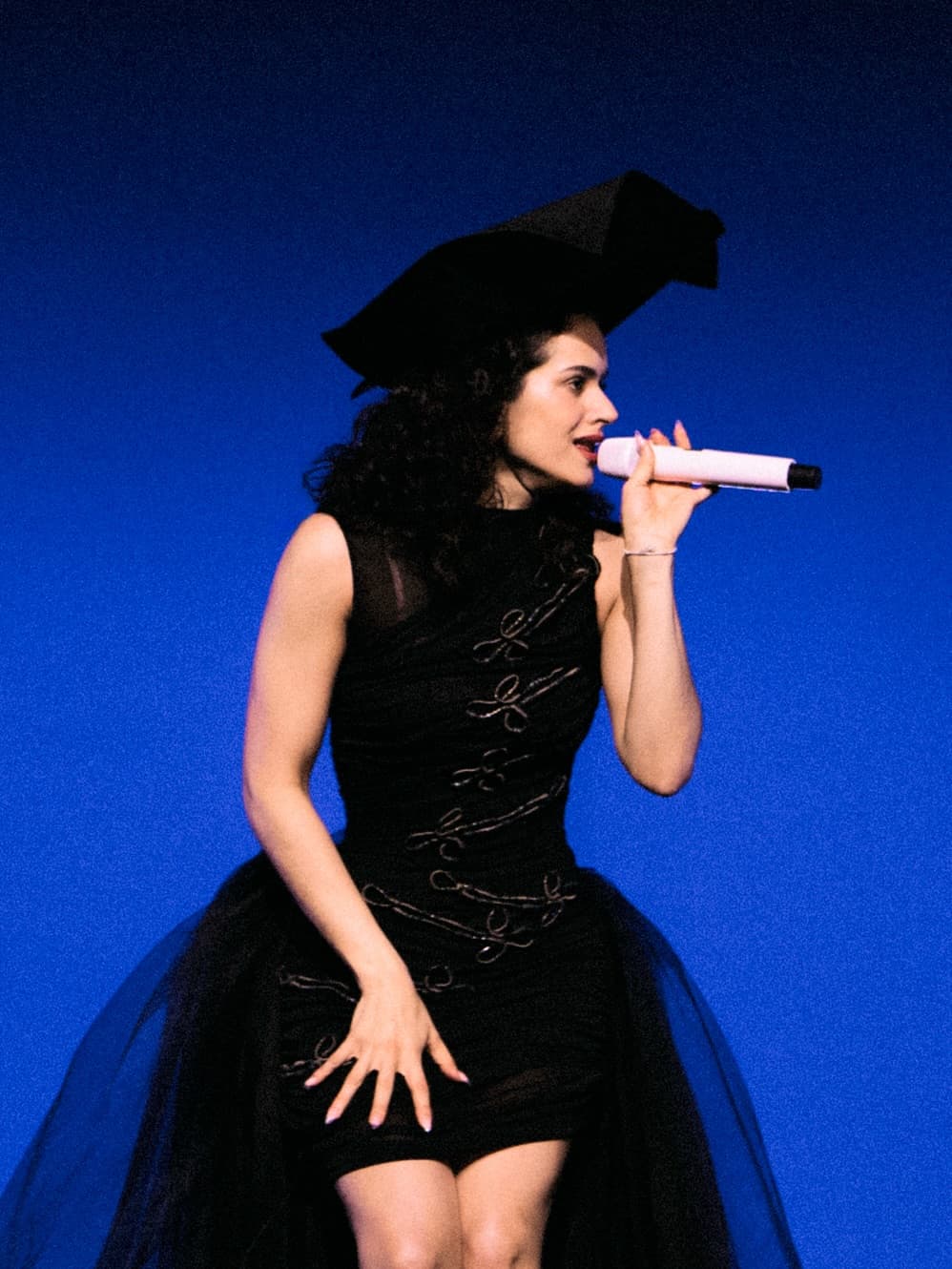
In Boston, with the Lux tour in full force, Rosalía in Dior did what the smartest stage dressing always does, it clarified the story. Not just who she is, but how she wants to be read in a room the size of an arena, where the back row deserves as much meaning as the front. Dior has long understood the theatre of clothes, and Rosalía has long understood the theatre of a body in motion. In Boston, those instincts clicked.
There is a particular kind of American concert atmosphere that can flatten fashion into merchandise, but this look refused that fate. It read as intention, not branding. If you have tracked the Lux tour’s visual language, you know it leans into contrast, devotional silhouettes sharpened by streetwise energy, tenderness with teeth. Dressing Rosalía in Dior for the Boston stop landed like an editorial decision made at volume.
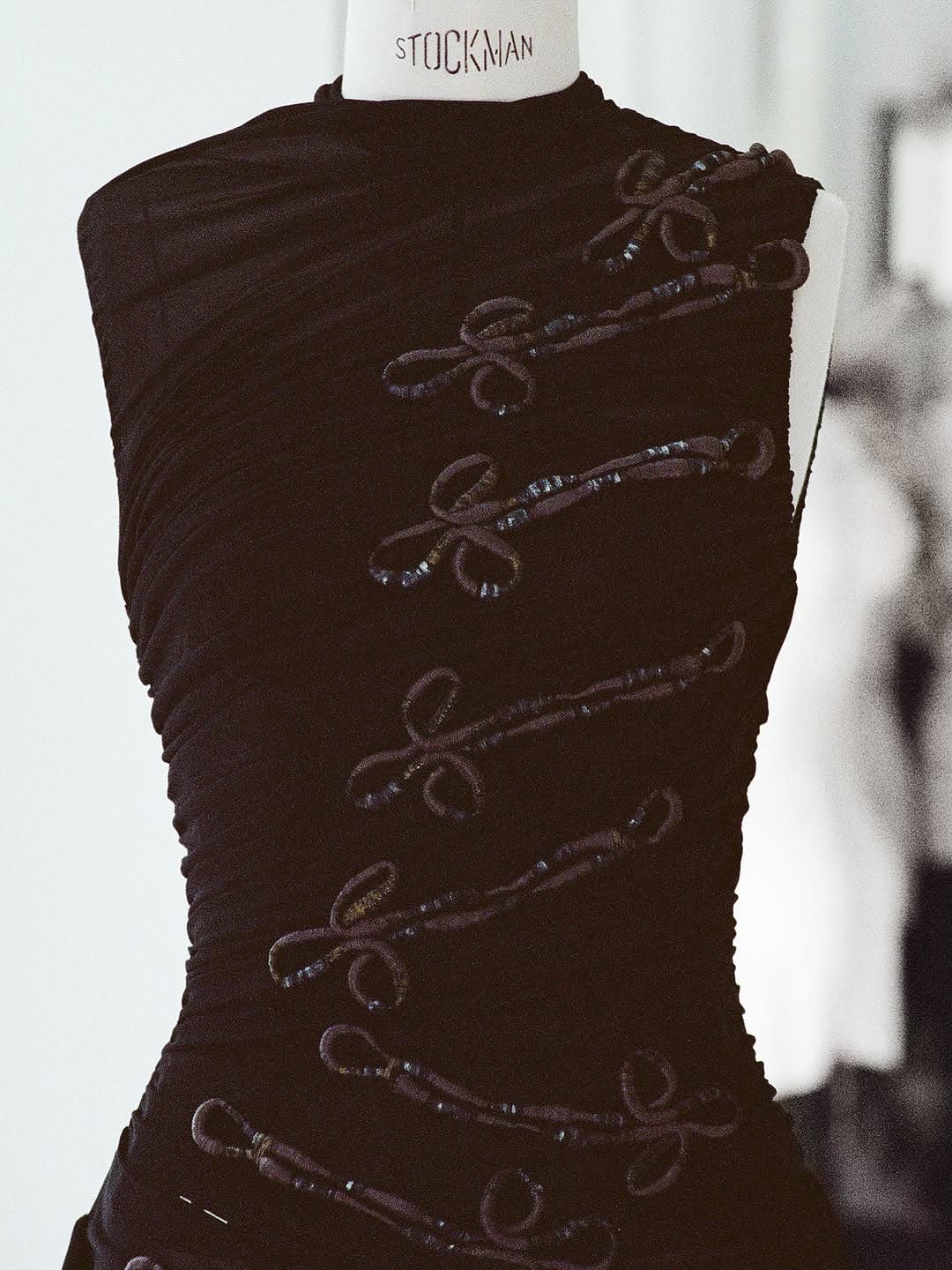
Rosalía in Dior, the Lux tour wardrobe at its most precise
Dior onstage is never only about prettiness. It is about line, posture, and control, the way a garment edits your movement as much as it decorates it. That matters for Rosalía, whose performances are built on switching gears quickly, from contained stillness to feral acceleration in the space of a bar. The Dior look in Boston leaned into that discipline. You could feel the cut doing work, keeping the silhouette legible under hard lighting, holding its own against the sheer sensory competition of a modern pop production.
There is also the cultural resonance that makes this pairing more than a styling headline. Dior, founded in 1946 and forever associated with the sculptural femininity of the New Look, carries a coded idea of power, achieved through structure. Rosalía’s power is different, rhythmic, athletic, often defiantly unpolished. Put together, it becomes a conversation, not a costume.
The Boston factor, why this stop mattered
Boston crowds have a distinctive attentiveness, part scrutiny, part devotion. It is a city that demands you show your work. Rosalía’s Lux tour has always been a performance of craft as well as charisma, and the Dior wardrobe choice felt like a nod to that. Not an attempt to soften her edge, but to sharpen it with a more exact outline.
And if you are wondering why luxury houses keep returning to arena tours, it is because a tour is the only fashion calendar that truly belongs to the artist. It repeats, it evolves, it accumulates memory. Dior does runway. Rosalía does repetition with reinvention. Boston was one of those nights when the reinvention looked inevitable.
How Dior’s codes translate to the stage
On a runway, Dior’s signatures are read up close, a seam here, a calibrated shoulder there. In a stadium, those same codes must be bold enough to survive distance, yet refined enough to reward the cameras that will crop and circulate the look for weeks. It is a surprisingly narrow target. The Boston ensemble succeeded because it understood scale. It did not rely on fussy detail that disappears. It relied on shape, contrast, and the kind of finish that catches light cleanly.
For readers who want a deeper sense of the house language, Dior’s own history is the best primer, particularly the way the brand frames its founding silhouettes and ateliers. Start with Dior itself, then, if you want context on how the house has been interpreted over time, the archival overviews at institutions like the Metropolitan Museum of Art have a way of reminding you that the line between stage and salon has always been porous.
Rosalía in Dior also sits neatly inside a larger celebrity fashion arc. The modern pop star is not simply a wearer, she is a moving platform for couture level ideas. That is why the best looks are the ones that feel authored, rather than merely assigned. Boston felt authored.
Why Rosalía’s style matters beyond the outfit
Rosalía’s fashion is compelling because it is never only trend translation. It is identity work, done in public. When she leans into luxury, she does not disappear into it. She stresses it, remixes it, tests its limits against her own references. That is why Rosalía in Dior reads as a partnership instead of a takeover. You still see her.
If you are following this from the angle of culture rather than clothes, it is worth noting how often Rosalía’s visual world borrows from the language of performance art and religious iconography, then flips it into something contemporary and tough. Dior has its own flirtation with reverence, the ceremony of fittings, the ritual of craft. In Boston, those parallel devotions found a shared tempo.
What to watch next, the afterlife of a Boston Dior look
Tour looks live longer now than magazine covers. They are clipped, memed, analysed, and eventually built into fan memory as shorthand for an era. Expect this Dior moment to keep circulating, because it lands in that sweet spot where the silhouette is instantly recognisable and still slightly mysterious. The kind of outfit that makes you lean in, even if you saw it first on a phone.
And for the source that sparked this conversation, Dior’s official channels remain the cleanest reference point for what she wore and how it was framed. Editorially speaking, Boston was not just a tour stop. It was a reminder that when the clothes are right, they do not distract from the music, they sharpen it.
Photo Credits
Cover image courtesy of Dior Official. Additional images courtesy of their respective owners.