There is a particular electricity in Paris at the turn of the 20th century, when ironwork starts behaving like vine and stone seems to soften into petals. Vacheron Constantin has been tracing that moment back to the bench, using Vacheron Constantin Métiers d’Art as the bridge between Art Nouveau’s architecture and watchmaking’s smallest stage, the dial, the case flank, the engraved edge you only notice when light hits it at an angle.
Vacheron Constantin Métiers d’Art, through a Paris lens
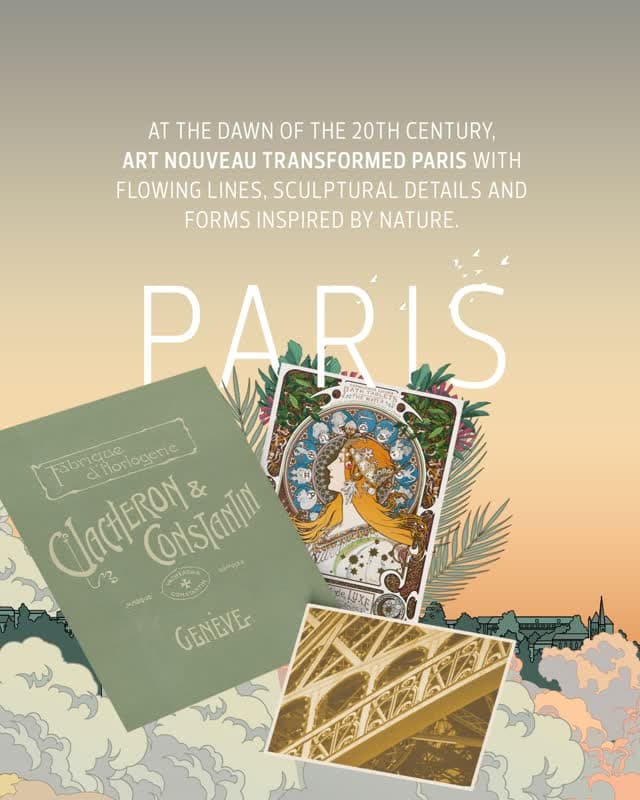
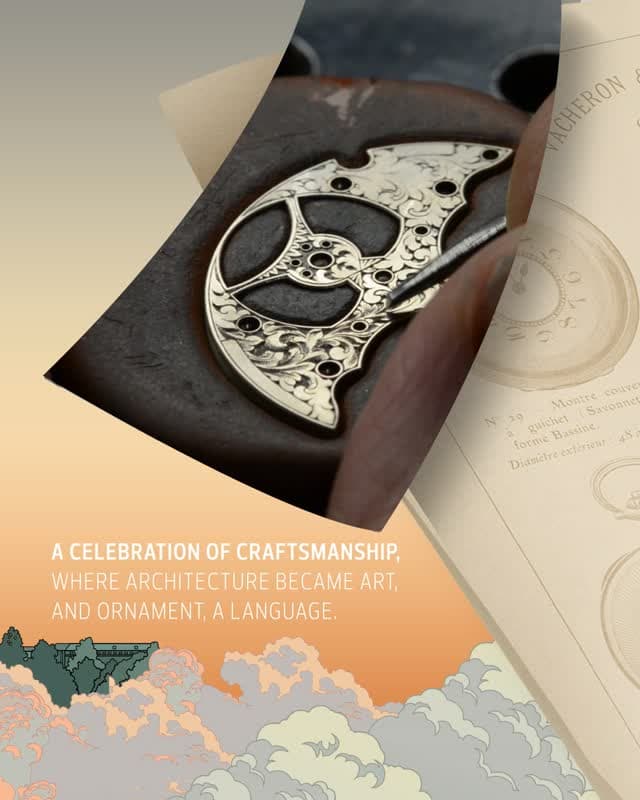
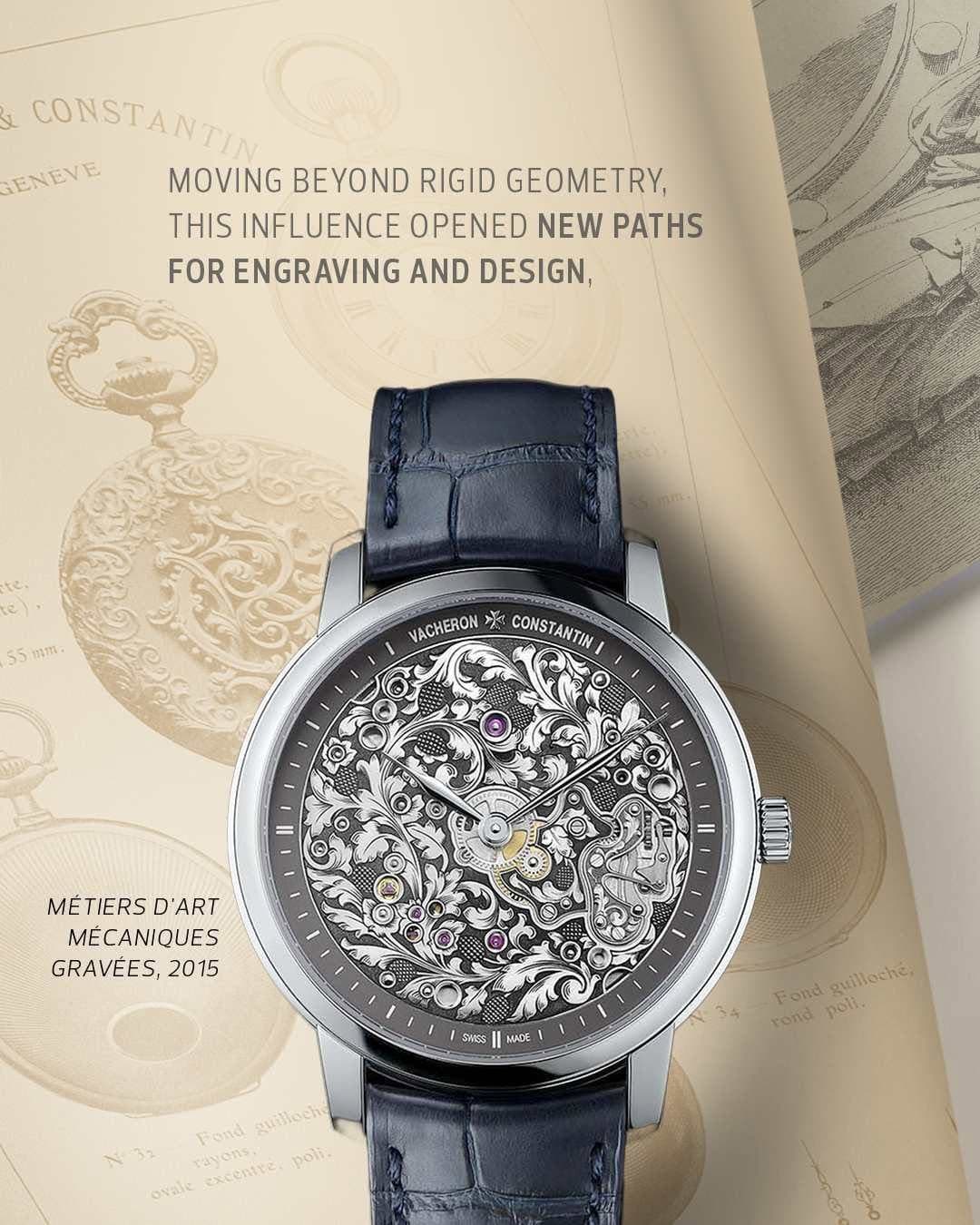
The Maison’s current mantra, “Explore All Ways Possible,” might sound like marketing until you look at what it demands from the craftspeople. In the Art Nouveau era, ornament was not an add on, it was the argument. Parisian façades were loaded with tendrils, nymphs, leaves, and long, elastic curves, motifs that translate uncannily well to engraving because they ask for depth, shadow, and anatomical confidence. That is exactly where Vacheron Constantin Métiers d’Art earns its keep: it is less about decorating a watch than about building a miniature relief sculpture that also happens to tell time.
Vacheron Constantin positions this Paris chapter as a prompt for its artisans to move beyond strict geometry and into forms that feel grown rather than drafted. You can see why Art Nouveau matters here. Those lines are not “pretty,” they are structural. They give engravers a route across a surface, a way to make metal behave like architecture.
2019’s “Mécaniques Gravées,” where the case becomes sculpture
One concrete anchor in this story is the 2019 timepiece named Mécaniques Gravées, singled out by Vacheron Constantin as an example of its engraved, sculptural approach. The point is not a single flourish, it is the accumulation, the insistence on carved relief that reads from multiple distances. At arm’s length you register volume, up close you start to follow tool marks and transitions between heights, the way a façade pulls your eye from balcony to cornice.
Because the Maison itself frames Mécaniques Gravées as a demonstration of craft, it sits naturally within the broader world of Vacheron Constantin Métiers d’Art, where technique is the headline and timekeeping is the discipline that keeps everything honest.
An 1889 ladies wristwatch, and two caryatids doing the holding
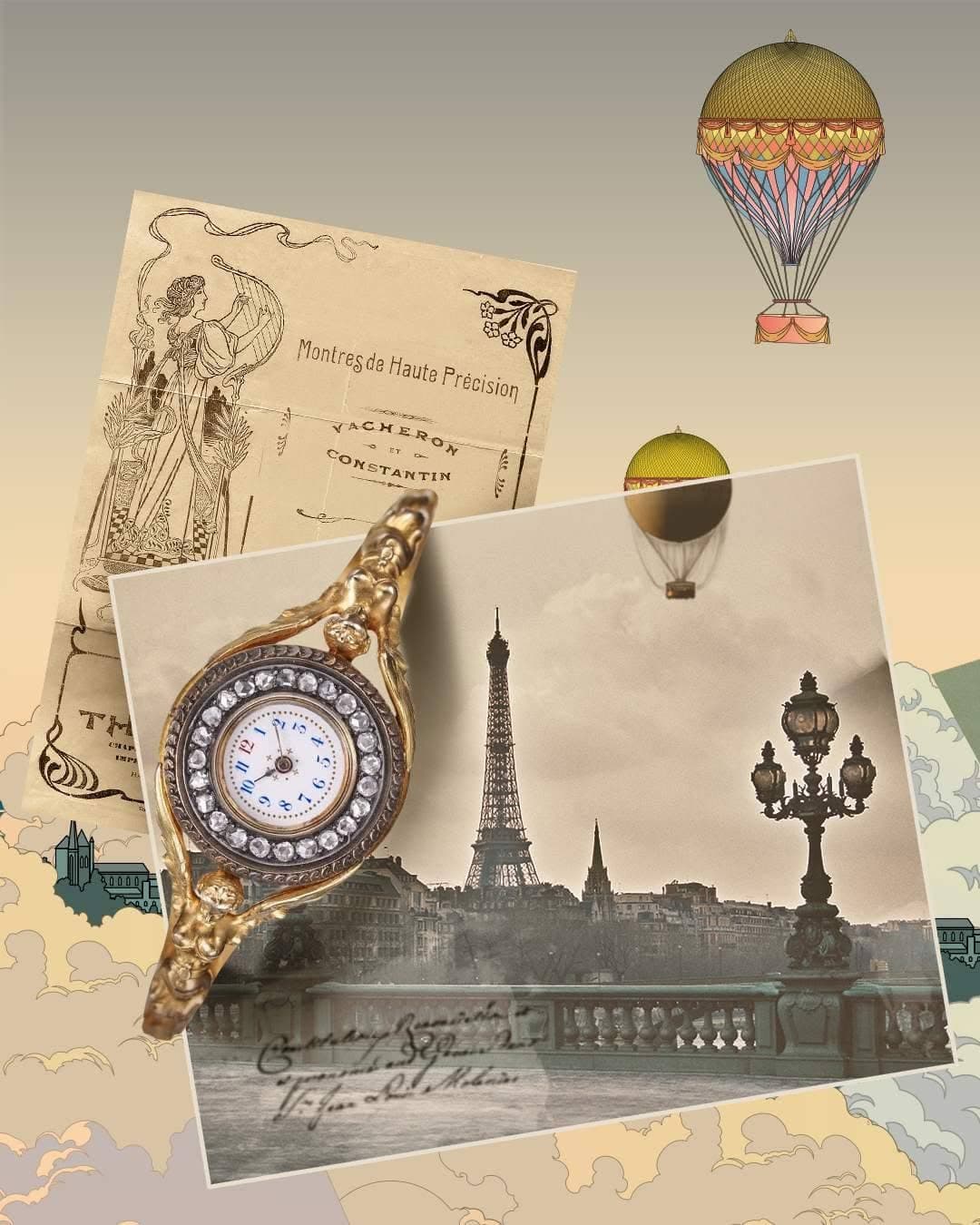
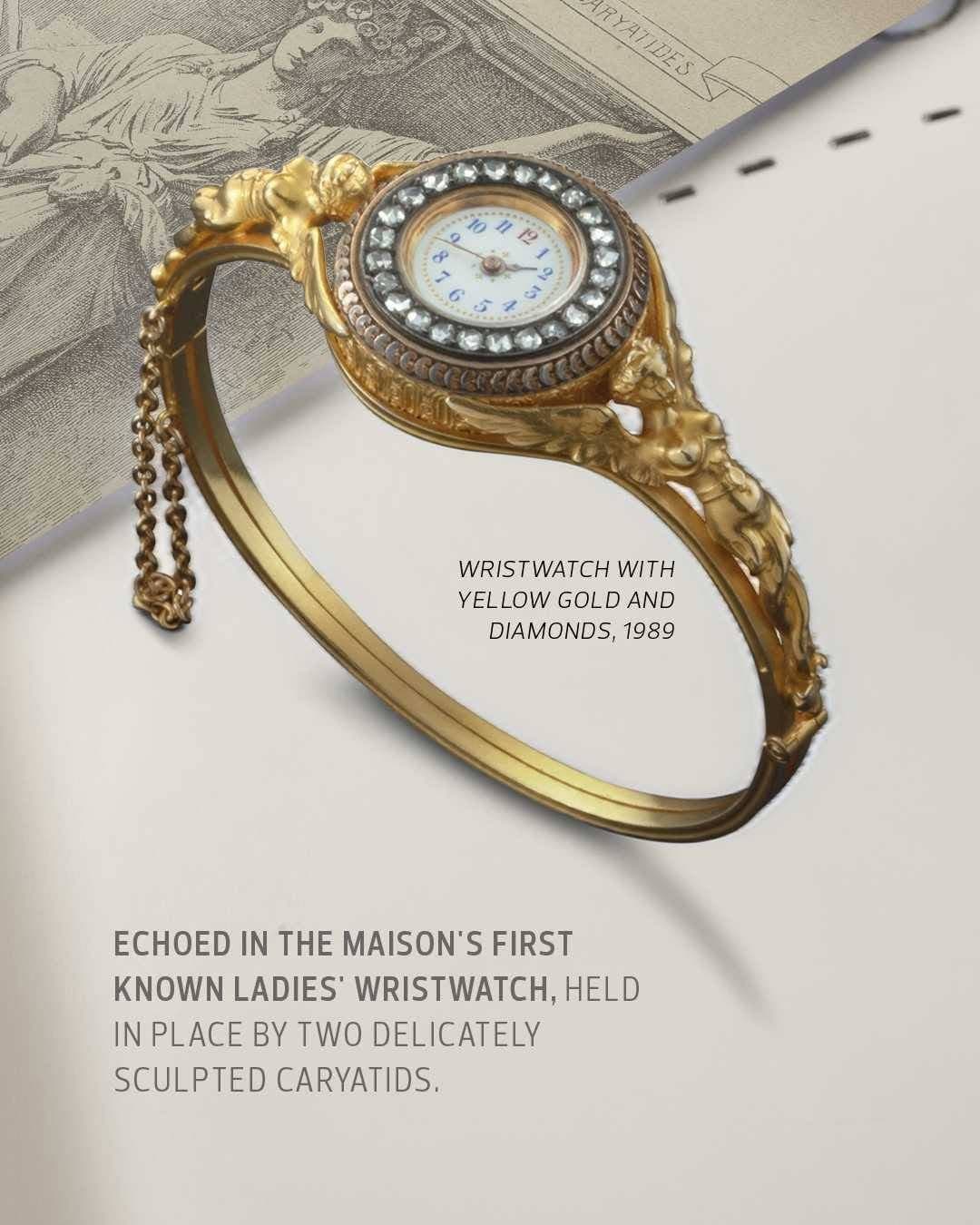
The most arresting detail in the captioned history is also the oldest: Vacheron Constantin’s first known ladies wristwatch, dated to 1889. It is described as yellow gold set with diamonds, held in place by two delicately sculpted caryatids. Caryatids, those human figures that serve as architectural supports, are a Parisian language in themselves. You see them on buildings before you ever see them on a wrist, which is exactly why the piece lands. It does not borrow Art Nouveau as a surface pattern, it borrows its logic, architecture as ornament, ornament as structure.
In other words, this is not a watch that happens to feature sculpture. The sculpture is doing a practical job. That is the sort of historical nugget that makes the current Paris narrative feel less like theme and more like continuity: a Maison testing how far it can push form without breaking function, then returning to the question again, a century later, with better tools and the same appetite.
Why this matters now
In a market that often treats dials like billboards, the appeal of Vacheron Constantin Métiers d’Art is that it asks you to slow your reading down. Engraving is information you cannot skim. And Paris, of all cities, has always rewarded the long look, the five extra seconds spent on a doorway, a grille, a figure half hidden by a curve of stone. Vacheron Constantin’s Parisian thread ultimately argues for the wristwatch as a tiny piece of built environment, something you inhabit rather than merely wear.
For Vacheron Constantin’s own framing of “Explore All Ways Possible” and the Maison’s Métiers d’Art work, see the brand’s official site: Vacheron Constantin. For additional context on Art Nouveau’s Paris origins and its characteristic natural motifs and flowing lines, the Musée d’Orsay’s overview is a useful reference point: Musée d’Orsay, Art Nouveau.
Photo Credits
Images courtesy of their respective owners.