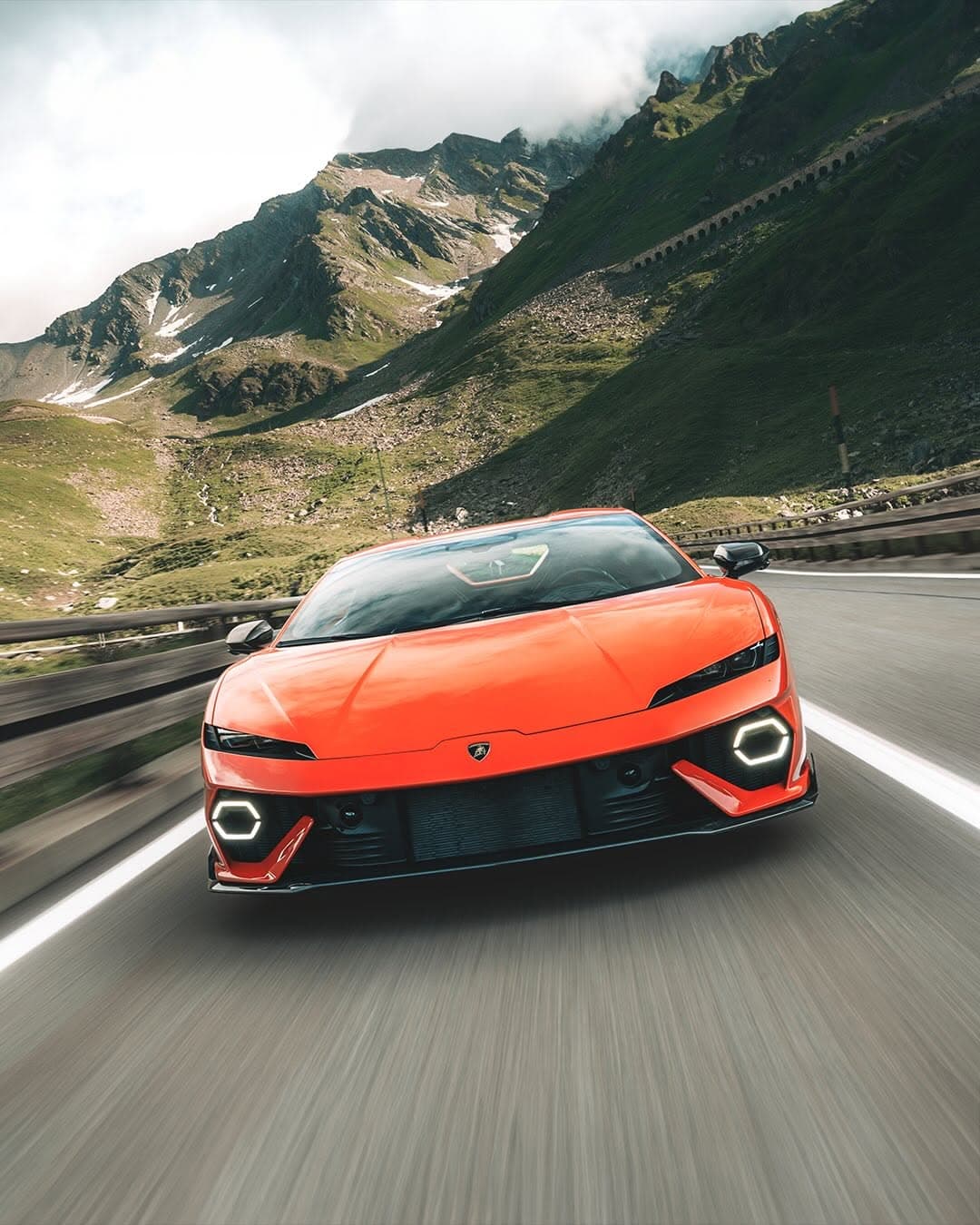
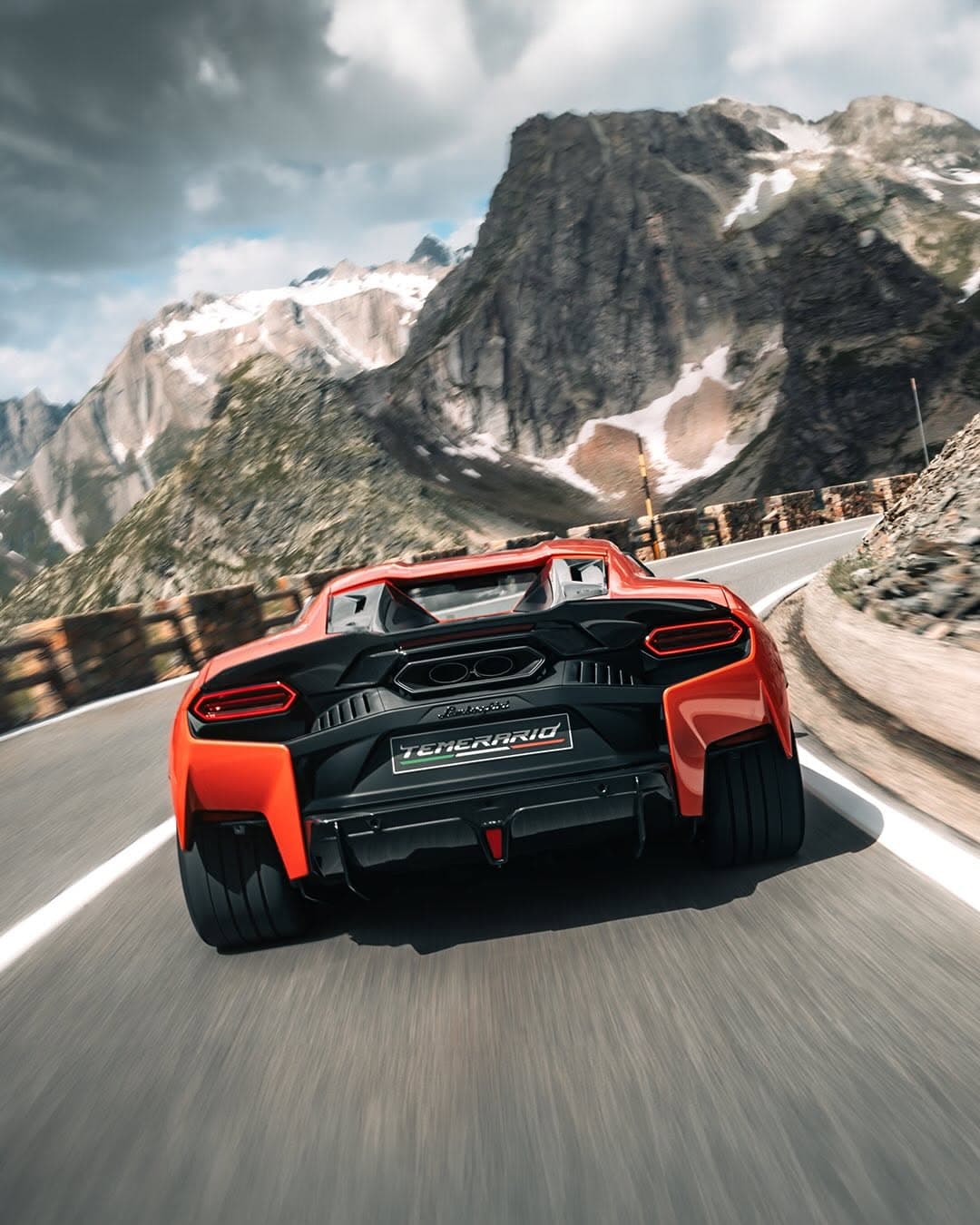
There are colours that behave politely in a city, and then there is Arancio Xanto, a shade that refuses to lower its voice. Under mountain light, where the air turns crisp and the shadows cut cleanly across rock, the Lamborghini Temerario in Arancio Xanto looks less like paint and more like a flare. The primary keyword here matters because it names a specific feeling. The Lamborghini Temerario is not trying to be liked, it is trying to be read, at speed, through every curve.
Lamborghini says 920 CV, the kind of number that tends to flatten conversation into a single wide eyed syllable. But the more interesting story is how that power translates when altitude changes the mood of the road. Hairpins tighten, sightlines shorten, and you begin to understand why this car is shaped the way it is, not as theatre, but as intent.
If you want the formalities, they exist. Start with Lamborghini, where the brand places the Temerario within its current era of performance and electrification, with all the necessary regulatory language that modern desire now carries. Then return to the images, where the car looks most honest, lit by a sun that does not flatter, only reveals.
Lamborghini Temerario in Arancio Xanto, the Colour That Won the Mountains
Arancio Xanto is not simply orange. It has a mineral warmth to it, like saffron rubbed into oil, or the last smear of sunset caught on a ridge. In the mountains, that warmth turns architectural. Every plane and intake reads with clarity, because high altitude light has a way of editing out softness. You see exactly where the designers intended your eye to travel, along sharp shoulders, downward cuts, then back into the stance.
There is a cultural lineage here that is easy to forget in an age of neutral everything. Lamborghini has always treated colour as identity, not garnish. This is the brand that made flamboyance feel like a principle. If you have ever wondered why the tagline You Cant Hide Who You Are lands with such confidence, it is because the cars have been practicing that truth for decades.
Mountain light is the most honest lighting designer
In the city, reflective glass and sodium street lamps can turn even strong colours into something slightly synthetic. Up here, the Temerario looks carved rather than coated. Arancio Xanto takes on a granular glow, bouncing against stone and timber, then sharpening again when the car slips into shade. It is the kind of visual drama that feels earned, because it comes from the environment, not a studio trick.
And the environment matters. In thin air, your senses sharpen. You notice the way the road surface changes, how the wind moves across the valley, how a car’s presence can feel almost audible even before you hear it.
920 CV Through Every Curve, Performance That Does Not Apologise
Numbers are seductive, but corners are the truth. The Lamborghini Temerario is engineered to stay composed when the road starts asking questions. In switchbacks, you want a car that does not feel theatrical when you need precision. The Temerario reads like a reply written in clean handwriting, immediate, controlled, and slightly severe.
Pure performance is often misunderstood as aggression. In the best cars, it is closer to poise. The sensation is not only speed, it is the way speed is parceled out, how the car seems to find grip and balance with a kind of practiced certainty. At altitude, that certainty becomes a luxury in itself.
The design speaks in angles, but the experience is emotional
What lingers is not just the silhouette, but the feeling of being in something that was not designed to blend into your life. It demands that you rise to it. The Lamborghini Temerario does not flatter the driver with false ease, it rewards attention. In that sense, the mountains are the perfect stage, not because they are pretty, but because they are exacting.
For readers who savour the broader culture of objects, it is worth placing the Temerario within the larger conversation we cover across Automobile and Luxury on Best Magazine. Modern status is no longer only about owning the most expensive thing, it is about choosing the thing that feels most specific. Today, specificity is the real flex.
Where the Temerario Sits in the Modern Lamborghini Story
Every generation of Lamborghini has had its own kind of audacity. What is striking now is how that audacity is being translated into the present moment, where performance must coexist with regulation, and where desire is expected to come with footnotes. Those footnotes matter, and they are part of the aesthetic whether we like it or not.
For those who want to read the official figures in full, and the language around efficiency that now accompanies even the most uncompromising machines, consult the brand’s published data and European testing standards, including WLTP references. The Temerario is listed with WLTP energy consumption and emissions figures as provided by the manufacturer, and they sit there on the page like the fine print under a piece of jewelry. Necessary, factual, and faintly surreal beside the romance of the object.
Still, the Lamborghini Temerario is best understood away from screens. In Arancio Xanto beneath mountain light, it becomes a study in clarity. A car can be rare, fast, and expensive, and still feel slightly anonymous. This one does not. It holds its gaze. It keeps its colour. It does not pretend to be discreet.
If you are drawn to design that announces itself, and to places that sharpen your senses, this is your kind of story. For more on the rituals of taste that surround modern objects, from travel to wardrobe to the way we collect experiences, explore our Culture coverage as well. The best things are rarely only about the thing.
Temerario (WLTP): Energy consumption (weighted combined): 6,4 to 4,3 kWh per 100 km plus 11,2 to 10,3 l per 100 km. CO2 emissions (weighted combined): 272 to 252 g per km. CO2 class (weighted combined): G. CO2 class with discharged battery: G. Fuel consumption with discharged battery (combined): 14 l per 100 km.
Photo Credits
Images courtesy of their respective owners.