Transmitting excellence is one of those phrases that can sound polished to the point of meaninglessness, until you see what it looks like in real life. Not on a billboard, not in a brand film, but in the quiet, stubborn intelligence of a hand that has learned how to listen. At Milan Design Week, the third edition of the Homo Faber Fellowship, presented through the Michelangelo Foundation’s partnership with Jaeger LeCoultre, made the idea tangible. “Today’s Masters Meet Tomorrow’s Talents” was not a slogan so much as a mood, precise, intimate, and quietly electrifying.
What struck me, moving from object to object, was the refusal to treat craft as nostalgia. These works do not cosplay the past. They argue with it, court it, learn from it, and then push forward. In an era that loves speed and frictionless consumption, the Fellowship insists on another tempo, the one where choices have weight, and the future is made, slowly, in full view.
Transmitting excellence, the hard way, and the only way that matters
The Homo Faber Fellowship is built on an old fashioned premise, apprenticeship is not a romantic detour, it is a serious technology. An atelier is a school of attention. A master’s correction can change a lifetime of muscle memory. When Jaeger LeCoultre speaks about excellence, it is not an abstract virtue. This is a maison whose history has always privileged the invisible, adjustment, finish, proportion, patience. Supporting the Fellowship feels less like cultural sponsorship and more like a natural extension of its own values.
Milan Design Week can be a beautiful kind of sensory overload, all lacquered surfaces and aspirational lighting. Here, the seduction came from quieter cues. The scent of paper and binding glue. The dry hush of ceramic surfaces. The particular dignity of wood that has been shaped, not coerced. The works on view spanned bookbinding, lutherie and ceramics, disciplines that require a tolerance for repetition, and the confidence to begin again when the first attempt is not honest.
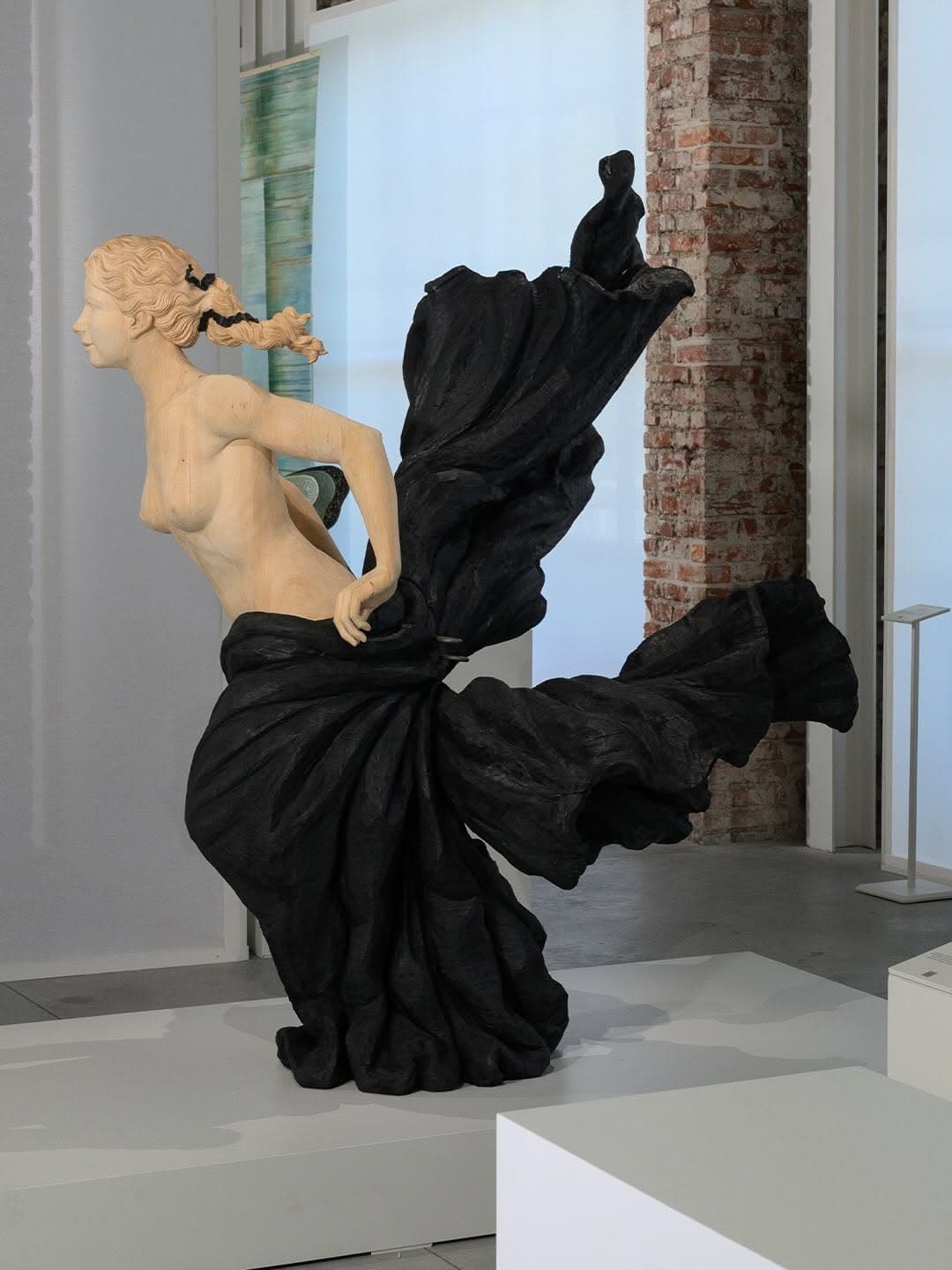
Alba, sculpture with a pulse
“Alba,” by Antonin Martineau and Nicolas de la Barre, reads like a dawn you can touch. Sculpture is often discussed in terms of monumentality, but this piece leans into something more intimate, the sensation of light arriving, not as spectacle, but as a shift in temperature. There is a quiet rigour in how the surfaces hold shadow, how the form feels composed rather than decorated. It is a reminder that transmitting excellence is also about transmitting restraint, the discipline to stop at the exact right moment.
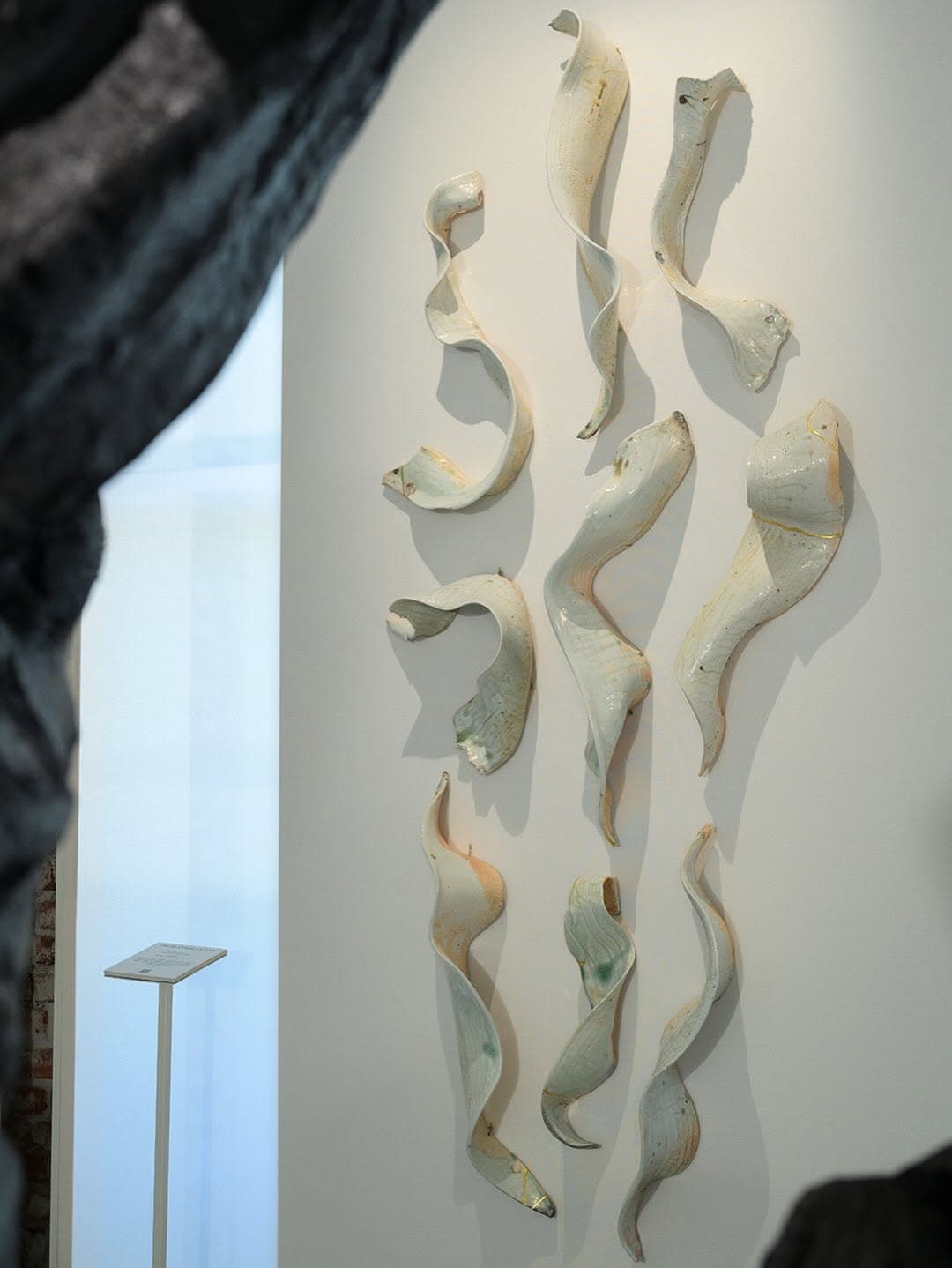
Fire Becoming Ocean, where heat learns to breathe
Caterina Roma and Si Ceramica’s “Fire Becoming Ocean” carries its contradiction beautifully. Ceramics always bear the memory of their making, the kiln’s authority, the risk, the point of no return. Here, that history is not hidden. Instead, it becomes part of the poetry, a work that feels like it has travelled from flame to tide without losing its spine. The object asks you to look closely, to notice transitions, edges, and softening, the way time changes a surface and makes it more persuasive.
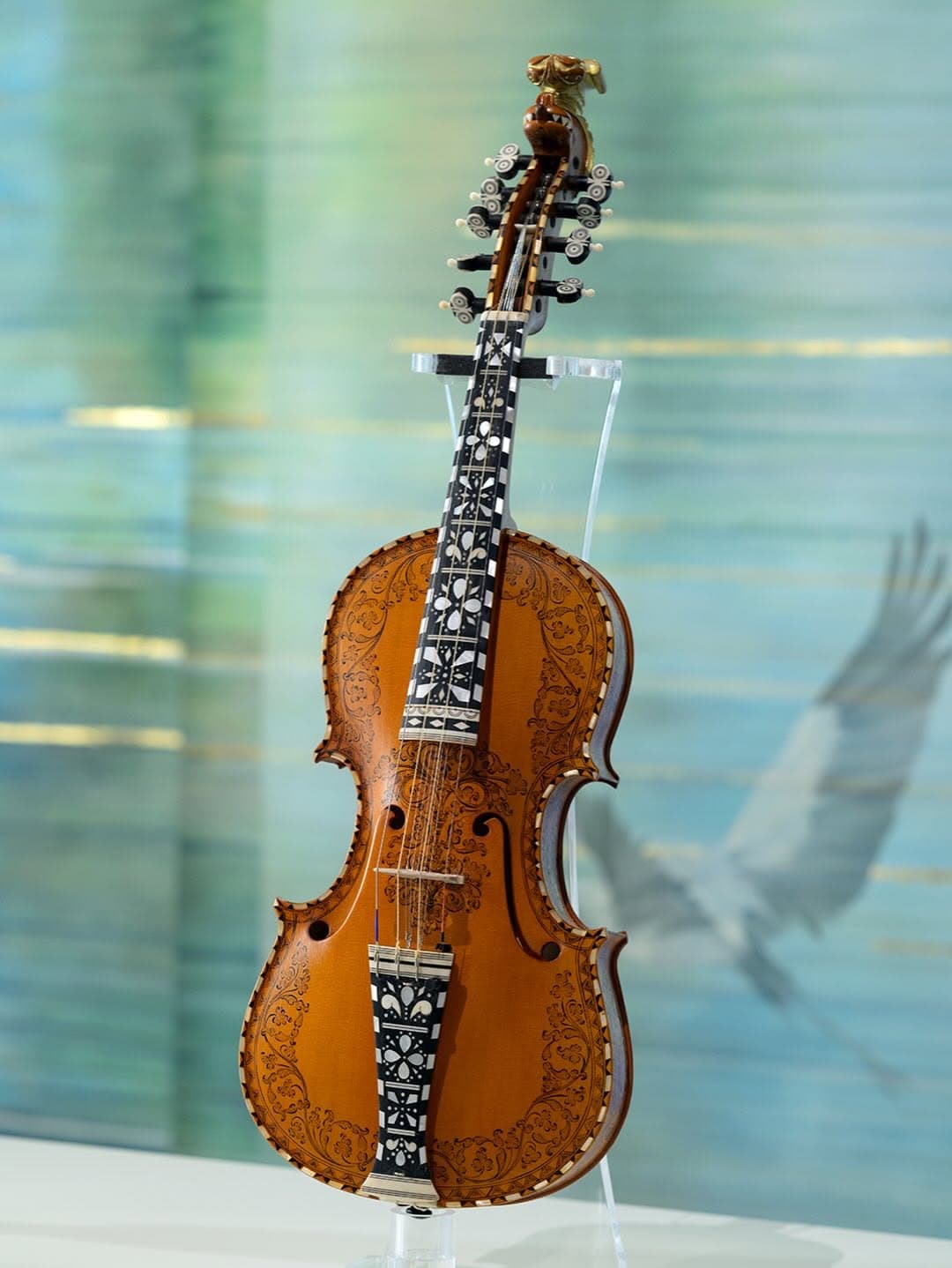
Hardingfele, the Hardanger fiddle as an heirloom that still sings
Ottar Kåsa and Jake Fineberg’s Hardingfele, or Hardanger fiddle, is the sort of piece that makes you reconsider the word “instrument.” It is not simply designed to be played, it is designed to be lived with, to become part of a room’s memory. The carving and decorative language feel specific rather than ornamental, like a dialect. Lutherie is a discipline of microscopic decisions, how wood will respond, where resonance will bloom, where it will tighten. This is where the Fellowship’s point comes into focus, transmitting excellence is transmitting the ability to predict outcome, then daring to chase something more elusive than correctness, character.
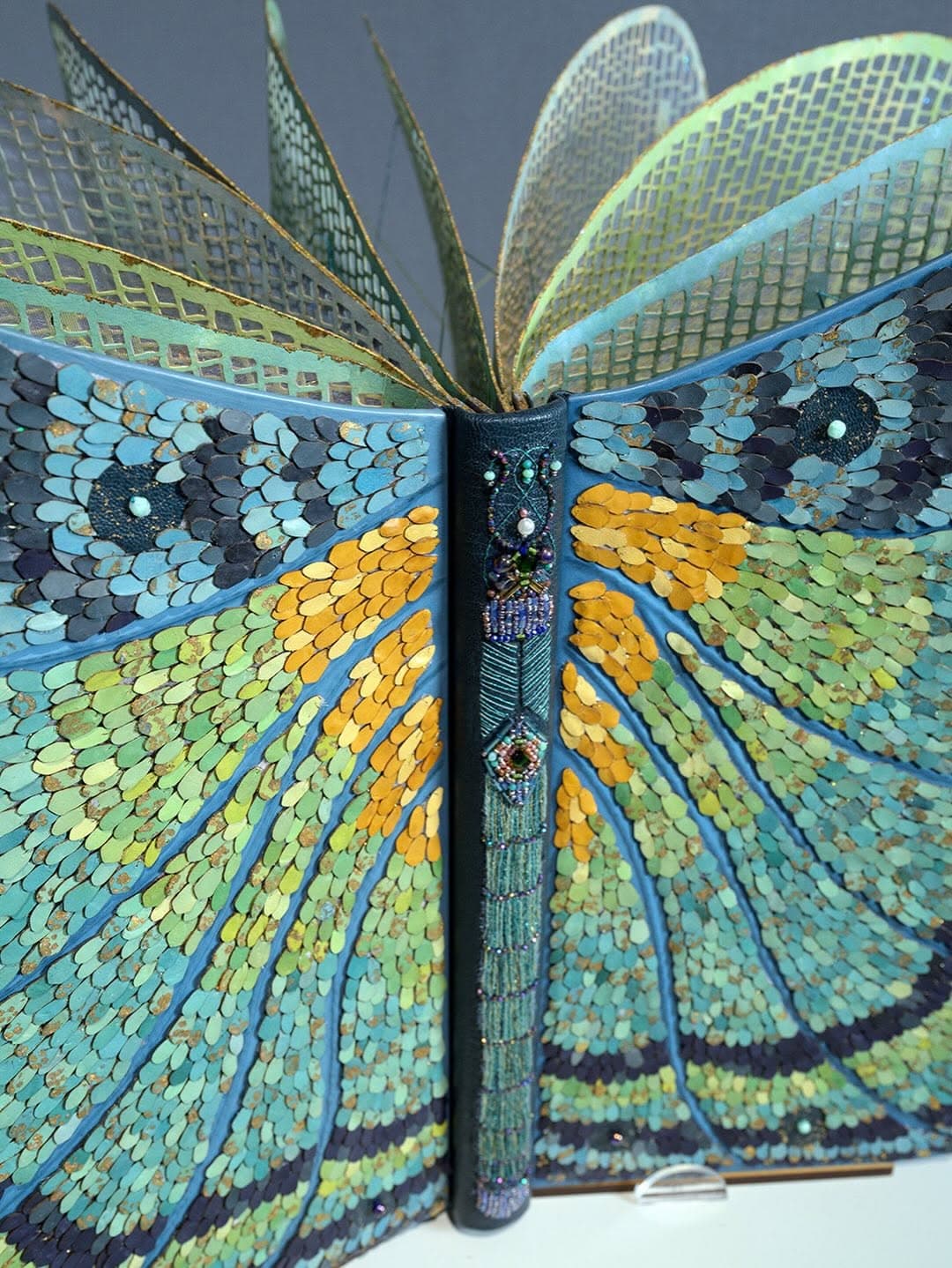
The Butterfly Mind, a book that makes you slow your gaze
With “The Butterfly Mind,” Kate Holland and Emma Vukman prove that bookbinding is not simply about preservation, it is about choreography. The book asks your hands to participate, to open, to pause, to register tactility. Paper has a sound when it moves, and a weight when it turns. Binding is architecture at a human scale, and this work understands that the most luxurious thing a book can offer now is not rarity, but attention.
Why Milan is the right stage for transmitting excellence
Milan has always had a knack for taking the serious and making it seductive, without draining it of meaning. That is why the Homo Faber Fellowship lands here so well. The city is fluent in the language of ateliers, whether you come to it through tailoring, furniture, leather, or, yes, watches. Design Week’s best moments often happen away from the loudest launches, in the rooms where you can stand still long enough to notice a join, a glaze, a hinge, a stitch line.
If you want to stay in that mood beyond the exhibition, consider dipping into bestmagazine.ca’s Luxury section for a wider look at contemporary craft and the maisons that still take it seriously. Our Culture coverage often traces how heritage industries survive the present tense, and the Watches archive is a useful reminder that the finest objects are rarely the loudest ones.
Today’s masters, tomorrow’s talents, and the future in your hands
The line “The future is in your hands” can feel sentimental until you meet the hands in question. In this Fellowship, the relationship between master and fellow is not a branding exercise. It is transmission in the literal sense, techniques passed down, yes, but also standards, vocabulary, and a way of seeing. I left thinking about how rare it is to witness excellence being taught rather than simply claimed.
To understand the broader framework, it is worth exploring the Michelangelo Foundation’s perspective on contemporary craftsmanship at michelangelofoundation.org. And if you want to follow how Jaeger LeCoultre continues to position craft at the centre of its cultural work, the maison’s continuing initiatives are best tracked directly via jaeger lecoultre.com.
Transmitting excellence, at its best, is not about polishing the past until it becomes inert. It is about keeping know how alive, sharp, and slightly dangerous, the kind of skill that can fail if you do not respect it. Milan Design Week offered plenty of spectacle, as it always does. But these creations, in bookbinding, lutherie and ceramics, had something rarer. They had conviction, and the calm confidence of work that will still matter when the noise moves on.
Photo Credits
Cover image courtesy of Jaeger LeCoultre and the Michelangelo Foundation, credit Christian Sinibaldi. Additional images courtesy of their respective owners.