There is something about Lake Como in spring that makes even hardened car people soften at the edges. The water throws back silver, the villas hold their breath, and the lawns at the Concorso d’Eleganza Villa d’Este look clipped to the millimetre. Into that bright, almost cinematic calm, Bugatti at Villa d’Este 2026 arrives with a line up that plays like a family album, nearly a century of the marque’s obsessions laid out in full daylight. It is not simply attendance. It is a statement about continuity, about what the brand chooses to remember, and what it insists on preserving.
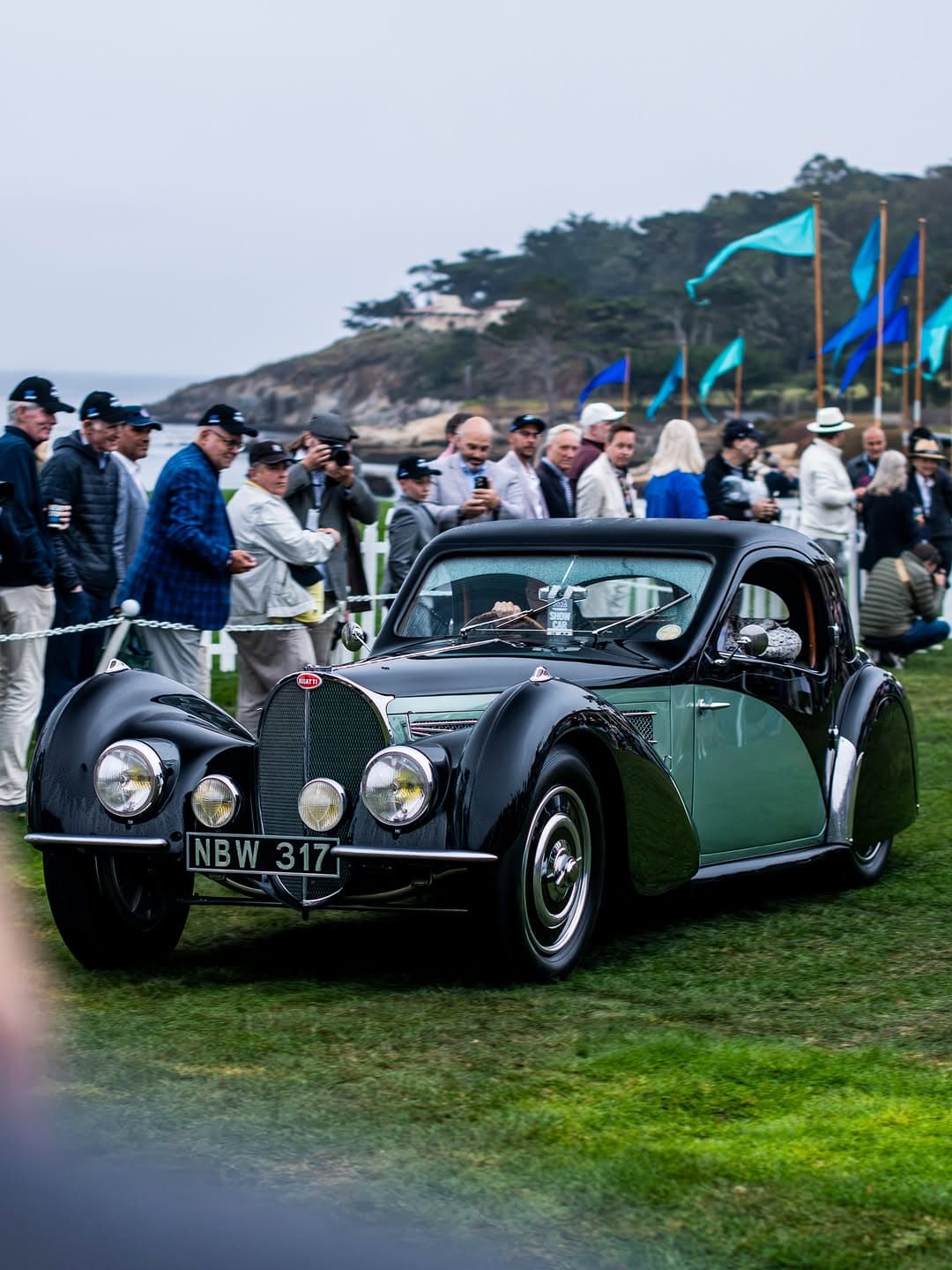
The selection matters because it does not chase novelty for novelty’s sake. Instead it pivots between eras with the confidence of a house that knows its codes. A Type 35 for the early competitive heartbeat. A Type 57 for the long, elegant exhale of grand touring. An EB110 that still carries the intimate patina of one family’s stewardship. And, anchoring the contemporary myth, a Veyron development car that reminds you the modern Bugatti legend was engineered through dust, heat, and repetition, not just through glossy studio photography.
Bugatti at Villa d’Este 2026 and the art of showing your work
Concorso d’Eleganza Villa d’Este is not an arena for noise. It rewards poise, proportion, and stories that can survive a close read. Bugatti’s return in 2026 feels calibrated to that atmosphere, the opposite of a product launch and closer to a curated exhibition. For readers who come to cars the way they come to design, fashion, or architecture, the appeal is that each vehicle here is a kind of primary source document.
From Lake Como, the message is subtle but firm. Heritage is not a logo slapped on a grille. It is the discipline of keeping the receipts, including the awkward, fascinating parts where masterpieces are still being argued into existence. If you want a wider view of how luxury culture works when it is done with restraint, the sensibility is familiar from the way we cover Luxury and the objects that earn their place over time, not over a weekend.
The Veyron Prototype 5.1, Pearl and Ice Blue, and the romance of development
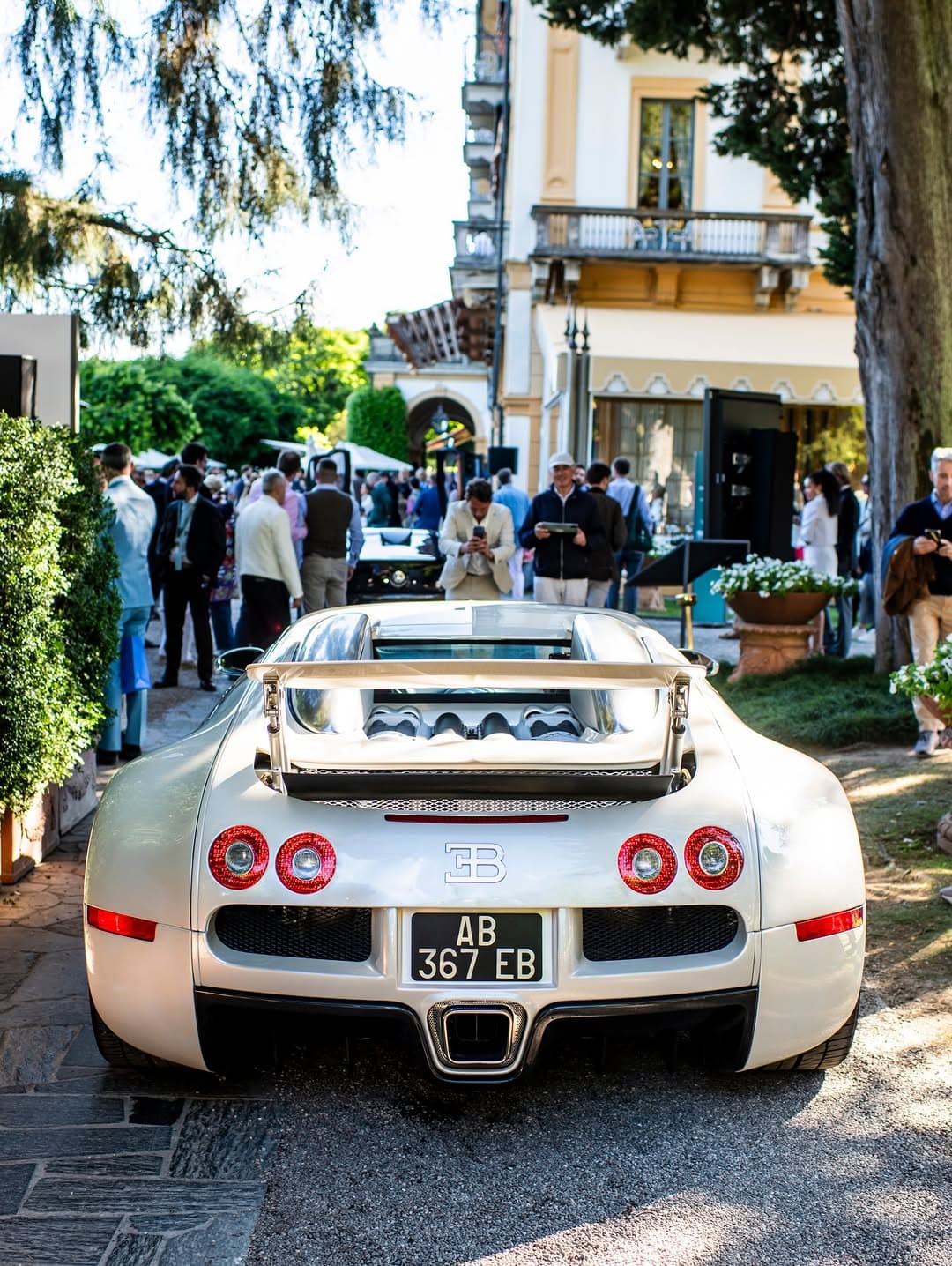
Among the most quietly arresting cars on the lawn is the VEYRON Prototype 5.1, one of six near production development cars built in 2005. That fact alone would make it rare. The more compelling detail is what it was used for. High speed testing, early media presentations, and the kind of proving work that turns a headline number into a real, repeatable reality. This is the car that became a reference point during the final phase of the model’s development, the backstage pass turned artefact.
Its finish in Pearl and Ice Blue reads almost like couture under the Villa d’Este sun, a surface that changes temperature with the light. But it is the backstory that gives it that extra charge. The widely published testing in the Black Rock Desert, an image that still flickers in the collective imagination of the early internet era, lands differently when you are standing a few feet away from the physical object. Desert grit and Como elegance should not coexist so seamlessly, yet here it does, as if Bugatti is reminding everyone that refinement has always depended on endurance.
Now preserved under the brand’s La Maison Pur Sang program, the Prototype 5.1 also signals a broader shift in how modern marques treat their recent past. Preservation is no longer reserved for pre war icons. Contemporary prototypes, the messy middle chapters, are being protected as cultural material. For context on the model’s official mythmaking, Bugatti’s own history pages are worth revisiting at bugatti.com, but the real intimacy comes from seeing a development car presented not as a curiosity, but as a cornerstone.
The EB110, a first delivery, and 33 years of one family’s care
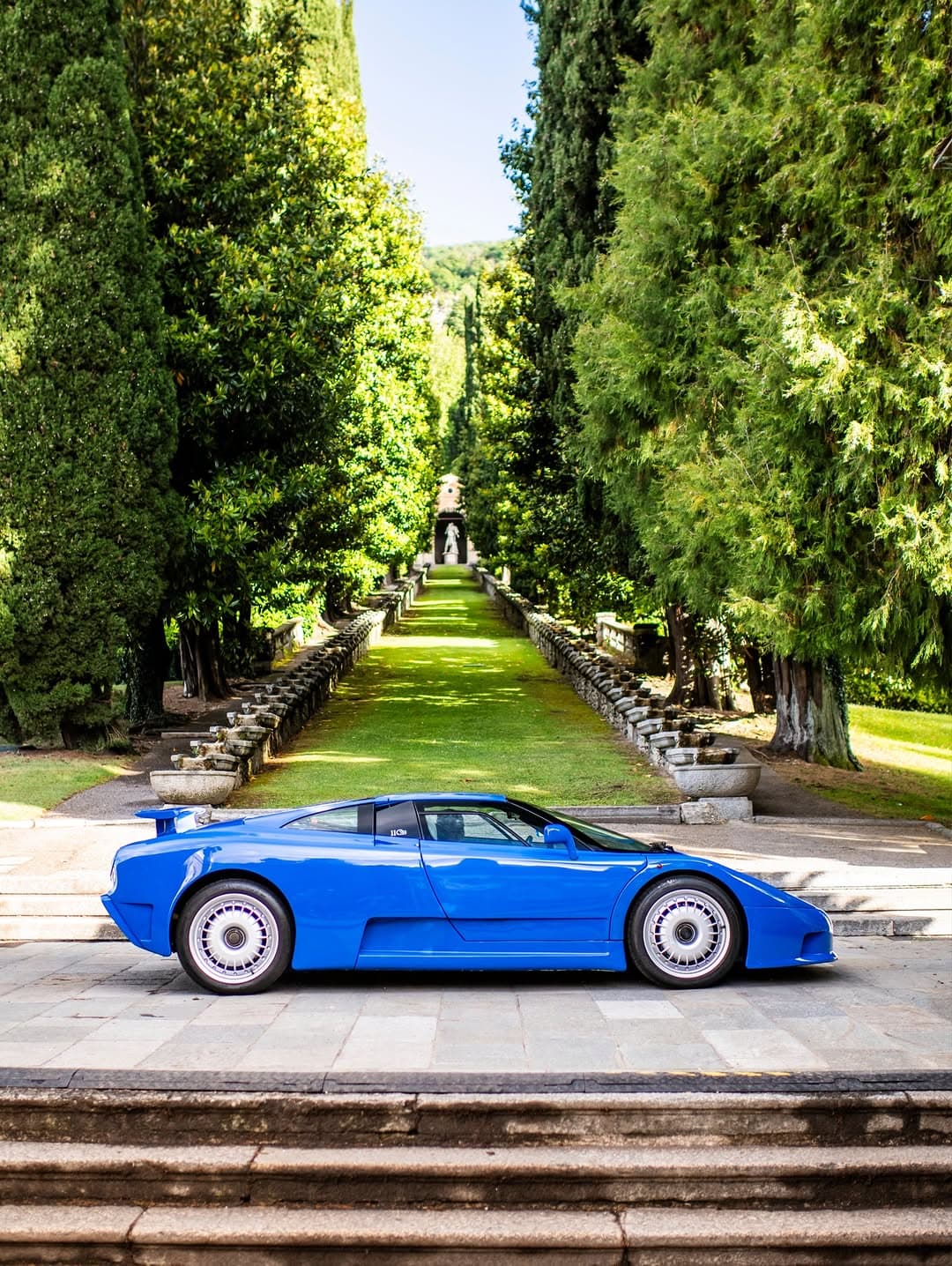
If the Veyron prototype is about the brand showing its work, the EB110 is about a family doing the same. Finished in Blu Bugatti with a Grigio Chiaro interior, this example is the first customer delivered car from 1992, and it remained with the same family for 33 years. In a world where collections are often treated like trading floors, that kind of continuity feels almost radical.
What does longevity look like in a car like this. It looks like familiarity. It looks like the next generation of collectors presenting the car not as a trophy, but as an heirloom, a machine that has lived alongside birthdays, moves, changing tastes, and the slow accumulation of stories. The colour combination is also quietly perfect for Como, the blue holding the lake’s mood, the light interior catching the sun without glare.
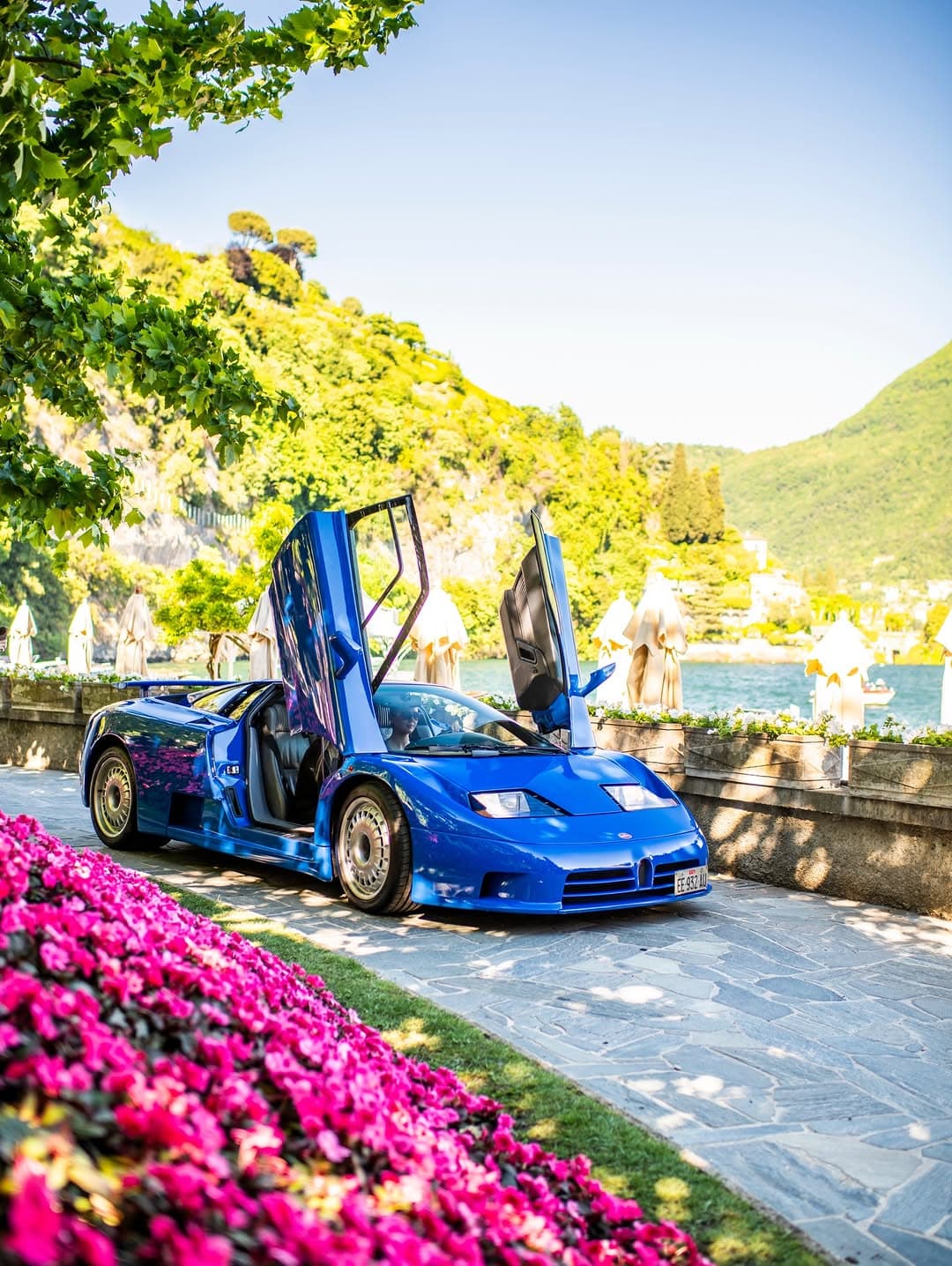
The EB110 occupies a fascinating position in Bugatti lore, an emblem of ambition and reinvention. To understand how Villa d’Este frames such cars as design objects rather than mere engineering feats, the Concorso’s own context at concorsodeleganzavilladeste.com is a useful companion. Yet the emotional centre here is simple. One family kept the faith, and the car arrives with that steadiness intact.
From Type 35 to Type 57, the original Bugatti vocabulary
The Type 35 and Type 57 complete the line up, and they do so with the kind of clarity that makes you realise how much of Bugatti’s identity was established early. The Type 35 represents the brand’s early competition heritage, a car whose very silhouette seems to lean forward, as if it is still impatient to get back to the circuit. Even at rest, it reads as purposeful, a lesson in how beauty in sporting design often comes from restraint and intent rather than ornament.
The Type 57, by contrast, speaks in a grand touring register. It is the kind of car that makes you think about travel rather than victory, about arriving rather than winning. Its presence at Villa d’Este makes sense because the event itself is a study in arrival, in the choreography of elegance. Between the two, you can trace the curve of the brand’s DNA, competition and couture, speed and ceremony.
For readers who follow the culture around these moments, not just the cars themselves, this is where our Culture coverage intersects with our Automobile lens. Villa d’Este is a salon, and Bugatti is fluent in salon language.
Why Bugatti at Villa d’Este 2026 feels especially timely
It would be easy to treat this appearance as a simple retrospective. It is more interesting to see it as a hint about where luxury is heading. The future is not only about what is next, it is about what is kept, what is catalogued, what is given the dignity of being remembered properly. A prototype like the VEYRON Prototype 5.1 being preserved with institutional seriousness. A first delivered EB110 returning with family provenance. Early icons placed not behind glass, but into conversation with the modern era. Bugatti at Villa d’Este 2026 is, in other words, a lesson in narrative control, delivered with taste.
On the shores of Lake Como, under a bright spring sun, the brand does not need to shout. The cars do the speaking, and the selection spans nearly a century without feeling like a timeline. It feels like a single, continuous idea, refined, challenged, and reasserted across generations.
Photo Credits
Images courtesy of their respective owners.