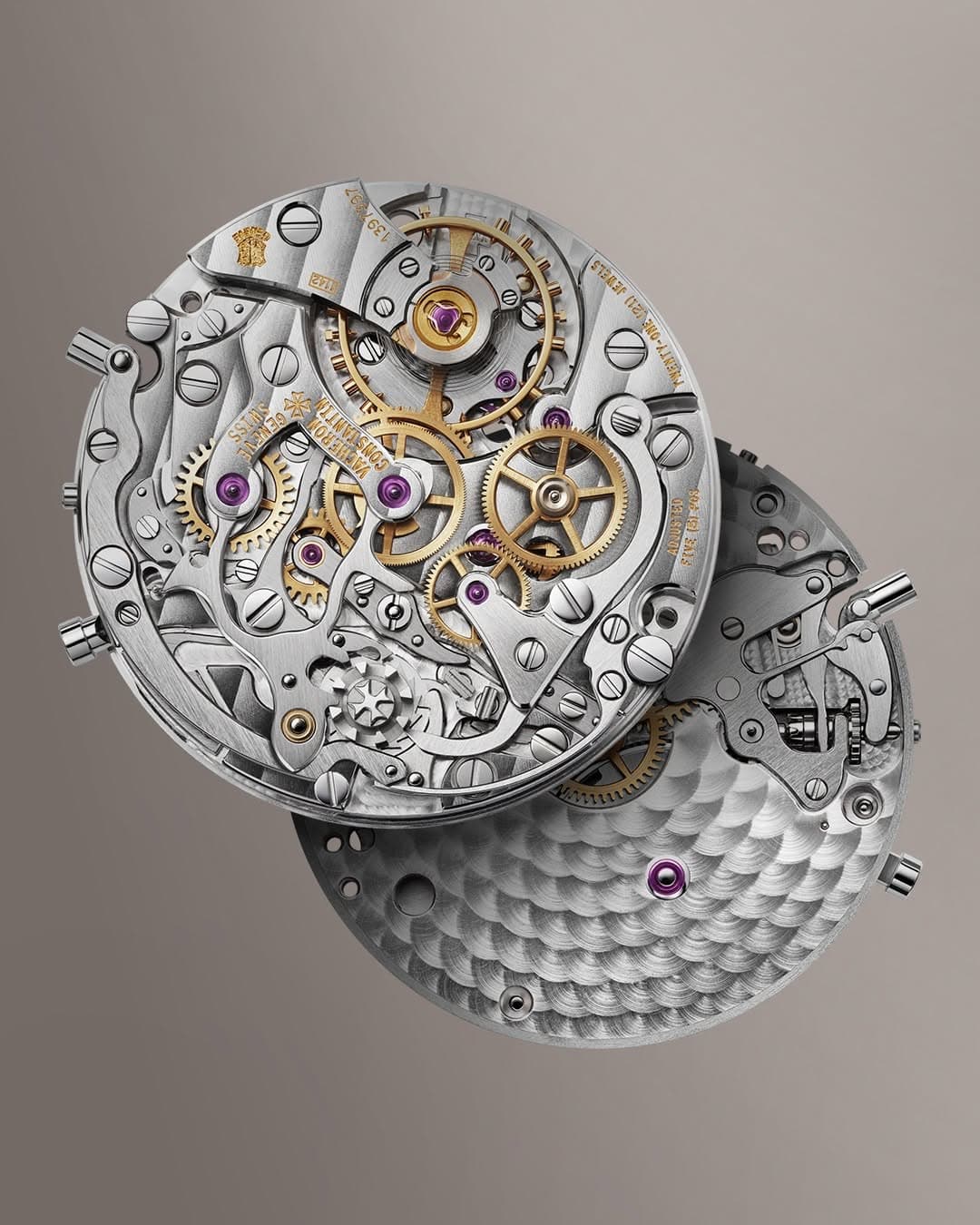
The heart of craftsmanship is rarely loud. It does not announce itself from across a room, it waits for you to lean in. Turn over the Vacheron Constantin Historiques Cornes de vache 1955 and the lesson is immediate. Beneath a transparent sapphire crystal caseback, Calibre 1142 opens like a private atelier, all disciplined geometry and human touch, the sort of finishing that rewards patience more than spectacle.
There is a particular intimacy to a manual winding chronograph. You do not just wear it, you participate. The ritual of winding is a small daily agreement with time, and with the people who built the thing in the first place. In an era that loves frictionless convenience, that quiet resistance feels almost radical.
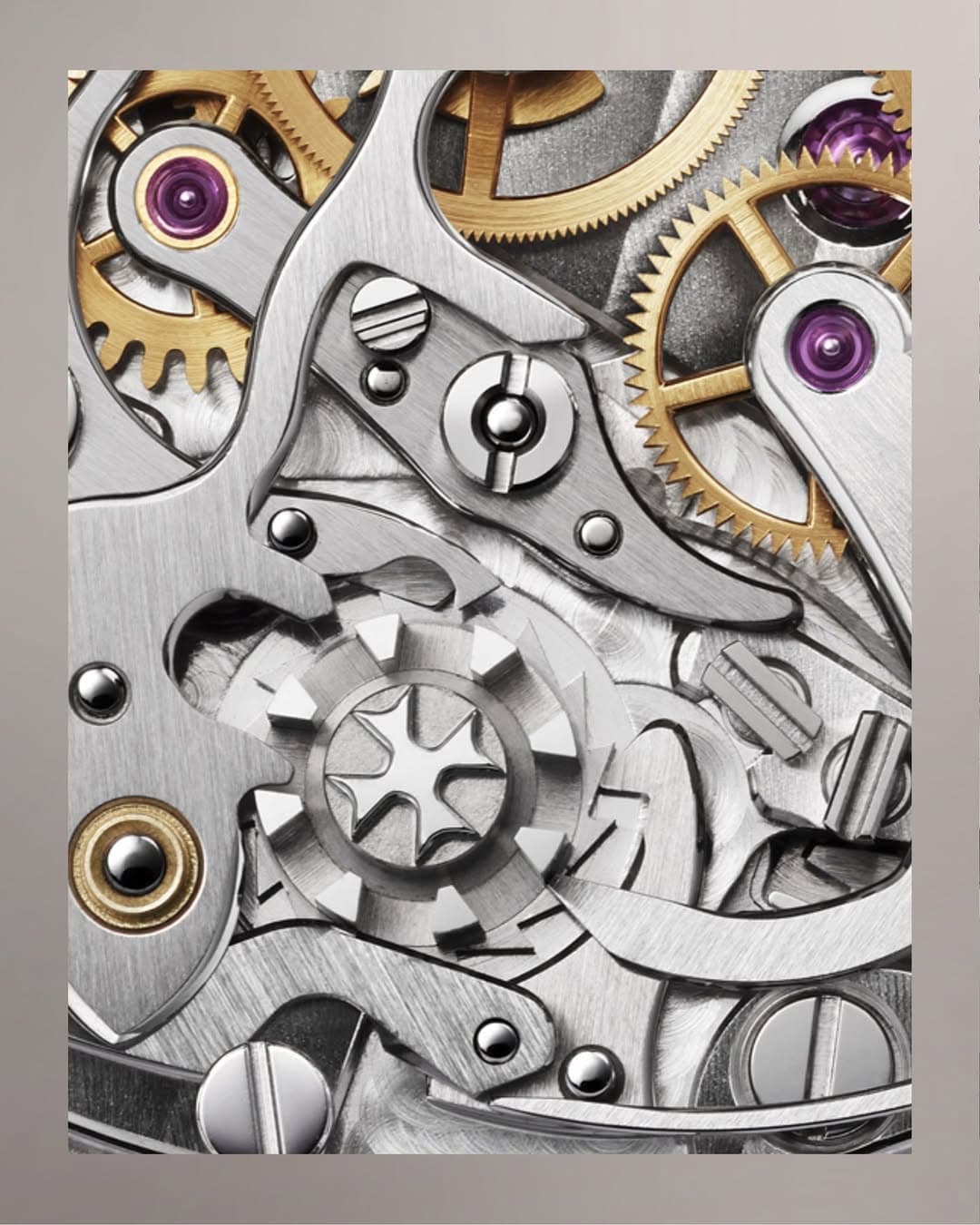
The heart of craftsmanship inside Calibre 1142
Calibre 1142 is constructed from 164 components, and the number matters less than what it implies: someone has to touch, shape, bevel, and decorate an astonishing amount of metal so that it looks inevitable. The dial side is circular grained, the back is dressed in Côtes de Genève, and the whole mechanism beats at 21,600 vibrations per hour. It is precise, yes, but also expressive, like penmanship. The minute differences are the point.
The most telling detail is the column wheel, crowned with a Maltese cross shaped screw head. You do not have to be an expert to feel the symbolism. Vacheron Constantin has always understood that heritage is not a marketing line, it is a set of behaviours repeated over generations. This is one of them, a signature tucked into the machinery where only the curious will notice.
If you want the official facts, Vacheron Constantin lays out the model story cleanly. What the website cannot quite communicate is the emotional temperature of the movement in the flesh, the way polished bevels catch light like a fine edge of glass, then disappear as you tilt your wrist.
A chronograph that chooses tradition, on purpose
Chronographs can be brash. This one is not. The Cornes de vache, those cow horn lugs that give the 1955 its name and its softly architectural stance, carry a mid century confidence that feels designed for people who notice proportion. Turn the case back over and you understand the design argument in full. The front is restraint, the reverse is abundance.
For readers who collect with a broader lens, it is worth placing this watch in the larger conversation about why mechanical crafts endure. The collector world often treats finishing as a scoreboard. I prefer to think of it as culture. The best examples feel less like luxury and more like literacy, an ability to read what the maker is saying through surfaces and edges.
What finishing really means, beyond perfection
Hand bevelled components sound like a simple boast until you have seen them up close. Machine finishing can be immaculate, but it is emotionally blank. Hand work has nuance. Angles soften almost imperceptibly, corners feel intentional rather than simply sharp, and the decoration has a cadence. You start to sense where the artisan lingered, where they moved quickly, where they insisted on an extra pass because the light was not yet right.
That is, ultimately, the heart of craftsmanship. Not flawlessness, but judgement. The kind of judgement that comes from repetition, tradition, and a standard that has nothing to do with trends.
For a deeper grounding in how movements are evaluated, the Federation of the Swiss Watch Industry is a useful reference point, and Hodinkee remains one of the more readable places for context when you want history and critique alongside desire.
How to look at a movement like an editor, not a spec sheet
Start by letting your eye travel along the bridges. Do they feel considered, or merely arranged. Watch how the Côtes de Genève behave as the light shifts, the stripes should feel alive rather than stamped. Look for the little moments, a delicately finished screw, a crisp edge where polish meets brushing, and that column wheel that holds court at the centre of the chronograph’s choreography.
If you find yourself wanting more of this kind of story, the watch world opens neatly from there. Our own Watches coverage is built for readers who want to understand the why, not just the what. For the wider notion of craft as a cultural appetite, there is an echo in how we write about Luxury, and even in the way style signals shift across Culture.
Because the truth is, a caseback like this is not only about watches. It is a small argument for caring. For looking closer. For choosing objects that do not merely perform, but speak.
Photo Credits
Cover image courtesy of Vacheron Constantin. Additional images courtesy of their respective owners.