At the 79th Cannes Film Festival, modern femininity did not whisper, it held its ground. This year, the story of the red carpet was less about spectacle for spectacle’s sake and more about a precise kind of elegance, the sort that reads clearly from a distance yet rewards you up close. Put plainly, Puig at Cannes felt like a well edited wardrobe in motion, confident, tactile, and unapologetically current.
The most compelling looks were not trying to outshine cinema. They were in conversation with it. The sheen of satin under flashbulbs, the weight of tulle catching the sea air, the disciplined line of a bodice meeting the edge of an open back, each detail was doing narrative work. For those who pay attention to construction as much as celebrity, the week offered a masterclass in how to dress with composure at the world’s most scrutinised staircase.
Puig at Cannes, Where Craft Becomes Character
There is a particular kind of pressure at Cannes that even seasoned stylists speak about in lowered voices. It is not just the cameras. It is the context. The Croisette is saturated with history, and anything too eager can feel oddly lightweight. What landed this season was the refusal to beg for attention. Puig at Cannes read as designed for women who know what a room is, and how to take it without raising their voice.
If you find yourself wanting to zoom out from the red carpet and into the wider fashion conversation, our ongoing coverage in Fashion and Celebrity tracks how these house codes travel beyond premieres, into the way we actually dress, desire, and collect. Cannes is theater, yes, but it is also a forecasting tool.
Carolina Herrera, A Flash of Red and the Discipline of Silver
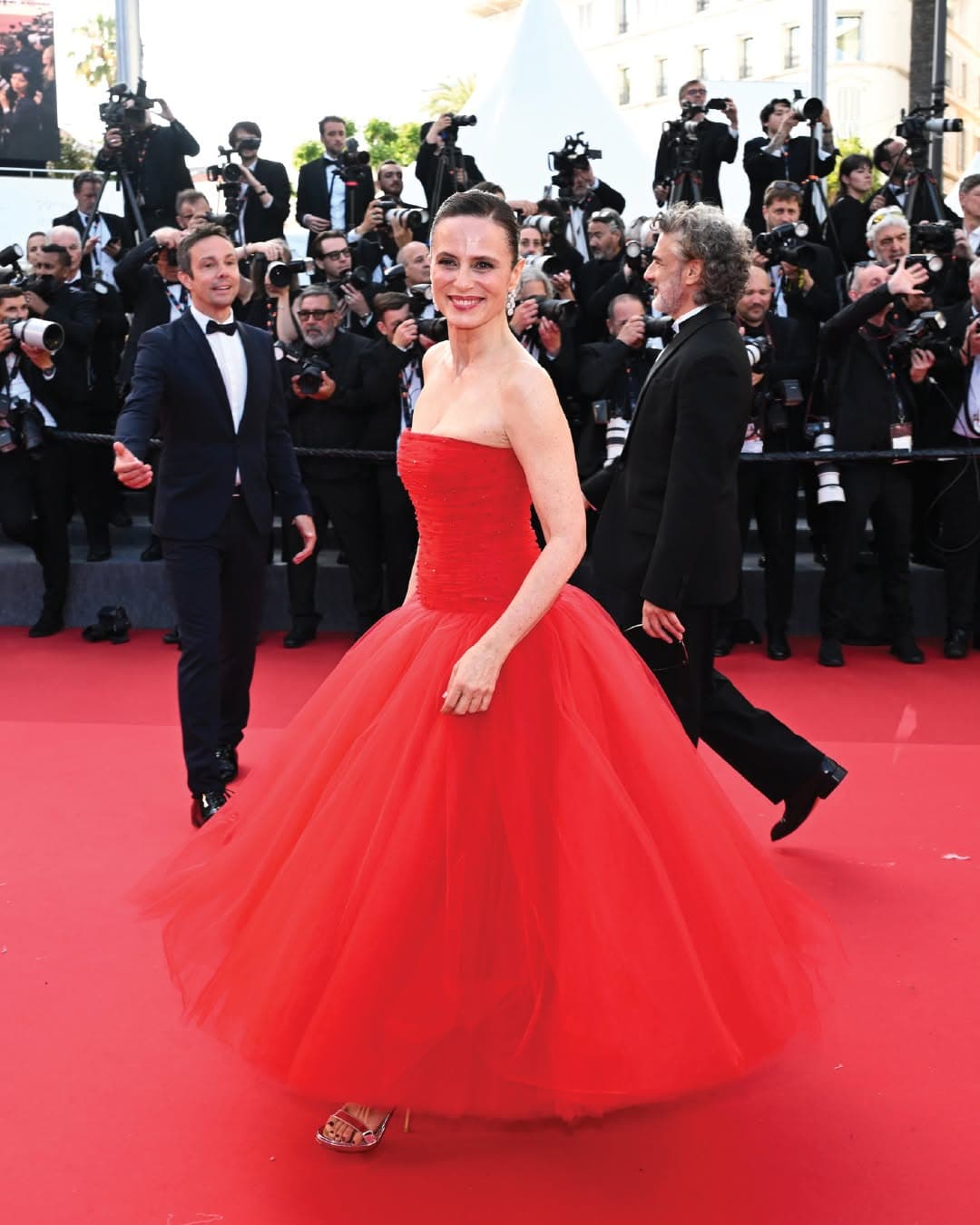
Carolina Herrera has always understood the power of decisiveness. Not loudness, decisiveness. Aitana Sánchez Gijón arrived at the Amarga Navidad screening in a vibrant red Spring Summer 2025 look that cut through the usual black column gowns like a ripe fruit on a white tablecloth. Red at Cannes can so easily become costume. This did not. It looked intentional, modern, and exactly calibrated for evening light on the Riviera.
Ester Expósito, meanwhile, took another Herrera route, a shimmering silver Pre Fall 2026 creation that leaned into reflection rather than embellishment. Silver can read cold when it is handled without restraint. Here it felt clean and cinematic, as if the dress had been designed with the idea of a moving image in mind, not a static photograph.
To understand why these moments worked, it helps to look at the house itself, which still treats line and polish as non negotiables. You can trace that sensibility through Carolina Herrera, where eveningwear is less about novelty and more about clarity, the kind that survives trend cycles.
Nina Ricci, The Soft Weapon of Sensuality
Nina Ricci’s best work has always contained a quiet tension, romanticism that knows what it is doing. On this carpet, it was that balance of sensuality and sophistication that kept catching the eye, not through shock, but through proportion.
Demi Moore wore a tailored black look that might have stopped at minimalism, if not for the voluminous tulle skirt that shifted the silhouette into something more deliberate. It was an old Hollywood gesture, reframed with contemporary control. The tulle did not froth, it asserted.
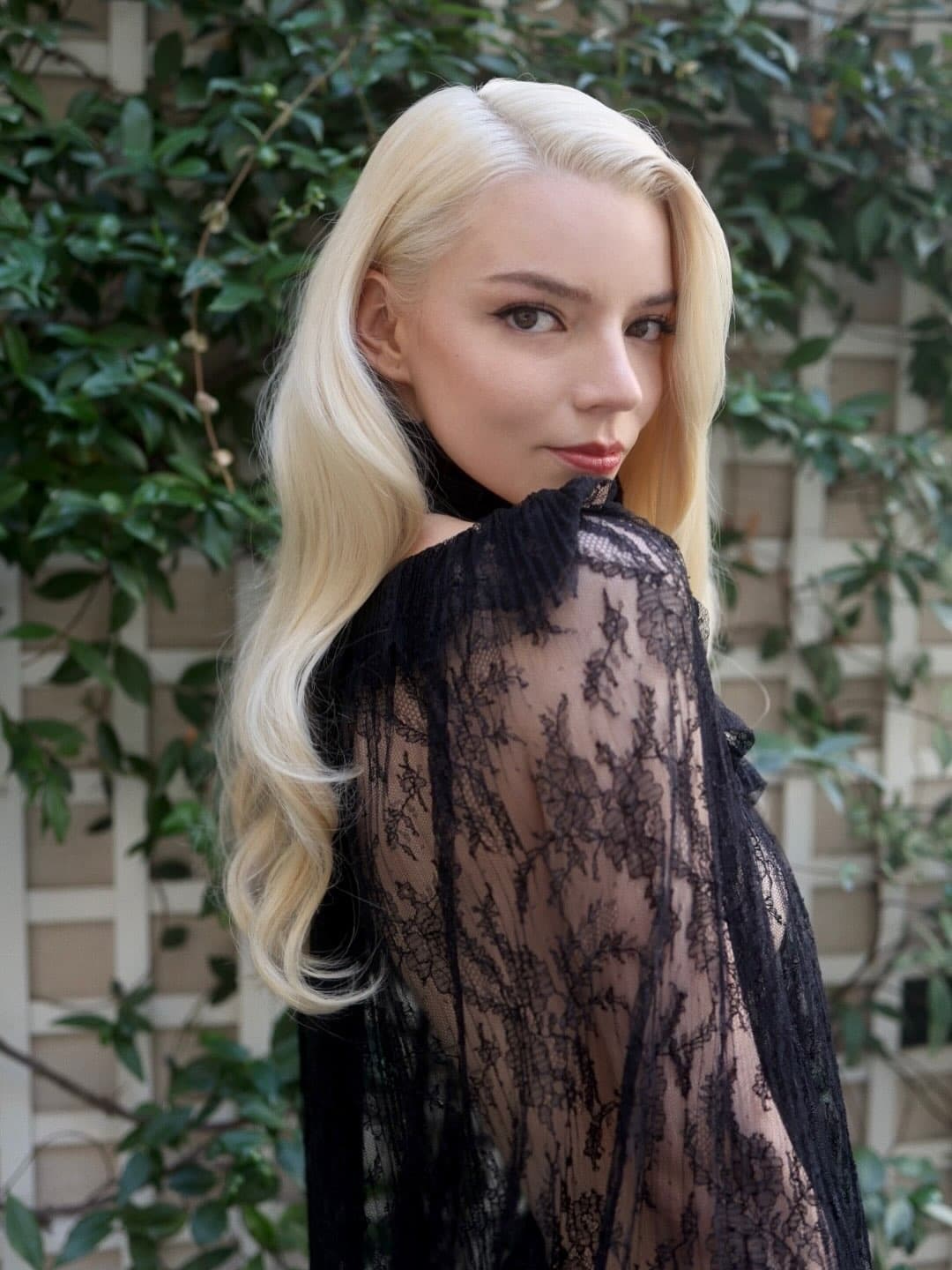
Cindy Bruna’s sheer, flowing look layered over a corseted bodysuit played with reveal and restraint in an especially Cannes appropriate way. Sheerness is everywhere, yet it rarely feels specific. Here it did, because the structure underneath gave the transparency a purpose.
Bella Kim’s satin top paired with a tiered skirt, adorned with tonal bows, delivered a pleasing study in texture. The bows were not saccharine, they were architectural, quietly amplifying movement. Thylane Blondeau’s long sleeved black look with an asymmetrical pleated skirt was the inverse, more severe at first glance, then unexpectedly dynamic as the pleats shifted with every step.
And then there was the white silk satin gown worn by Chantal Monaghan, an open back that felt less like a flourish and more like a final sentence, clean, confident, and hard to forget. Ester Expósito also stepped out in a Nina Ricci open back silhouette, which is worth noting, because it suggests a wardrobe logic rather than a one off gamble. The open back, in Ricci’s hands, becomes a signature. Sensual, yes, but never needy.
For a closer look at the house language behind these choices, Nina Ricci is a useful window, especially if you care about the difference between a dress that photographs well and a dress that actually lives well on the body.
Why These Cannes Looks Felt So Current
It is tempting to treat red carpet fashion as a parallel universe, but the better read is that it compresses the direction of travel. What stood out about Puig at Cannes was the emphasis on silhouettes that communicate authority without erasing softness. The dresses did not rely on novelty fabrics or stunt details. Instead, the message came through in craft, a seam that holds, a skirt that moves with intelligence, an exposed back that feels composed rather than precarious.
There is also a broader cultural shift at play. The mood has moved away from looking perpetually available to the gaze, and toward choosing how to be seen. These looks, across both Carolina Herrera and Nina Ricci, understood that distinction. They gave us glamour with boundaries, and that is modern femininity in 2026.
For readers tracking how runway codes turn into real world dressing, bookmark our Luxury section, where we regularly map the distance between the Croisette and the closet. And if you want to follow the larger ecosystem that made these moments possible, Puig’s brand universe is outlined at Puig, a reminder that fashion at Cannes is rarely a single image. It is a strategy, a story, a point of view.
Photo Credits
Cover image and additional images courtesy of their respective owners.