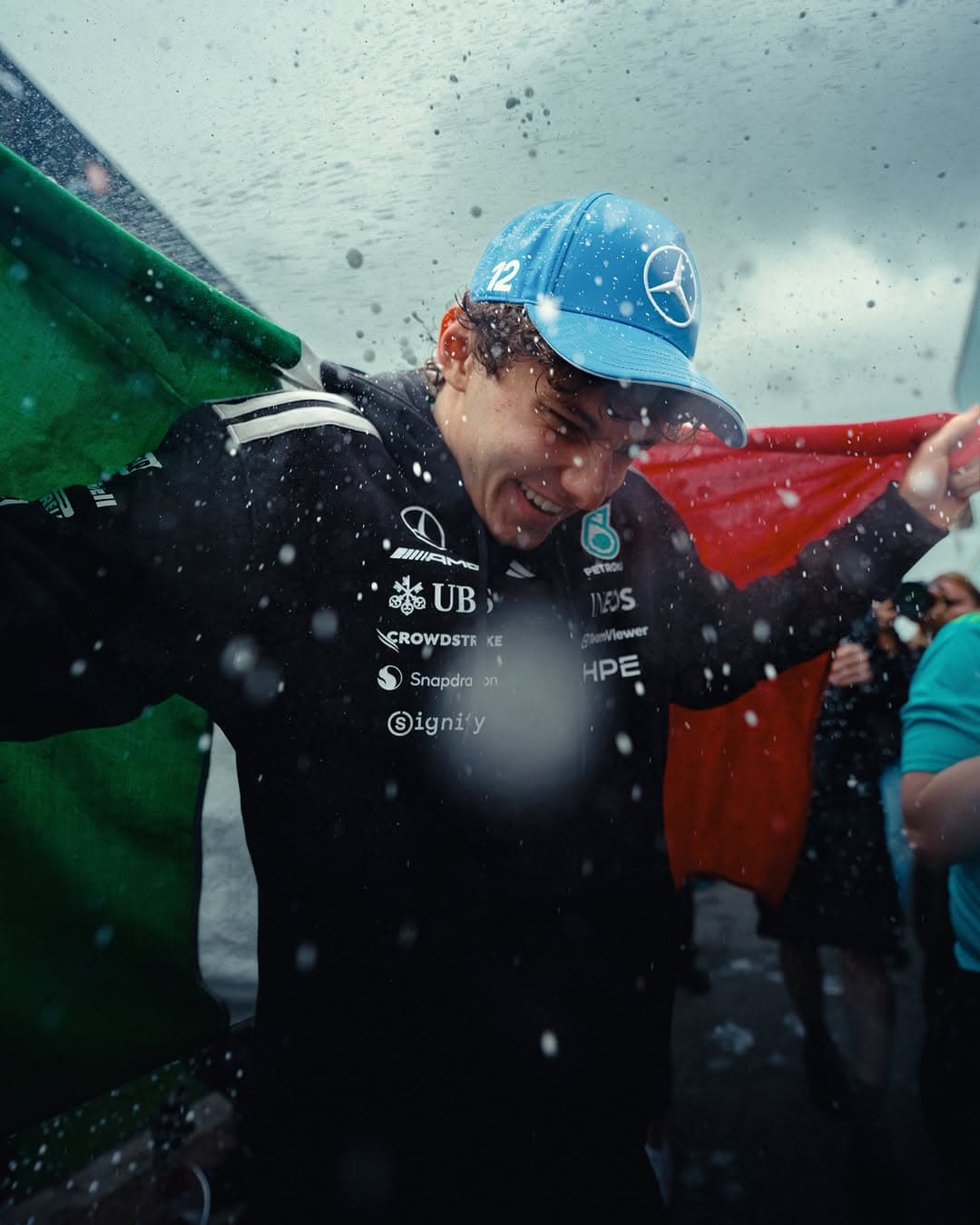
There are wins that feel like fireworks, loud, clean, uncomplicated. And then there are wins that taste like metal at the back of your throat, earned in the margins, shadowed by what might have been. P1 in Montreal belongs to the second category. The kind of result that leaves a driver sounding older than his years, not because he is performing maturity, but because the Circuit Gilles Villeneuve has a way of demanding it.
Andrea Kimi Antonelli did not dress this weekend up in easy triumph. He called it, plainly, the most intense weekend of the season so far. He spoke about learning the car and learning himself. He admitted the win was not the way he wanted it to land, and he made space, publicly, for George and the team after what he described as an amazing weekend. In a paddock that often confuses volume for conviction, that restraint reads as confidence.
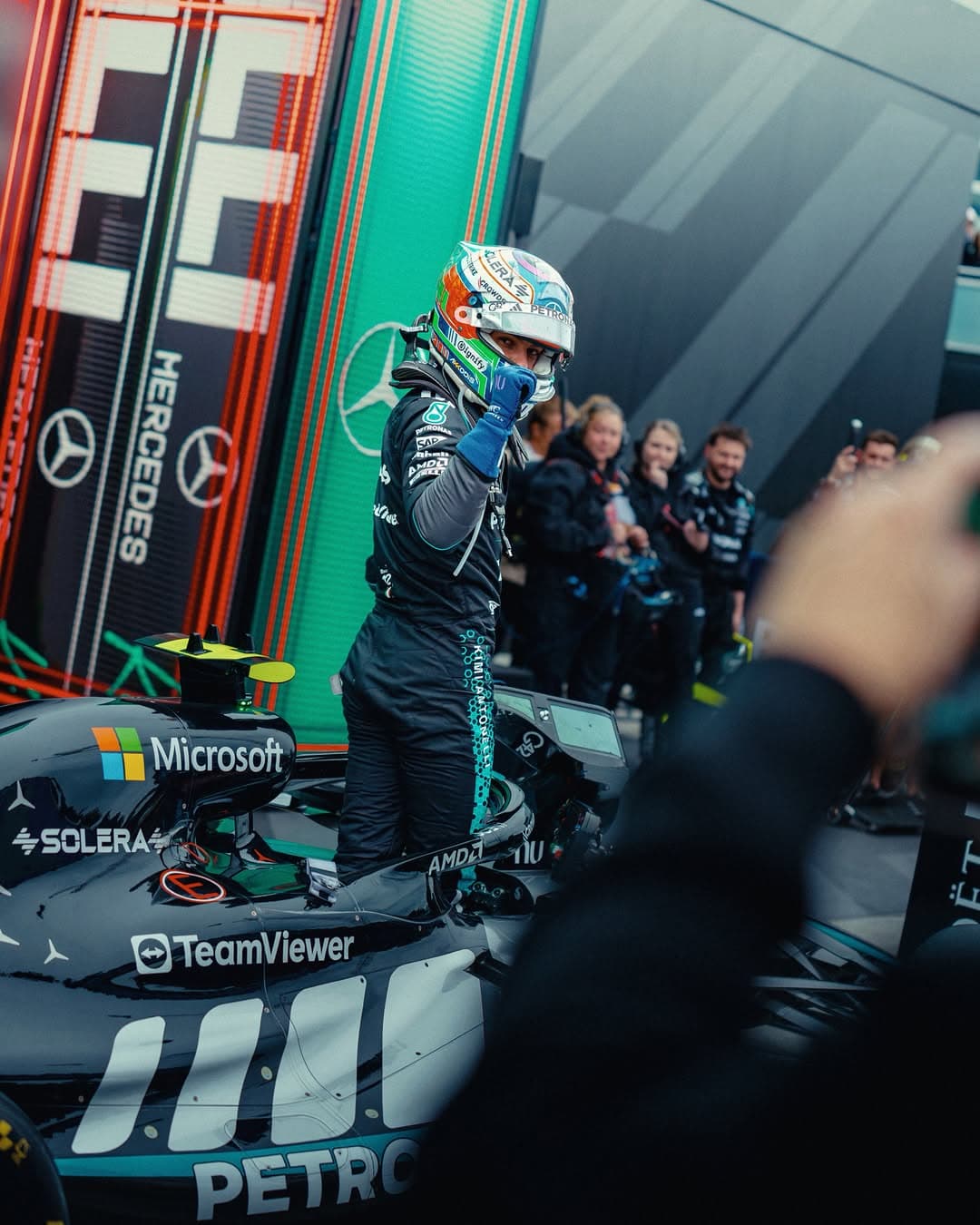
P1 in Montreal and the particular pressure of a streetwise circuit
Montreal always looks festive from the outside, the river air, the terraces, the city’s bilingual sparkle. Trackside, it is less romance than reality check. The circuit rewards late braking and sharp nerve, but it punishes the tiniest lapse with a wall that feels abruptly close, as if the asphalt has decided it has had enough of you. The margins, famously, are slim. That is part of why P1 in Montreal carries a different weight than a win earned on a broad, forgiving runway of a track.
You can feel it in the way drivers describe the place, not in grand declarations, but in the little details. A car that is perfect through one chicane suddenly feels nervous over a kerb that looked harmless on Friday. A confidence that felt steady in practice becomes something you have to rebuild, corner by corner, when it matters. Montreal makes you negotiate with yourself.
What Antonelli’s quote reveals, beyond the stopwatch
When Antonelli says he learned a lot about the car and himself, it is tempting to treat it as the usual weekend wrap up. It is not. There is an emotional specificity in the way he frames it. He singles out the battle with George as genuinely fun, and he implies it would have remained intense until the end. Then he draws a line, not to claim moral high ground, but to acknowledge the uncomfortable truth of racing, that outcomes can hinge on moments no driver would choose as their preferred ending.
That is what distinguishes a driver you watch from a driver you follow. Not just the speed, but the ability to narrate the speed without turning it into theatre.
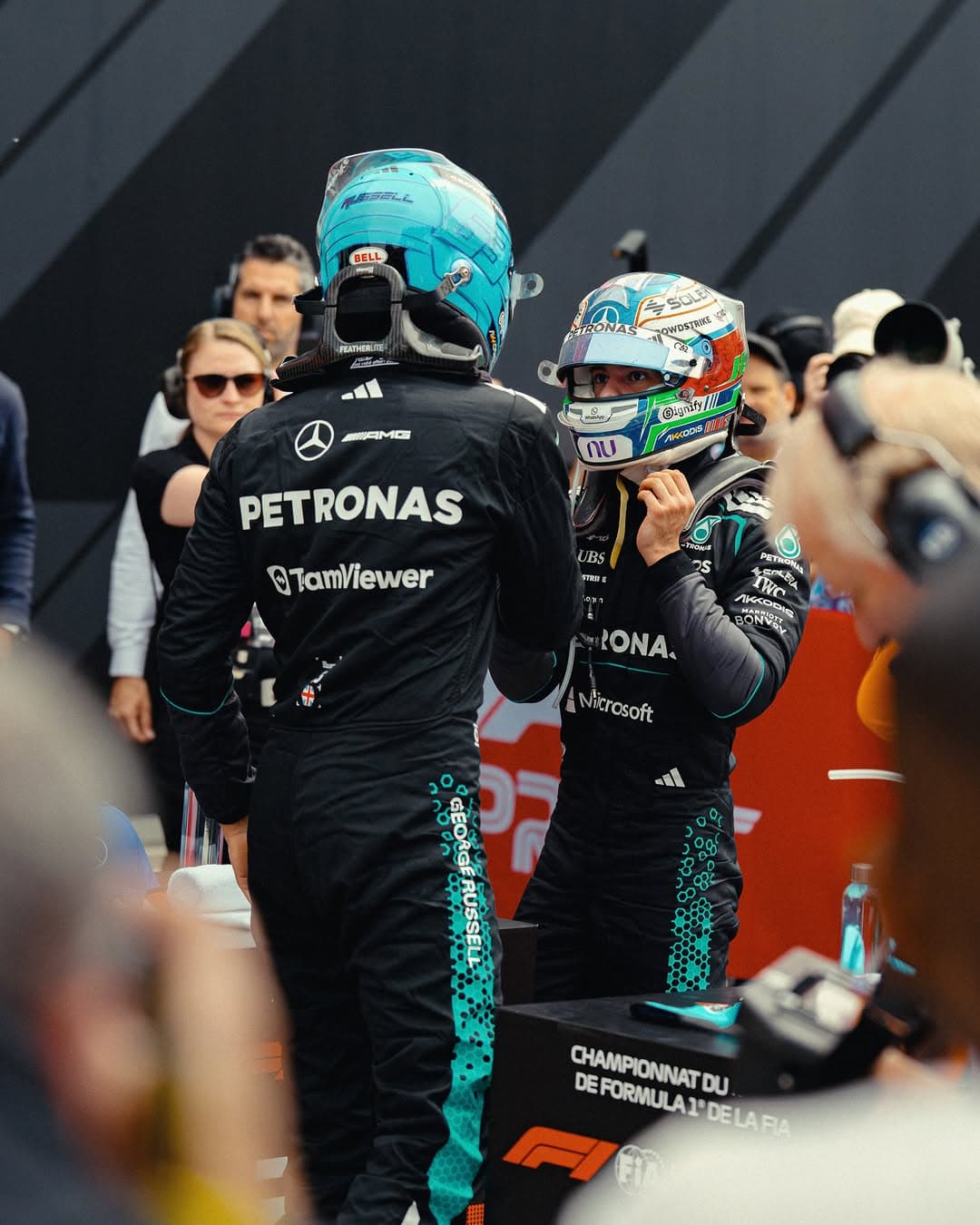
The duel with George, and why the best rivalries look elegant
Rivalry, when it is good, is clarifying. It sharpens the senses. It forces you to drive with intention rather than instinct alone. Antonelli’s comment about battling George lands because it is recognisably sincere, the admission that the fight itself was part of the pleasure. There is a certain old fashioned dignity in that. It recalls an era when competition was a craft, not a content strategy.
He also makes an important distinction. He is happy to win, of course. But he does not romanticise the way it happened, and he chooses sympathy over smugness. In a sport where narratives are often flattened into winners and losers, his approach adds texture.
If you want the official numbers and session breakdowns, Formula 1 remains the cleanest source. For the deeper mechanics of what Montreal tends to expose in car setup and tyre behaviour, Motorsport.com is reliably nuanced. But the human story, the part that lingers, is right here in his language.
From Montreal to Monaco, the calendar as character study
There is something deliciously abrupt about leaving Montreal and turning your mind to Monaco. Canada is wide, brisk, and faintly wild around the edges. Monaco is tight, choreographed, and unapologetically glossy, as if the whole principality has been polished for the camera. That whiplash is part of the season’s charm, and part of its cruelty.
Antonelli signs off with a simple promise, home time, then Monaco. If Montreal is about bravery with consequences, Monaco is about precision with no margin for improvisation. The idea of carrying the lessons of P1 in Montreal into the slow burn pressure of Monte Carlo is, frankly, intriguing. Not because it guarantees anything, but because it sets the stage for an increasingly sophisticated driver to test what he has just learned against the sport’s most theatrical exam.
What you can watch for in Monaco, if you care about craft
Monaco does not flatter. It rewards drivers who manage their rhythm, who can keep their impatience under a silk glove, who know when to accept that the lap is not salvaged and reset without drama. If Montreal coaxed out Antonelli’s candour, Monaco may demand his composure. It is not the same skill, but it is adjacent. And that is where careers quietly turn.
If you are following the season through a broader lifestyle lens, not just lap times, consider dipping into bestmagazine.ca’s Automobile coverage for the way racing culture intersects with design, travel, and taste. For the off track theatre, the people watching, the mythmaking, Celebrity is often the better compass than the grid itself. And because watches are never just watches in this world, Watches has a way of decoding the sport’s quieter status signals without losing the plot.
Why P1 in Montreal feels like a turning point, even if it is not one
It is easy to over interpret a single weekend. The season is long, the variables too many, and luck remains an uninvited guest with its own key. Still, P1 in Montreal feels significant because the driver himself framed it as education, not coronation. He sounded interested in the work, not the applause. He sounded, in other words, like someone who understands that greatness is not a mood, it is a habit.
And perhaps that is the most luxurious thing in a sport addicted to spectacle. The quiet insistence on standards.
Photo Credits
Cover image courtesy of Andrea Kimi Antonelli. Additional images courtesy of their respective owners.