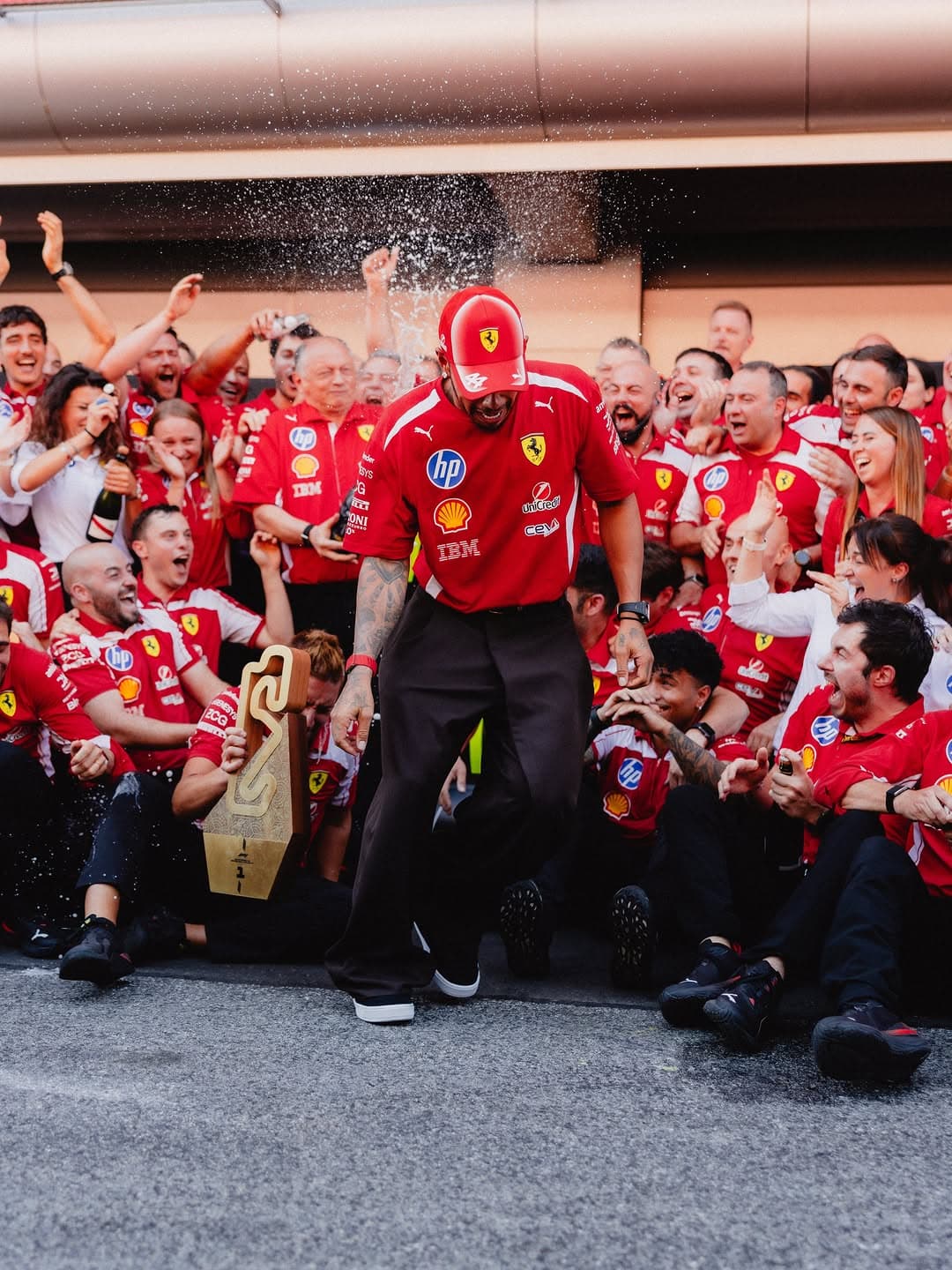
There is a particular electricity to a Lewis Hamilton Ferrari win, not because it flatters a narrative we already know, but because it dares to rewrite it. Barcelona delivered the kind of afternoon that feels less like sport and more like theatre, all heat haze and high stakes. When Hamilton speaks about finally winning in red, you can hear the exquisite friction of relief against responsibility. A driver who has lived at the sharpest edge of expectation does not gush, he measures. And yet the gratitude arrives unfiltered, a full heart aimed at Scuderia Ferrari, at Maranello, at the people who make progress look inevitable only after the fact.
Ferrari is not just a team, it is a cultural weather system, a moving pressure front of history, myth, and appetite. For Hamilton to win in that shade of red is to step into a story that has swallowed larger than life characters before him. He does it with an intimacy that many champions avoid. He names the dark times, he admits the heaviness of it, he lets the fans into the private chambers of doubt. That is the rare part, not the trophy.
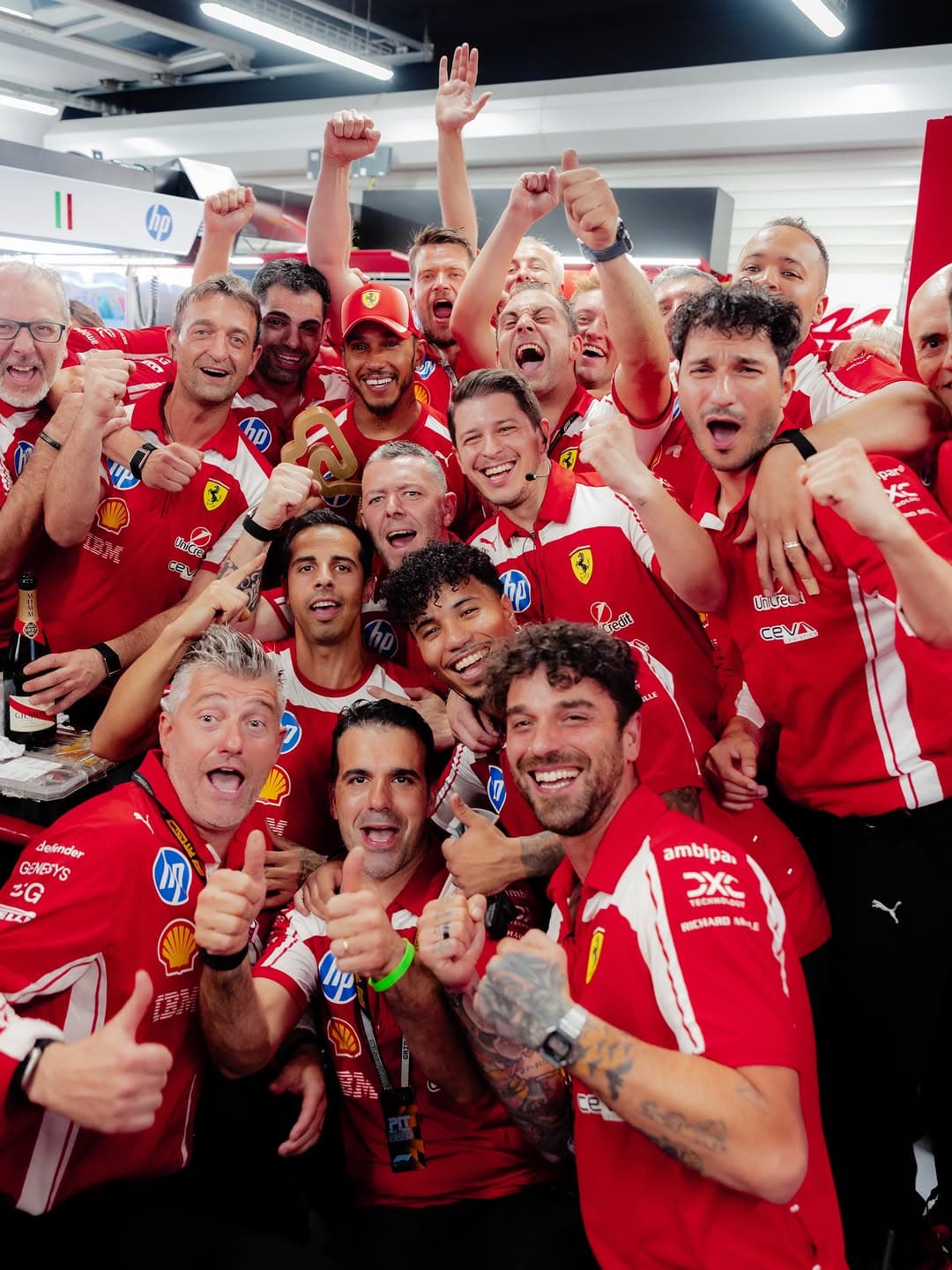
Lewis Hamilton Ferrari win, the sound of a new chapter
Racing has always been a language of surfaces, carbon, rubber, painted kerbs, a visor slick with breath. But the truly memorable wins are about texture. This one feels tactile. The pit wall tension you can almost taste, metallic and dry. The moment the car is released, the small violence of speed, the way a crowd’s roar turns from noise into force. Hamilton describes it as “finally” winning in red, and that word matters. It implies time served. It implies patience in a culture that seldom rewards it.
Barcelona is also a place where aerodynamics and endurance are exposed with little mercy. Nobody flukes their way through it. When Hamilton thanks the workforce on site and “back in Maranello,” he is pointing to the quiet truth of modern Formula One, which is that the romance is still built by people whose names you will never chant. It is worth remembering, especially when timelines are crowded with hot takes. If you want a wider view of how big moments are made, Formula 1 itself is unusually good at archiving the granular story as it unfolds.
For readers who come to this as cultural spectators, not lap time obsessives, it is the symbolism that lingers. A Lewis Hamilton Ferrari win carries an almost cinematic charge because Ferrari has always stood for desire, the distilled idea of wanting something simply because it is beautiful and difficult. That sensibility, the yearning in the brand, is why Ferrari is as much shorthand in film and fashion as it is on track. If you are in the mood for adjacent icons and their rituals, our Celebrity coverage tracks the same interplay of performance and private cost, just in different lighting.
The fans as co authors, and why Hamilton keeps naming them
Hamilton’s message is unusually direct about the emotional economy of fandom. He thanks Team LH and the Tifosi, but he also acknowledges the period when “negativity won out” and hope felt “impossible.” That is not the kind of line you write unless you mean it. The most compelling public figures do not pretend they are untouched by the public. They recognise that attention can be both scaffolding and storm.
In Ferrari, the fan relationship is heightened, sometimes combustible. The Tifosi are not a demographic, they are an inheritance. They will forgive you, they will demand you, they will adore you, they will howl. To offer them this win “for you” is, in a way, to accept the bargain fully. It is also smart. Ferrari’s aura thrives on mutual belief. The team needs not only engineers and strategy, but a collective willingness to imagine the impossible until it becomes ordinary.
For anyone who follows the human side of competition, this is where Hamilton remains singular. The win is not framed as conquest alone, but as repair. The arc is not simply redemption, it is continuity. Keep going. Remember who you are. These are not slogans, they are survival instructions. We talk often about the aesthetics of speed, but the inner work, the daily decision to keep showing up, is what makes a Lewis Hamilton Ferrari win feel like a public moment with private weight.
The Ferrari red effect, history, style, and the discipline of desire
Ferrari red has never been a neutral colour. It is a provocation, an invitation, an old European idea of glory made visible. In photographs it can look lush or severe depending on the light, and in Barcelona it read as both. That is why this win travels beyond the paddock. It is instantly legible even to people who never watch a qualifying session. Red means you have arrived, and it also means you are now expected to keep arriving.
It is tempting to treat the image as the entire story, Hamilton in red, the crowd feverish, the team elated. But what matters is the discipline underneath it. The best luxury objects are never just pretty, they are the result of obsession, iteration, and refusal. Ferrari understands this, as does Hamilton. The victory feels like a small proof of concept, the promise that dedication to progress can pay off. You can hear it in his insistence that this is “only the beginning.”
There is a broader cultural resonance here too. In an era that often mistakes reinvention for novelty, Hamilton’s moment reads as something more grown up. A recalibration. A long view. This is why a sports story starts to look like a style story and then, quietly, like a life story. If your interests tilt toward the objects that carry that kind of heritage, our Luxury section often circles the same question, what does it cost to make something enduring, and how do you keep faith while you are making it.
Barcelona, Maranello, and the invisible labor behind the podium
Hamilton’s thanks to the people in Barcelona and back in Maranello is not perfunctory. It locates the win in two places at once, the visible arena and the invisible workshop. Maranello is not merely a headquarters, it is a mythic factory town where the future is built by small improvements. Those improvements rarely photograph well. They do not trend. They do not roar. But they are the difference between dreaming and arriving.
And for anyone who loves design as much as sport, it is hard not to admire the way Ferrari’s identity bleeds between worlds. It is on track, yes, but it is also in craftsmanship, in Italian industry, in the kind of brand language that the rest of luxury keeps borrowing. Even outside racing, there is a reason Ferrari remains studied, parsed, desired. The brand has made an art of making pressure look like poise.
A Lewis Hamilton Ferrari win is, ultimately, a story about belief that survived its own worst weather. It is a thank you note, but it is also a manifesto. Keep fighting. Keep going. Keep it moving. The fans asked him to remember, and in Barcelona he did, loudly, in red.
Photo Credits
Images courtesy of their respective owners.