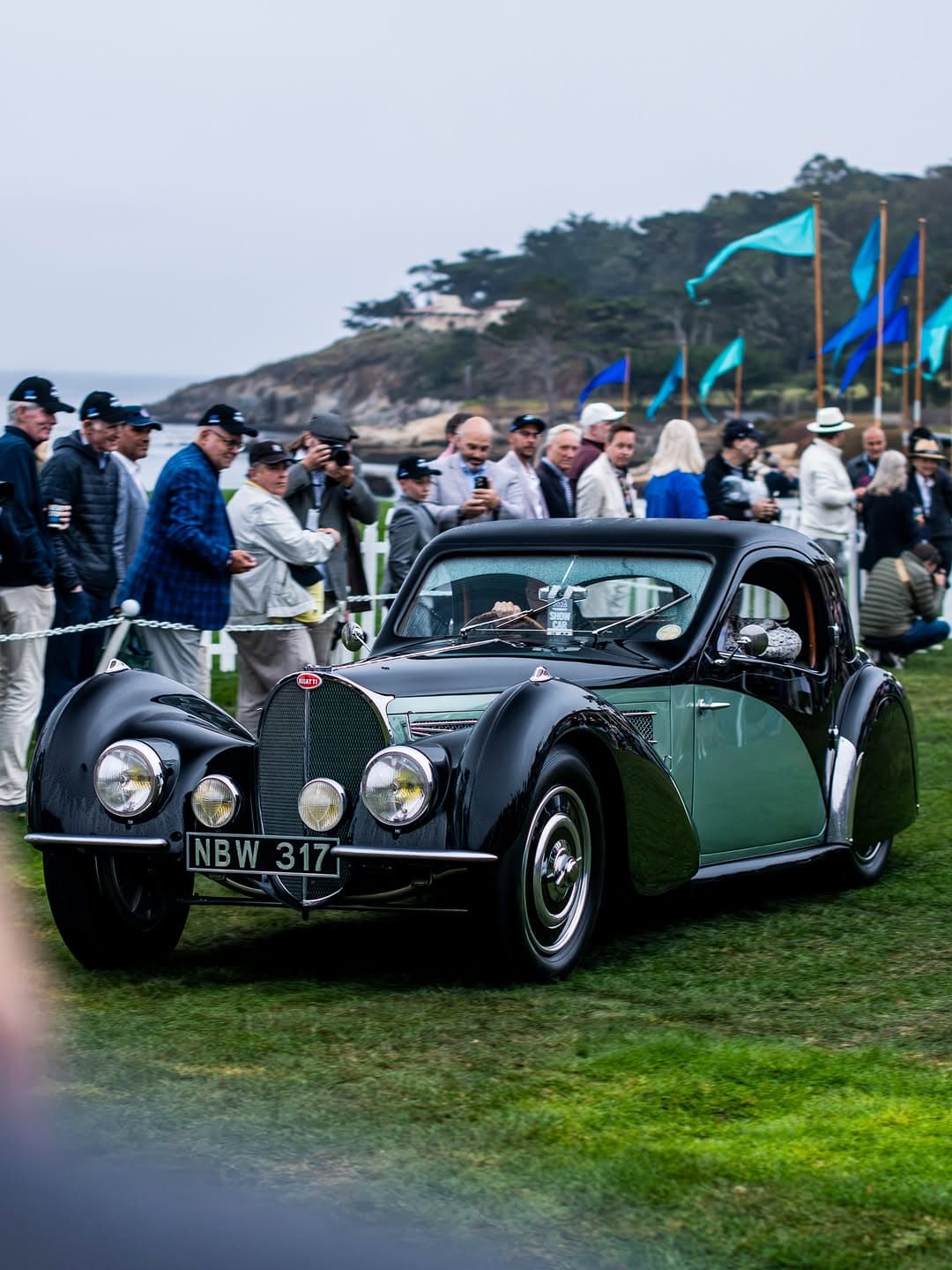
There is a particular hush that falls over the lawn at Pebble Beach when a truly historic car rolls into view, not because it is loud, but because it is exact. This year, Bugatti heritage did not merely attend Monterey, it quietly dominated it. On Sunday at the Pebble Beach Concours d’Elegance, the marque’s past arrived in a small fleet of shapes and silhouettes that still feel oddly modern, as if time has been politely asked to stand aside.
What made the moment linger was range. Not the kind that can be measured in horsepower figures, but in design temperament, in proportion, in the way a fender line can suggest confidence or restraint. A gathering of Type 57s alone can tell you almost everything you need to know about Jean Bugatti’s eye, his refusal to settle for a single idea of elegance, and his instinct for drama that never tips into costume.
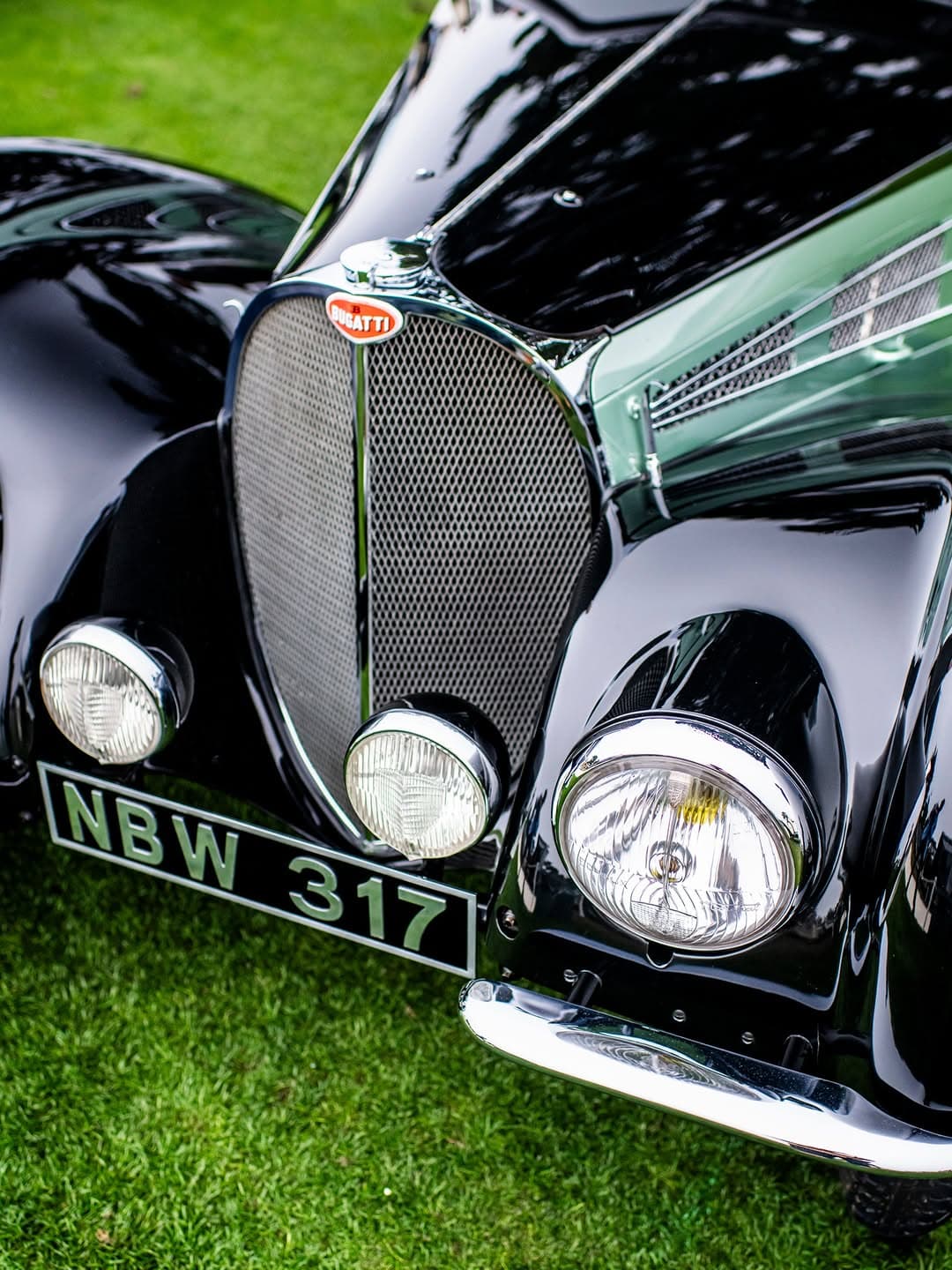
Bugatti heritage at Pebble Beach Concours d’Elegance
Monterey Car Week can be a loud week, socially, visually, emotionally. Yet the most persuasive displays tend to be the ones that do not beg for attention. A row of historic BUGATTIs on the concours lawn reads like that, a sequence of decisions made by people who cared about line, surface, and presence as much as speed. If you want a reminder that luxury is, at its best, a point of view rather than a price tag, Pebble Beach is the place, and Bugatti is the case study.
For readers who like to place car culture within a wider aesthetic frame, it is worth treating these machines as objects of design history in the same breath as couture or architecture. If that’s your lens, you may find yourself drifting from our Luxury coverage to Culture, because the conversation is rarely just about vehicles, it is about taste.
The Type 57s, and the breadth of Jean Bugatti’s imagination
The Type 57 family is often described as a pinnacle, and that is true, but it is also incomplete. A pinnacle suggests a single peak, one triumphant solution. The pleasure of seeing multiple Type 57s together is realizing how many solutions Jean Bugatti was willing to try. One car will be all long bonnet and poised cabin, the next a study in restraint, and then another arrives with a more overtly sculptural stance, the coachwork treating light like a material to be shaped.
Even standing still on the lawn, they carry movement in their proportions. The wheels sit with a certain purpose. The curves feel drawn, not molded. It’s the kind of elegance that does not need ornament, because the geometry already does the talking. Bugatti heritage, in this sense, is not nostalgia, it is a set of standards for how beauty should behave.
The Type 41 Royale, a reminder of scale and ambition
Then comes the Type 41 Royale, one of only six, and suddenly the air around the display changes. The Royale does not ask to be admired, it assumes it. At Pebble Beach, where rare becomes commonplace by sheer concentration, the Royale still manages to look singular. It is less a car than a philosophy rendered in metal, a statement about scale that feels almost theatrical, and yet, like the best theatre, it is disciplined in its details.
Seeing it among the Type 57s is a pleasing jolt. It reminds you that Bugatti heritage is not one story. It is ambition expressed at multiple volumes, from whisper to opera.
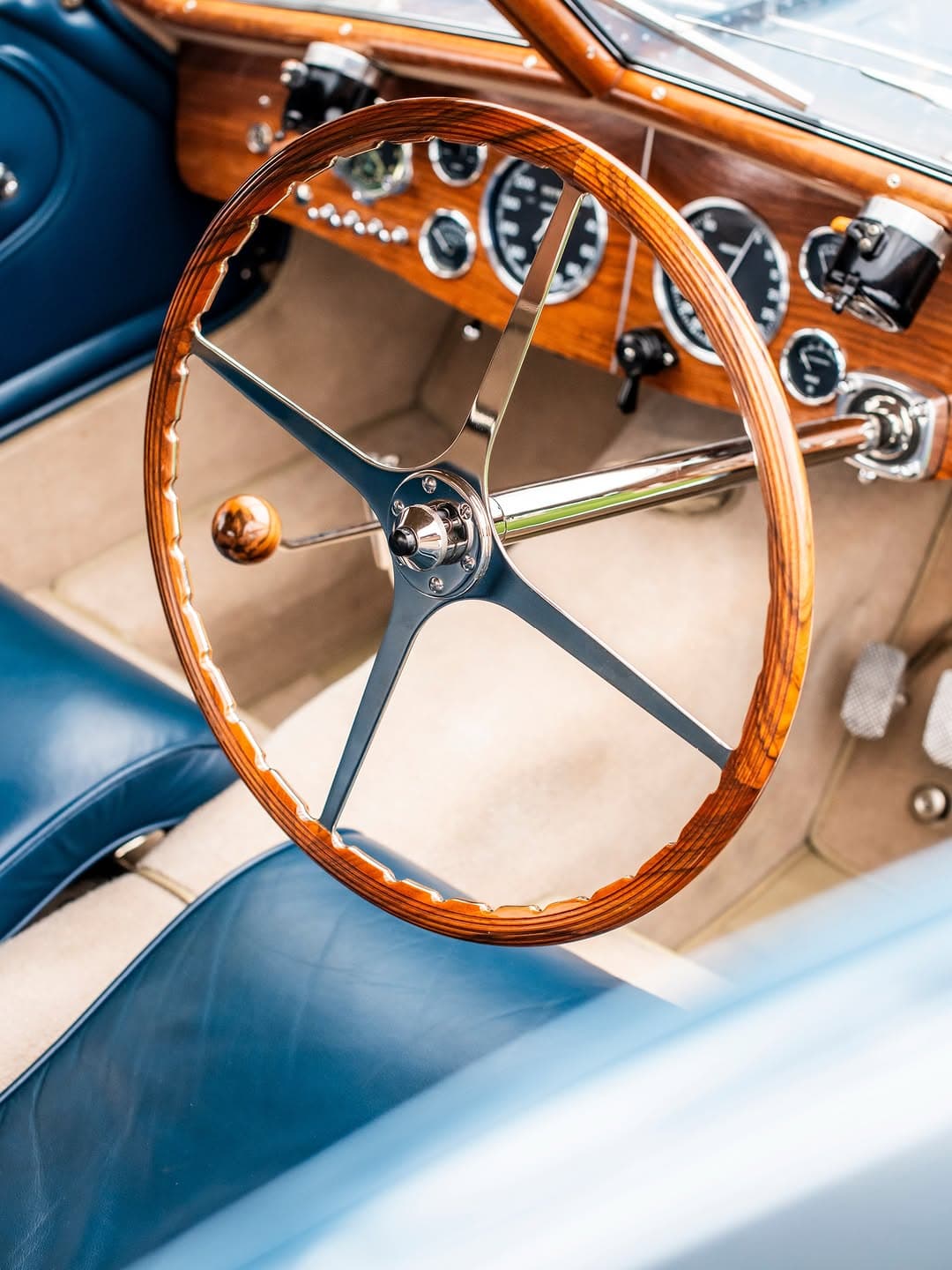
The 1936 Type 57SC Atlantic, the silhouette that stops time
Even rarer, and arguably the most instantly recognizable, was the 1936 Type 57SC Atlantic. Calling it a masterpiece is easy, but the more interesting truth is that the Atlantic remains difficult, even today. Its flowing proportions have the uncanny calm of something inevitable, as if it could not have been designed any other way. And yet it is also strange, almost otherworldly, the bodywork tight over the mechanical reality underneath like couture stretched over a moving frame.
The Atlantic’s aerodynamic shape is part of its spell, but the deeper seduction is its clarity. Any angle gives you a complete image. It photographs like a myth, but in person it is more intimate: the way the light pools along a curve, the way the surface catches the fog brightened by California sun, the sense that air itself is being directed. This is Bugatti heritage at its sharpest, not just craftsmanship, but conviction.
Why Monterey still matters for historic Bugatti
There are plenty of places to see important cars. What Monterey offers is context, the particular kind that comes from proximity. At Pebble Beach, the lawn becomes a temporary museum with an editorial eye, one that privileges narrative as much as rarity. A Type 57SC Atlantic does not appear alone, it appears in conversation with its siblings, with its era, with the people circling it slowly, noticing details the way you notice a hemline or a brushstroke.
If you want to go deeper into the formal history, the Pebble Beach Concours d’Elegance remains the proper starting point. For the marque itself, Bugatti has put real effort into presenting its lineage with seriousness rather than marketing gloss. And for those who care about provenance and the market realities that follow these cars around, RM Sotheby’s is often where the temperature of collector desire becomes measurable.
It is tempting, in a week so saturated with the new, to treat the past as seasoning. But the truth is the opposite. These historic BUGATTIs are not background. They are the backbone. Bugatti heritage is the reason Monterey still feels like a pilgrimage rather than a parade.
If you are planning your own week around the lawn and the auctions, our Automobile pages are where we track the culture around the cars, not just the cars themselves. Because the best part of Monterey is never only the metal. It is the mood, the rituals, the way a design from 1936 can still make a modern crowd fall quiet.
Photo Credits
Cover image courtesy of BUGATTI. Additional images courtesy of their respective owners.