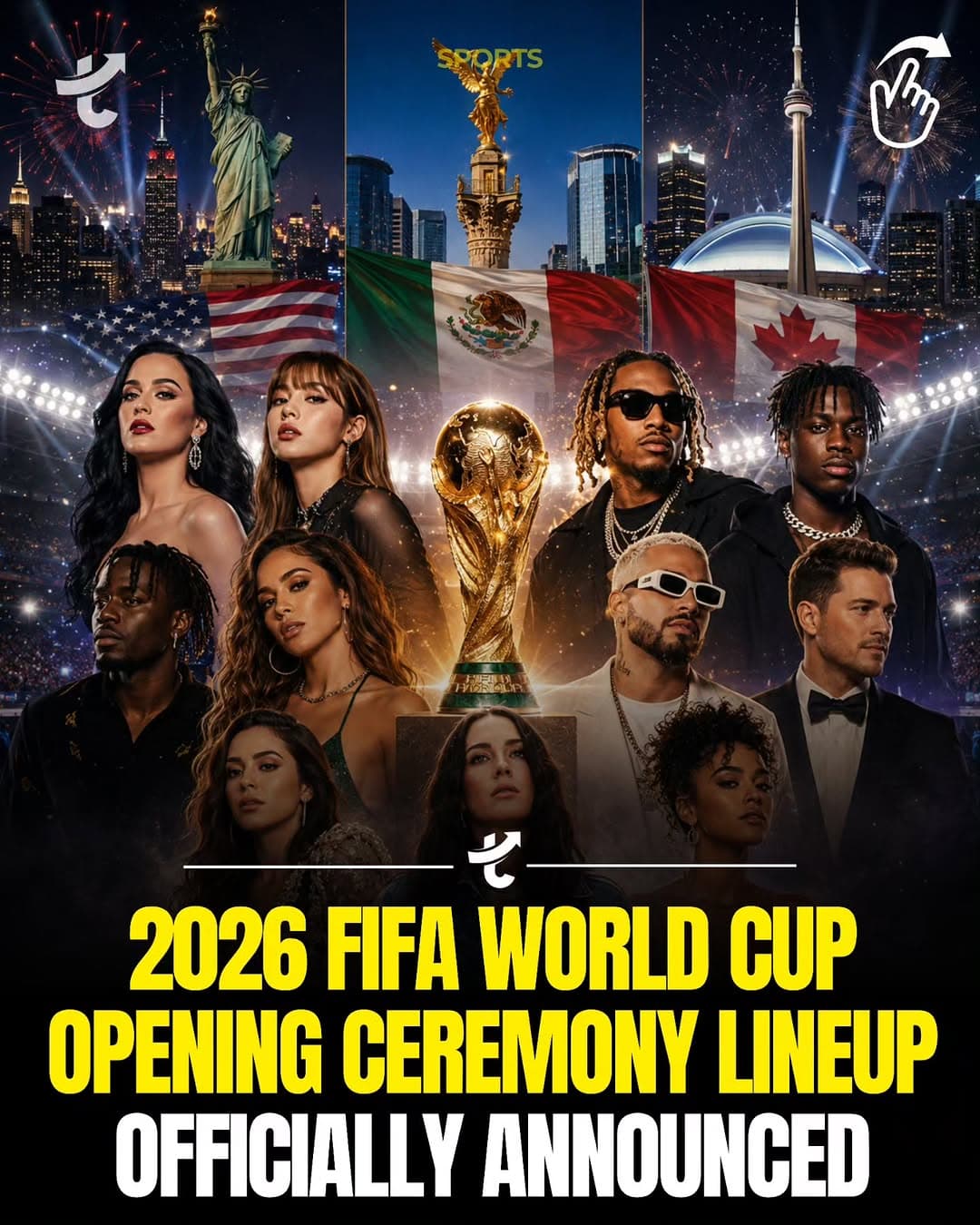
FIFA World Cup opening ceremony plans have always been a kind of cultural weather report, a snapshot of what the hosts want the world to feel before the first whistle. For 2026, that feeling is movement. FIFA has officially unveiled performers for the 2026 FIFA World Cup opening ceremonies, with separate celebrations across the United States, Mexico, and Canada, and a roster that swings from glossy global pop to Latin heat, Afrobeats precision, and hometown sentimentality.
The names are intentionally loud. Katy Perry, Lisa, Future, Rema, Anitta, J Balvin, Michael Bublé, Nora Fatehi, Alanis Morissette, Tyla, and more. Read it once for recognition, then read it again for geography. This is not a single stage trying to speak for an entire continent, it is three countries insisting on their own accents, their own star systems, their own way of getting a stadium to shimmer.
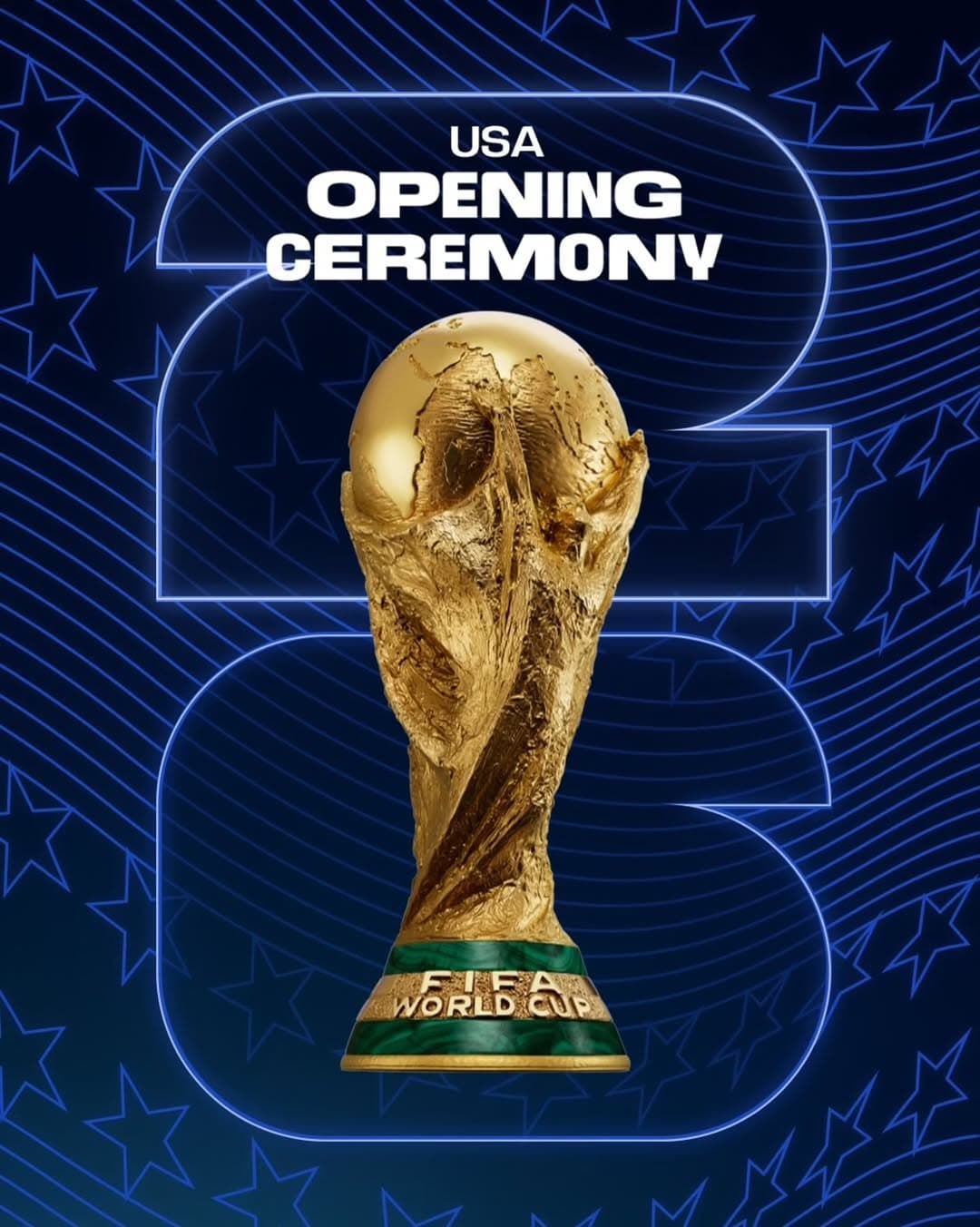
It also helps that this tournament will be historically oversized. The 2026 edition is set to be the first World Cup with 48 teams, a format FIFA has outlined in its tournament overview and competition updates on FIFA.com. Bigger brackets, more matches, more cities, more fans, more everything. So the decision to split opening celebrations across host countries feels less like an indulgence and more like an honest response to scale. A single ceremony would be a bottleneck. Three becomes a statement.
FIFA World Cup opening ceremony 2026, three hosts, three moods
There is something quietly radical about decentralizing spectacle. A World Cup opening ceremony has always been a performance of national mythmaking, even when it pretends to be purely about sport. In 2026, the mythology has to stretch across borders, and that requires pacing, restraint, and a certain confidence in cultural specifics.
The United States will almost certainly lean into maximal production values, the kind of camera grammar perfected by halftime shows and award season broadcasts. Mexico has an inheritance of stadium pageantry that is visceral and communal, less about polish than pulse. Canada brings a different register, cooler, musically literate, and often more emotionally direct than people expect. If this sounds like stereotyping, it is also how ceremonies work. They are built from symbols, and symbols only land when they are legible.
For readers who love how culture moves through cities, the multicity approach mirrors how people actually travel the tournament now. You do not just pick a match, you pick a route. Consider pairing your planning with our coverage in Culture, Celebrity, and Luxury, where the World Cup becomes less a calendar event and more a reason to build an itinerary with taste.
The point of a lineup like this is not cohesion, it is friction
On paper, Katy Perry and Future do not “match.” Neither do Michael Bublé and Tyla. But a World Cup is not a playlist for a dinner party, it is a collision of publics. FIFA is leaning into that friction, and in doing so it is acknowledging what the sport already knows. The crowd is multilingual. The fandom is algorithmic. Taste is fractured, and the only way to honor that is to program for contrast rather than consensus.
Why these artists, why now
The inclusion of Afrobeats names like Rema and Tyla is not a token nod, it is a realistic reading of what has shifted in global pop in the last five years. Their music travels fast because the rhythmic language is instantly bodily, and because streaming has trained listeners to move between Lagos, Johannesburg, São Paulo, Seoul, and Los Angeles without asking permission. If you want a sense of how deeply this shift has permeated the mainstream, look at how frequently Afrobeats has been tracked and contextualized by outlets like Billboard, which has documented its climb from scene to center.
Latin music, too, is no longer framed as a crossover, it is the infrastructure of global pop. J Balvin and Anitta are the obvious choices, artists with stadium scale and a fashion instinct that reads well on camera, the kind of charisma that makes even a wide shot feel intimate. Their presence is also a reminder that Mexico hosting is not simply logistical, it is cultural. A World Cup in North America without Latin music up front would feel like a room with the lighting wrong.
The Canadian choices carry a different kind of weight. Michael Bublé is a familiar, touring proven showman, and Alanis Morissette is something rarer, a name that signals artistic identity rather than pure chart velocity. It is a canny pairing. One says celebration, the other says legacy. Together they make Canada’s contribution feel deliberate, not decorative.
And then there is Lisa, whose presence is a neat shorthand for where youth culture gathers now, at the intersection of pop performance and high fashion staging. Brands have always understood this better than governing bodies. If FIFA is learning, it is learning from the same playbook that keeps Vogue readers attentive to the way music and style share a bloodstream.
What the opening ceremonies will actually feel like in the stadium
A televised ceremony and a stadium ceremony are two different organisms. In the stands, you register bass before you register melody. Lights read as heat. Smoke hangs and smells faintly metallic. Your memory becomes a sequence of textures, confetti on your shoulders, the low roar when a familiar hook lands, the strange tenderness of singing with strangers who will be gone by the time you reach the metro.
That is why the multicity model matters. It allows each host to tune the sensory experience to its own crowd. The United States can build a broadcast first spectacle and still deliver scale in person. Mexico can favor rhythm and communal call and response. Canada can create a more music forward atmosphere, where the words matter and the room listens, even in a stadium.
Expect more regional cameos than the headline list suggests
Major events rarely stop at the announced names. They expand. The smart money is on local guests folded into each ceremony, artists who speak directly to the host city’s audience even if they are not globally famous. That is how you get authenticity without sacrificing the marquee. It is also how FIFA keeps the ceremonies from becoming a generic global concert, a risk whenever the lineup is built for worldwide recognition.
The real story, the World Cup is becoming a cultural festival
With 48 teams, the tournament’s sprawl will reshape how fans move, spend, and schedule. The opening ceremonies are not just an amuse bouche, they are an invitation to treat the World Cup as a month long cultural festival with football at its center. That has implications for everything, from what designers dress performers in to which hotels suddenly become unofficial embassies for particular fan bases.
For those mapping the trip already, keep an eye on host city announcements and ticketing updates via FIFA, and watch how the ceremonies help define each country’s narrative. The United States will sell scale. Mexico will sell soul. Canada will sell clarity. If FIFA gets this right, the 2026 FIFA World Cup opening ceremony will not be one moment, it will be three openings, three doors into the same tournament, each lit differently.
Photo Credits
Cover image courtesy of Trending. Additional images courtesy of their respective owners.