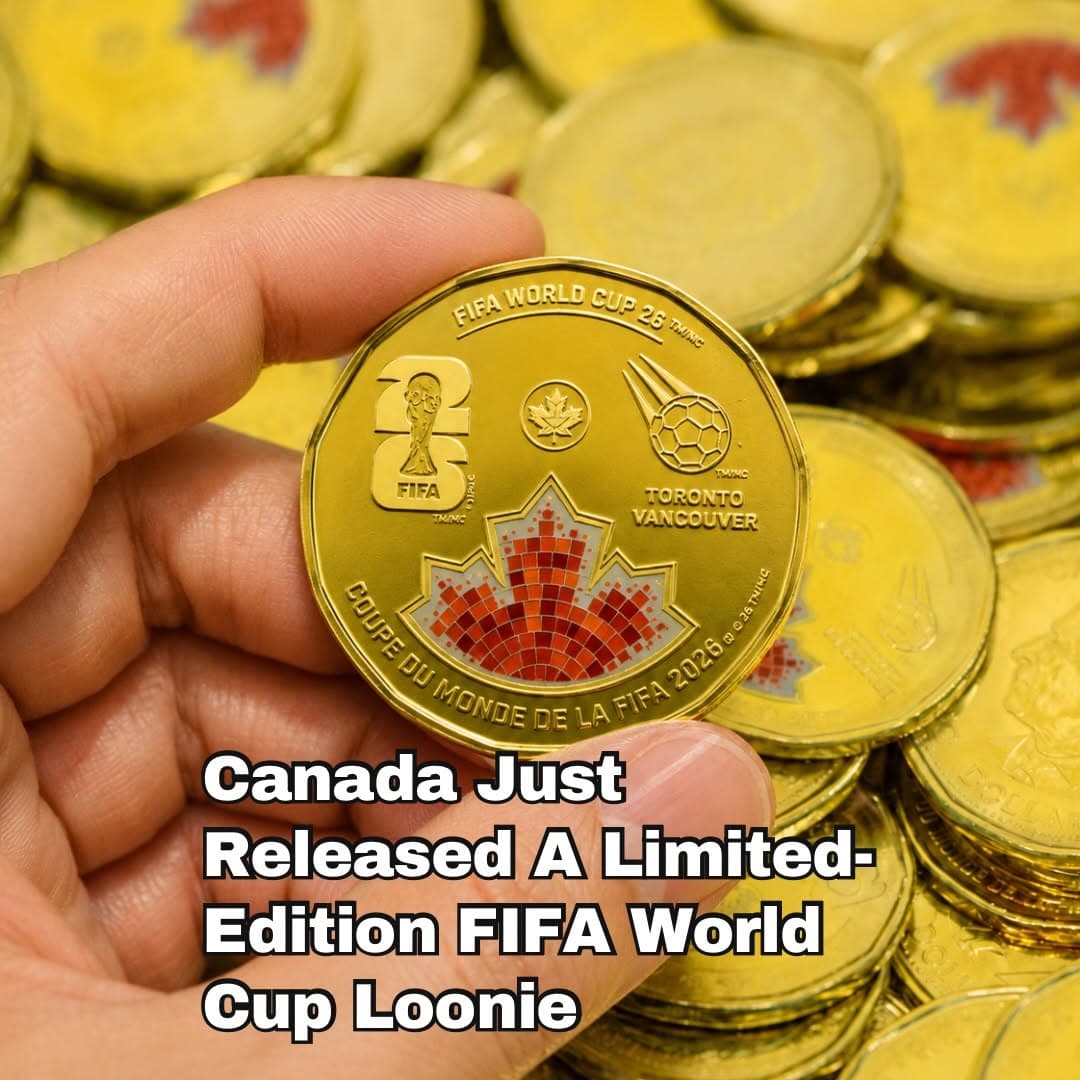
The FIFA World Cup loonie has the kind of quiet magnetism Canada does best, a small, everyday object that suddenly feels loaded with story. As of today, the Royal Canadian Mint has begun circulating a limited edition one dollar coin celebrating the tournament, meaning it will not sit behind glass forever. It will jingle in a pocket, get handed over for a coffee, disappear into a tip jar, then reappear weeks later in the palm of someone who looks down and thinks, wait, is this one of the new ones.
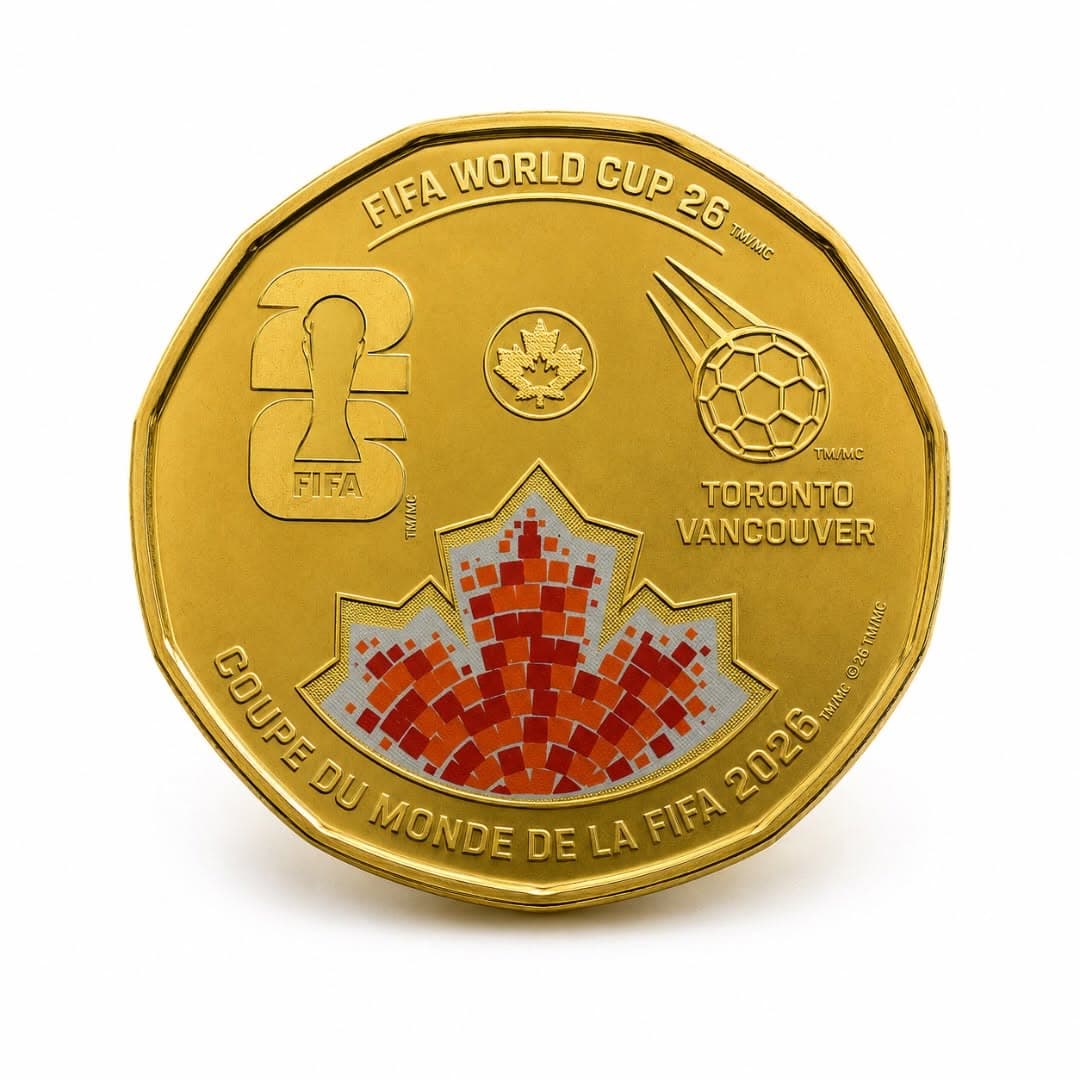
Only three million were struck, a number that sounds generous until you remember how fast coinage moves through a country. The coin is both ordinary and oddly ceremonial, domestically intimate but globally minded, a piece of metal that quietly nods to the fact that the 2026 FIFA World Cup is not an abstraction anymore, it is approaching with a schedule and a map and the unmistakable hum of anticipation.
The FIFA World Cup Loonie, by the Numbers and the Nerves
The Royal Canadian Mint confirmed the coin is officially entering circulation across Canada, with a total mintage of three million. That detail matters, not because it guarantees future value, it does not, at least not immediately, but because it lends the coin an edge of scarcity that changes how you handle it. A loonie is something you spend without thinking. A limited edition loonie makes you hesitate.
For the Mint, this is familiar territory, they have a history of special circulation coins that become inadvertent cultural timestamps, from commemorations of anniversaries to national milestones. You can find the broader context, plus official product details and announcements, at the Royal Canadian Mint. The tone is formal, of course, but the effect is intimate. These are objects designed to travel hand to hand, to be touched.
Why a circulation coin feels different than a collectible
There is a particular romance to a coin that is not precious in the traditional sense. It is not a limited run art object sold under museum lighting. It is a solvent little thing made to move. The FIFA World Cup loonie will inherit the smudges, the scratches, the softening of its edges, and that is precisely why it feels persuasive. It is a souvenir you did not have to buy, and that makes it, for many people, more believable.
If you do want to go deeper, the Mint’s collector catalog has been known to turn big public moments into smaller, more display friendly pieces. The loonie is the democratic version, and perhaps the most Canadian expression of fandom imaginable.
Should You Spend It or Keep It
Here is the truth editors rarely admit about collectibles, most of them are not going to pay for anyone’s retirement. A three million coin mintage is not microscopic, and value depends on condition, demand, and time. Still, keeping one is not a financial decision so much as a mood. The question is whether you want to preserve an object that will remind you, in 2026, where you were when the country began to feel the tournament’s proximity.
If you find one in your change and it looks pristine, consider setting it aside in a small envelope, somewhere dry, away from the chaos at the bottom of a bag. If you find one already scuffed, spend it with pleasure. Let it circulate. A commemorative coin that never leaves a drawer misses half the point.
A quick word for serious coin collectors
Collectors will tell you to look for clean strikes, minimal contact marks, and crisp details. They will also tell you to verify what you have, especially in a moment when social media turns every new release into instant mythology. For education that is less hype, more reference, resources like the Numicanada catalog can be useful for understanding Canadian coin issues and how collectors talk about them.
How the Coin Fits Into Canada’s 2026 World Cup Mood
Canada, in the lead up to the 2026 FIFA World Cup, is gathering symbols. Some are obvious, stadium updates, match day plans, the gradual shift in conversation from hockey first to also soccer. Others are subtler, and that is where the FIFA World Cup loonie lands. It is an emblem that does not ask you to perform fandom. It simply shows up, like a wink.
There is also something appealingly analog about it. In an era where our biggest shared experiences are filtered through screens, a physical token feels grounding. Coins are little artifacts of public life. They pass through strangers’ hands without permission. They are one of the last objects we share without an algorithm deciding who gets what.
Where to look, realistically
You will not find them in one dramatic wave. They will appear the way all new circulation coins do, intermittently, unevenly, and often when you are not paying attention. Grocery store change, transit kiosks, bank rolls, the corner shop that still gives you coins instead of a sigh. If you live in a city that leans into big sports moments, you may notice people watching their change more closely than usual.
If this kind of cultural detail is your thing, you might also like browsing our Culture coverage, where we pay attention to the objects that quietly shape the national mood, or our Luxury stories, which often argue that luxury is not only about price, it is about intention. For those who love the precision of design, even in the smallest formats, our Watches section understands the appeal of a well made, palm sized object.
Ultimately, the FIFA World Cup loonie is less about profit than presence. It is a small public reminder that 2026 is coming, and that Canada will be on the world’s stage. Keep one if it charms you. Spend one if it delights you. Either way, it is doing its job.
Photo Credits
Cover image and additional images courtesy of their respective owners.