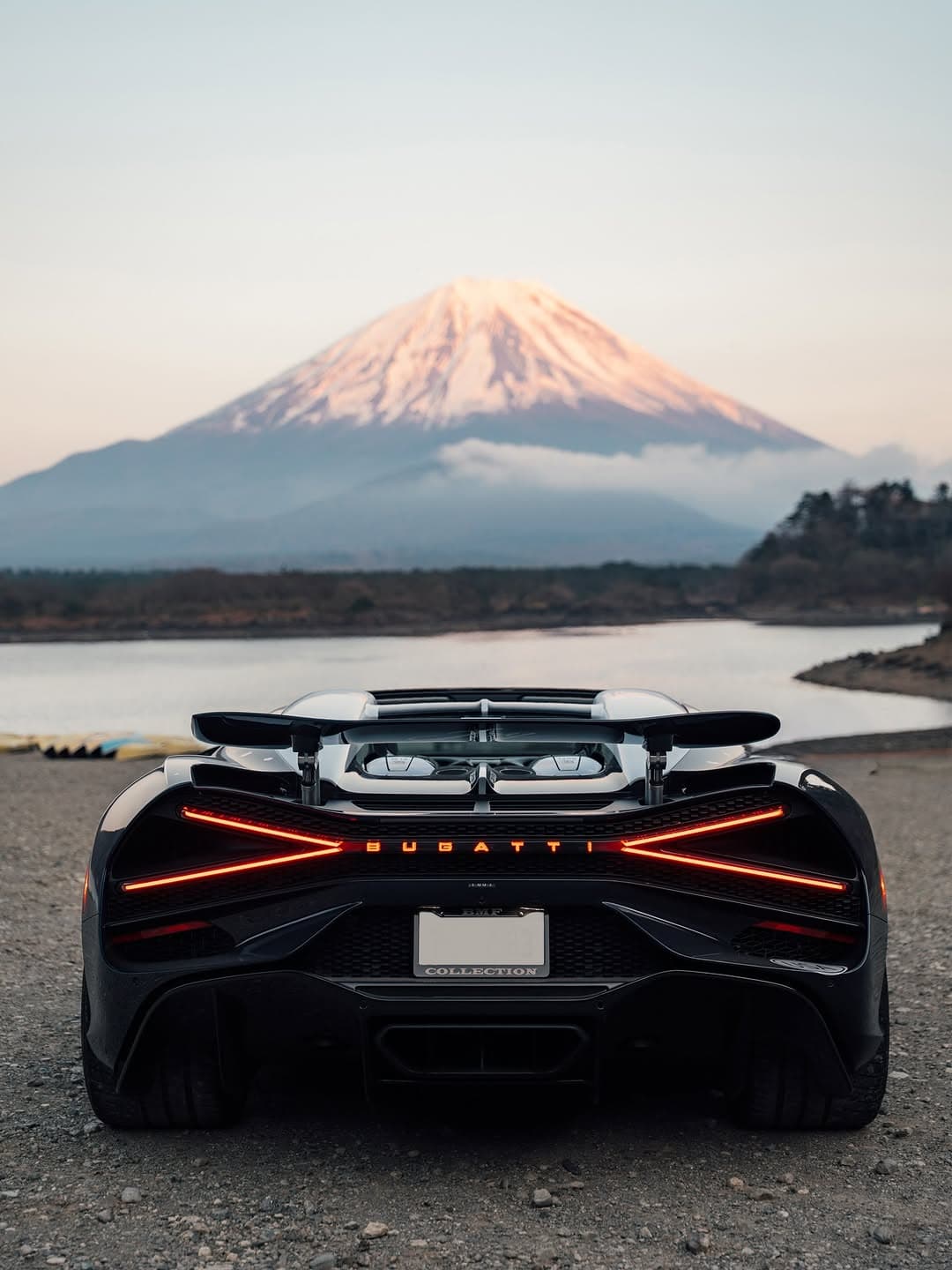
There are places where speed feels vulgar. And then there’s Japan—where restraint is an art form, silence has etiquette, and even awe arrives with good posture. Which is precisely why the idea of Bugatti under Mount Fuji lands with such delicious tension: a French hypercar dynasty—Mistral, Chiron, the whole operatic lineage—set against the quiet, watchful geometry of Fuji-san.
Picture it: a road that ribbons through misty foothills, cedar and cypress perfuming the air, vending machines blinking like tiny city lights in the countryside. In the distance, Mount Fuji holds court—calm, unbothered, almost indifferent. And then the cars arrive, not so much driving as making an entrance. The scene reads like a modern myth: legends beneath the quiet watch of Mount Fuji, where thunder is considered and beauty is precise.
Bugatti Under Mount Fuji: When Power Learns Manners
Japan has a way of forcing even the most extroverted objects to refine themselves. A Bugatti doesn’t shrink here—it edits. The Bugatti silhouette, already a study in proportion and control, looks almost ceremonial against Fuji’s symmetrical presence. The light is different too: softer, cleaner, with that pearly morning quality you get near lakeside towns like Kawaguchiko, where the world seems freshly rinsed.
Call me sentimental, but hypercars are rarely improved by context—usually they overpower it. This is the exception. With Bugatti under Mount Fuji, the setting doesn’t serve as a backdrop; it acts like a curator, insisting the viewer slow down and actually look. The vantages, the negative space, the disciplined horizon line—it’s architecture for the eyes.
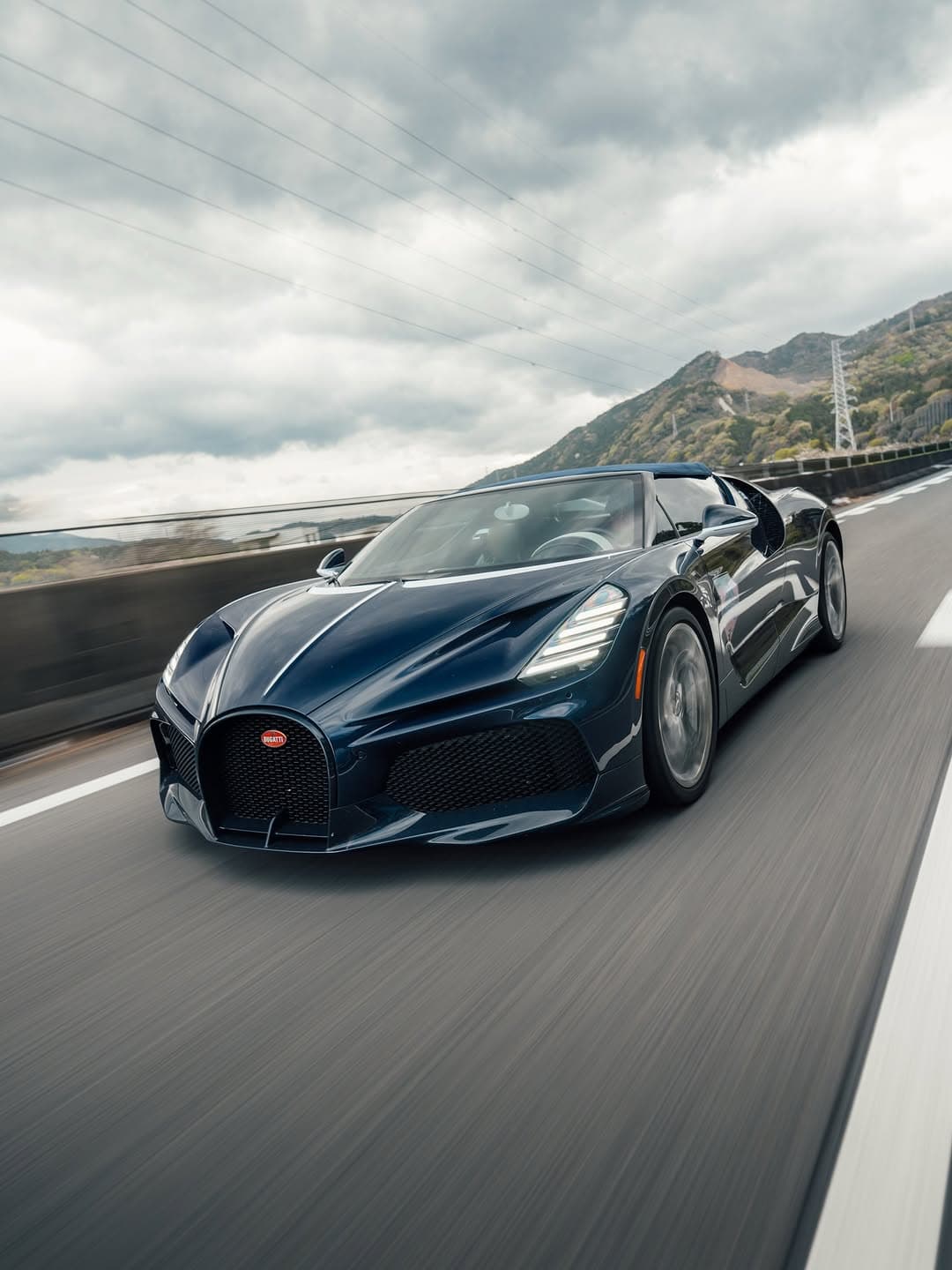
The Mistral: A Roadster With a Poet’s Temper
The Bugatti W16 Mistral is the sort of machine that makes even jaded luxury editors temporarily apostate—one part engineering flex, one part final bow. As Bugatti’s last W16 roadster, it carries the romance of an ending (and yes, endings sell). Under Mount Fuji, top down, it becomes less a status symbol and more a sensory instrument: wind pressure, engine timbre, the faint metallic sweetness of morning air hitting warmed carbon fiber.
If the Mistral has a personality, it’s not brash. It’s assured—the kind of confidence that doesn’t need to raise its voice, even when it easily could.
The Chiron: Modern Legend, Unapologetically Baroque
Then there’s the Bugatti Chiron, which remains—years into its reign—absurd in the best way. A Chiron is baroque excess executed with Swiss-watch tolerance. Under Fuji’s calm gaze, its drama reads differently. The lines feel sharper. The paint (whether in inky noir, electric blue, or that signature jewel tone that Bugatti does like no one else) looks almost lacquered, as if it belongs in a Kyoto atelier rather than a garage.
There’s a cultural frisson here: Japan reveres craftsmanship with a seriousness that borders on spiritual. Park a Chiron under Mount Fuji and the conversation shifts from “How fast?” to “How made?” Suddenly, the obsessive detailing—the vent sculpting, the symmetry, the tactility of the interior—feels less like indulgence and more like devotion.
Why Mount Fuji Makes Hypercars Feel Like Folklore
Mount Fuji is not just a mountain; it’s a symbol with a resume—woodblock prints, poetry, pilgrimages, postcards that have outlived entire fashion cycles. It has been interpreted endlessly, from Hokusai’s “Thirty-six Views of Mount Fuji” to contemporary photography that treats Fuji like the original influencer: always composed, always iconic, never trying.
That’s the alchemy. Hypercars are typically about immediacy—instant torque, instant attention. Fuji is about patience. Put them together, and something unexpected happens: the cars start to read as legends rather than toys—rare objects that feel almost mythic, like they shouldn’t exist and yet, here they are.
The Quiet Luxury of Restraint (Yes, Even at 300+ km/h)
We talk incessantly about “quiet luxury,” usually in the context of Loro Piana cashmere and logo-less handbags. But there’s a version of quiet luxury that’s purely experiential: knowing when not to perform. Japan understands this instinctively. A Bugatti experience framed by Mount Fuji becomes less about being seen and more about seeing—about the road’s texture, the calm intervals between villages, the way fog lifts like a curtain.
If you want more of that mood—the kind of travel where elegance is a choice, not a price tag—bookmark our guide to quiet luxury travel.
From Street Style to Steel Style: The Aesthetics Matter
Fashion people have always understood cars as extensions of taste. The right vintage Mercedes reads like a trench coat; the wrong supercar reads like a bad date. Bugatti, at least, rarely looks cheap. It’s too sculptural, too intentional—more runway couture than nightclub bottle service.
Under Mount Fuji, you notice details the way you’d notice a couture hem: the way carbon fiber catches low light; the precise negative space around a horseshoe grille; the discipline of design that keeps aggressive aerodynamics from turning into visual noise. It’s the same satisfaction you get from a perfectly cut blazer—structure that flatters, not shouts.
For a broader lens on how taste is shifting right now, see our take on modern luxury trends—spoiler: understatement is having a very expensive moment.
A Road Trip Fantasy, Edited
- Start early: Fuji mornings are cinematic—mist, clean light, fewer crowds.
- Chase reflections: Lakeside pullovers near Kawaguchiko turn cars into moving sculpture.
- Keep it respectful: The best flex in Japan is good manners (and a low profile).
The Editorial Take: Luxury Isn’t Loud—It’s Specific
Here’s my mildly unpopular opinion: the future of car culture isn’t about louder exhausts or louder personalities. It’s about specificity. About context. About choosing a place that makes the object feel smarter, rarer, more intentional. Bugatti under Mount Fuji works because Fuji refuses to be impressed—and in that refusal, it elevates everything around it.
And if you’re collecting moments the way some people collect watches—consider pairing this story with our Japan luxury travel guide. The best trips aren’t always the fastest; they’re the ones with the sharpest point of view.
Photo Credits
Cover image and additional images courtesy of their respective owners.