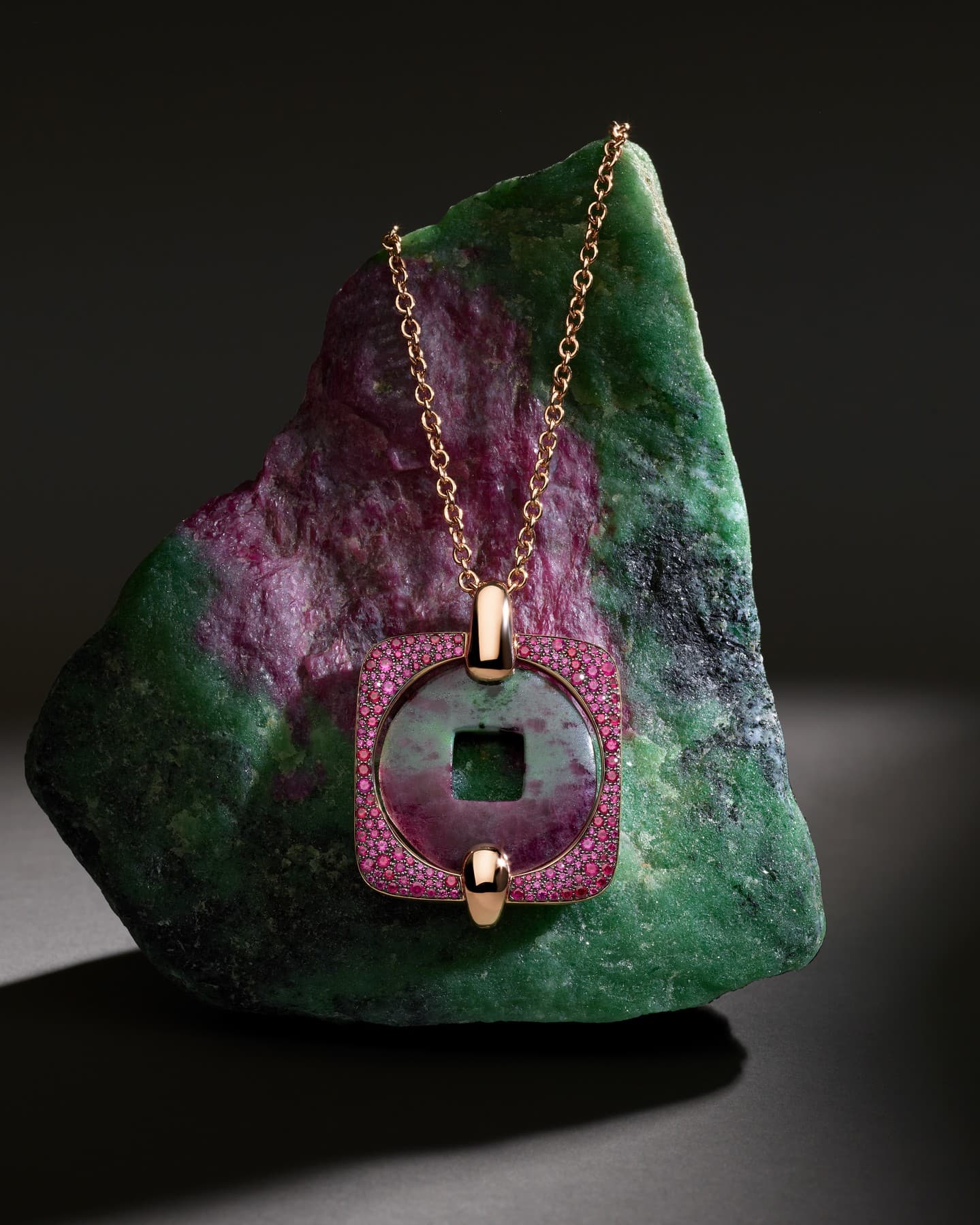
A pendant should be simple. That is the polite fiction jewelry has been selling for decades. Pomellato’s Moneta Orientale never agreed, and its 2024 return under Memorie d’archivio makes the point again, with conviction. Call it what it is: a piece of Pomellato heritage that treats gem cutting and color the way Milan treats fashion, as a daily language rather than a special occasion dialect.
Memorie d’archivio, and the return of the Pomellato Moneta Orientale
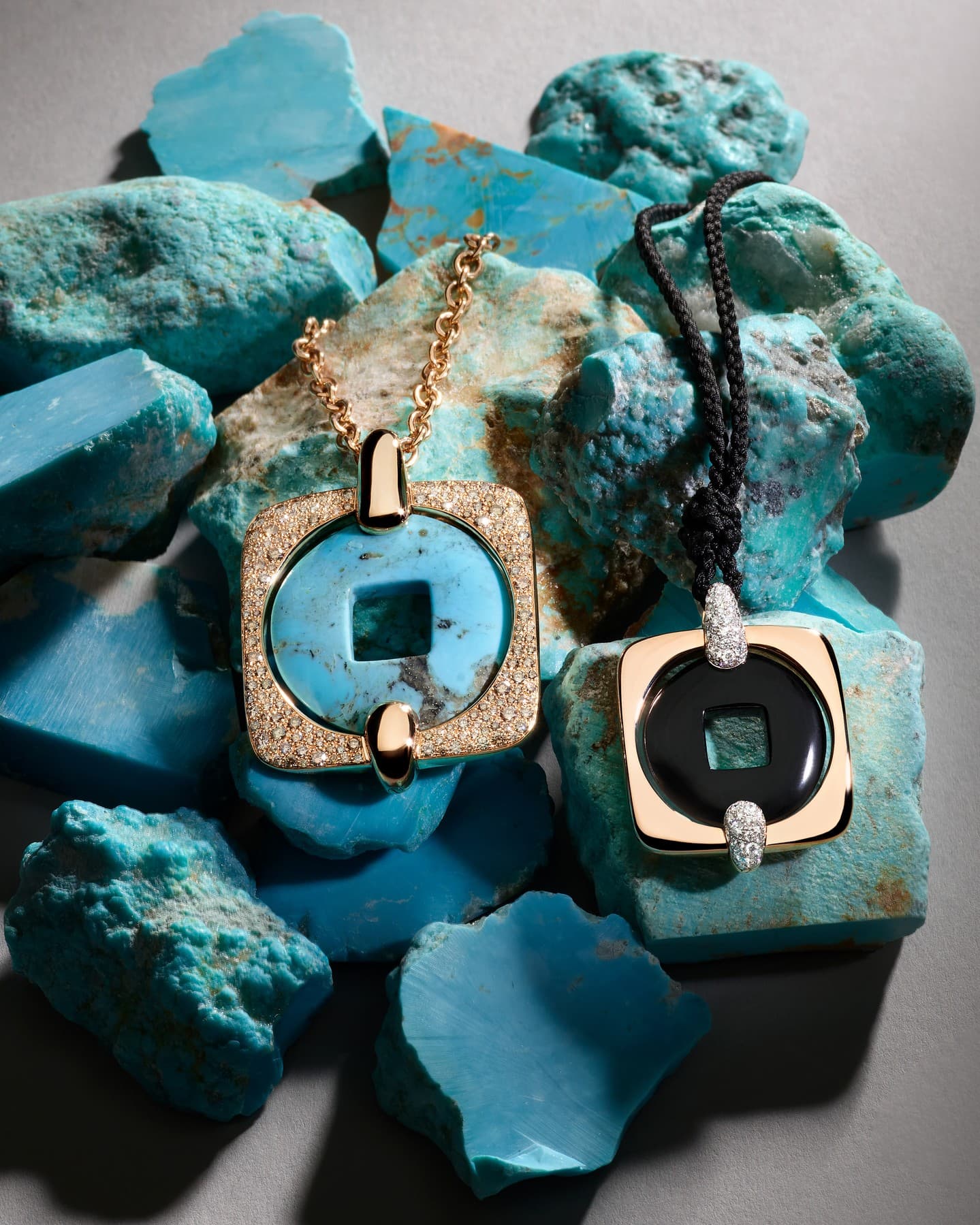
For Memorie d’archivio, Pomellato’s annual exercise in looking back without turning nostalgic, the house has reimagined the Moneta Orientale pendant first introduced in 1997. The name alone signals its intent. Moneta suggests an object with history baked in, an artifact you might find rather than buy. Orientale hints at a point of view the pendant always carried: ornament that feels collected, not manufactured.
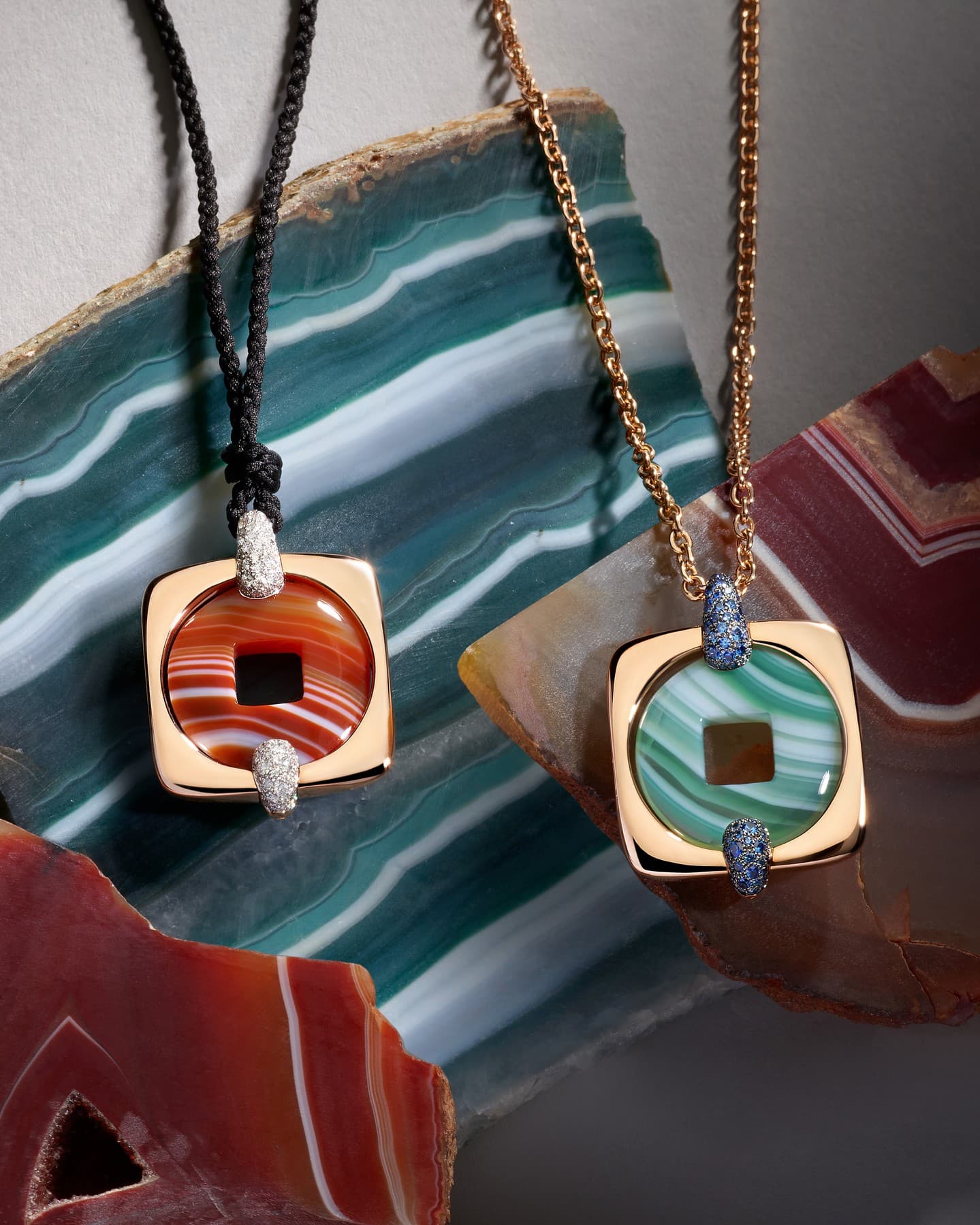
In this new chapter, the Moneta Orientale is presented in what the house describes as a “contemporary spirit,” anchored by two signatures that have long separated Pomellato from more ceremonious high jewelry. First, gem cutting that prioritizes volume and surface presence, the sort of lapidary work that changes a piece’s posture on the body. Second, chromatic decisions that feel deliberate rather than safe, where stones are selected to converse, and occasionally argue, across the setting.
Where Pomellato’s design logic shows itself: cut, color, and the pendant as an object
Pomellato rarely treats a pendant as a mere frame for a single hero stone. With the Pomellato Moneta Orientale revival, the emphasis on “masterful gem cutting” is the actual headline, because it tells you how the Maison wants you to look. Not at carat weight first, but at how a surface catches light across a moving torso, how edges meet metal, how color sits next to skin.
This is also where the 1997 reference matters. The late 1990s were a period when jewelry began to lean away from uniform sets and toward pieces with personality, objects you could build a wardrobe around. In that sense, bringing back Moneta Orientale now reads like a well aimed reminder: Pomellato has been in the business of wearable, design led preciousness for a long time, and it does not need to imitate today’s algorithms to prove relevance.
Kering context, and why it matters
The hashtag in the original caption is not incidental. Pomellato is part of Kering’s jewelry portfolio, alongside brands such as Boucheron and Qeelin. That matters because it positions Moneta Orientale as more than a one off mood piece. It lands inside a group strategy that has put serious weight behind jewelry as a long game category, with craftsmanship and brand codes doing the heavy lifting rather than seasonal churn.
How to wear a revival without treating it like a costume
The trap with any archive story is cosplay. The point of the Moneta Orientale return is that it can live in a modern rotation without asking you to dress “vintage.” Let it operate as punctuation. A pendant like this does not need competing talismans. It needs negative space, the blankness of a fine knit, an open neckline, a crisp shirt buttoned one step lower than usual.
If you want context straight from the source, Pomellato’s own communications around Memorie d’archivio frame the project as heritage in motion rather than a museum exercise. Start with the brand site and work outward, because the collection naming and positioning are part of the story, not marketing garnish.
Pomellato confirms the Moneta Orientale’s placement within the Maison’s broader universe of archival references and contemporary reworkings. For brand level context on ownership and portfolio, Kering’s Pomellato page situates the house within the group’s jewelry division.
Photo Credits
Images courtesy of their respective owners.