There is a particular kind of quiet theatre to timeless elegance at Royal Ascot, the moment you step onto the green and feel the day choose its own tempo. Silk rustles like polite applause. Hat brims cast private shade. Somewhere beyond the hedges, hooves land with the soft insistence of tradition. Ascot is not merely a race meeting, it is a social language, spoken fluently by those who understand that restraint can be more thrilling than spectacle.
Every June, the Berkshire air seems to sharpen, bright with roses, cut grass, and that faint mineral note that arrives before champagne. The dress codes are famously exacting, but the best looks never feel like compliance. They feel like conviction. If fashion is often accused of chasing the next thing, Ascot remains a persuasive argument for the staying power of the right thing, beautifully done.
Timeless elegance at Royal Ascot, and why it still matters
Plenty of events have pageantry, yet few have a point of view. Ascot’s is clear. This is elegance as discipline, a kind of composed choreography where proportion, fabric, and posture do the work. The silhouette does not scream, it clarifies. The palette does not shout, it holds its nerve. You see it in a cream wool crepe coat that sits cleanly on the shoulder, in a hat positioned with intention rather than whim, in gloves that feel less costume than punctuation.
What makes timeless elegance at Royal Ascot compelling is not nostalgia, it is the reminder that style can be an agreement between the wearer and the room. In an era of perpetual visibility, Ascot remains refreshingly selective about what counts as good taste. Not because it is conservative for its own sake, but because it is committed to the idea that clothes should create a mood, not merely content.
For readers who prefer their fashion with cultural context, it fits neatly alongside the kind of detailed city dressing we gravitate toward on BestMagazine’s Fashion pages, where clothes are treated as lived experience rather than empty trend cycle.
The hat is not a punchline, it is architecture
The wrong hat tries to entertain. The right one edits the face, like excellent lighting. At Ascot, millinery works best when it understands line. A brim that frames without swallowing, a saucer that sits level and calm, a sculptural flourish that looks considered from every angle. If you are tempted to go bigger, go cleaner. If you are tempted to go louder, choose texture instead.
Look for materials that behave well in daylight. Sinamay that feels crisp, straw with a satin like sheen, feathers used sparingly and with purpose. It is the difference between drama and fuss. The most chic hats at Ascot never look as though they are begging for a camera, they look as though they would be worn even if no one were watching.
Morning dress and the modern suit, a lesson in proportion
The men who look best at Royal Ascot understand that formality is not about stiffness, it is about fit. Morning dress, when done properly, has a pleasing severity, the curve of the tailcoat creating a line that feels almost graphic against the lawn. Yet there is room for personality in the waistcoat choice, the tie knot, the polish of a shoe that catches the sun.
For those in the modern suit codes, the same rule applies. Choose cloth with body. Avoid anything that collapses under heat. A well cut wool, a subtle birdseye, a pale grey that reads cool rather than washed out, these details photograph beautifully, but more importantly, they wear beautifully.
The Ascot palette, creamy neutrals, lucid pastels, and one decisive shade
Ascot colour is rarely accidental. The most persuasive wardrobes begin with neutrals that feel expensive in broad daylight, ivory, stone, warm taupe, ink. Then come pastels that are less confection and more watercolour, pistachio, cornflower, blush with a hint of dust. If you want one statement note, make it singular and intentional. Scarlet lipstick with a pale suit. A deep emerald hat with a clean white dress. A navy glove against bare skin.
Fabric is the secret protagonist
At Royal Ascot, fabric announces quality before anyone reads a label. Linen that is properly weighted, so it creases with elegance rather than collapse. Silk that holds colour without glare. Cotton pique that keeps its shape through heat and hours. Wool that breathes. If you have ever worn the wrong synthetic blend on a bright day, you already know that timeless elegance at Royal Ascot is, in part, a practical decision. Comfort is not a concession, it is part of the poise.
Timekeeping as finishing touch, why Longines belongs here
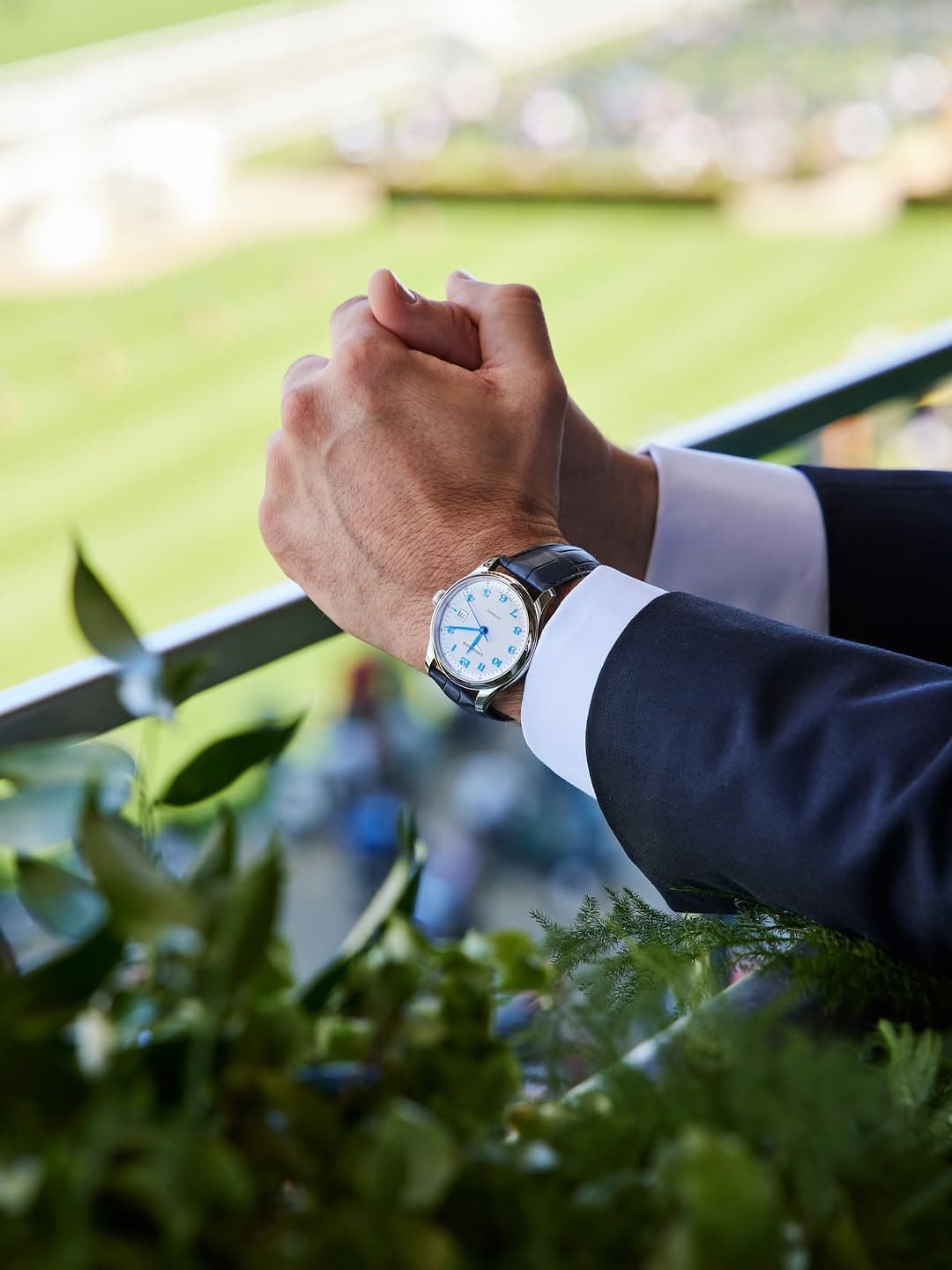
Ascot is a study in timing. The bell, the procession, the collective pause before a race breaks open. It is one of the few places where wearing a proper watch still feels like good manners, a small sign that you are present in the day rather than scrolling past it.
For decades, Longines has been woven into the rhythm of the racing calendar, a fit that makes sense when you consider how both worlds prize precision without sacrificing romance. A slim case under a cuff, a classic dial that reads instantly, a strap that looks better with wear, these are the choices that harmonise with timeless elegance at Royal Ascot. They do not compete with the outfit, they complete it.
The detail that separates dressed from well dressed
The tells are quiet. A hem that lands exactly where it should, never a fraction too long. A hat secured so it never needs fussing. Jewellery that does not jangle. A pocket square folded with restraint. Shoes that have been cared for, not merely worn. None of this is about perfection, it is about intention. The point is not to look styled, but to look certain.
How to watch Royal Ascot like an insider, even if you are not one
Focus on the ritual. Arrive early enough to see the morning light shift across the course, when everything looks newly pressed. Notice how people move, especially those who have done this for years. They do not rush. They do not over adjust. They let the day come to them.
And if you are following from afar, start with the official Royal Ascot site for race details and history, then read the dress codes as a cultural text rather than a list of rules. You can also deepen the context with the Ascot Racecourse perspective on the season, which captures how the week sits within a wider British social calendar.
Ultimately, timeless elegance at Royal Ascot is not a trend report. It is a reminder that style can be ceremonial without being costume, and that the most modern thing you can do right now might be to dress with patience, clarity, and a little reverence for the setting.
Photo Credits
Images courtesy of their respective owners.