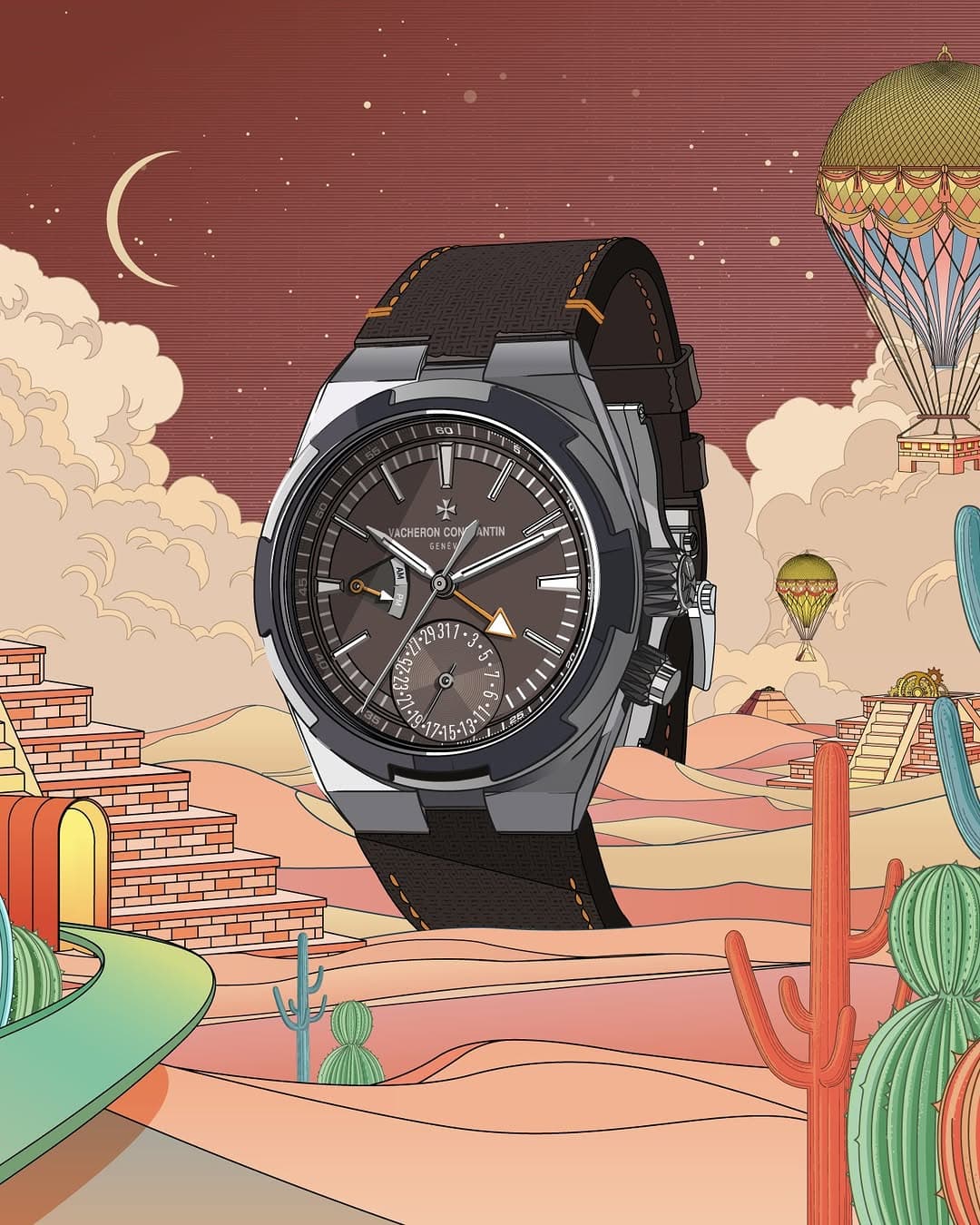
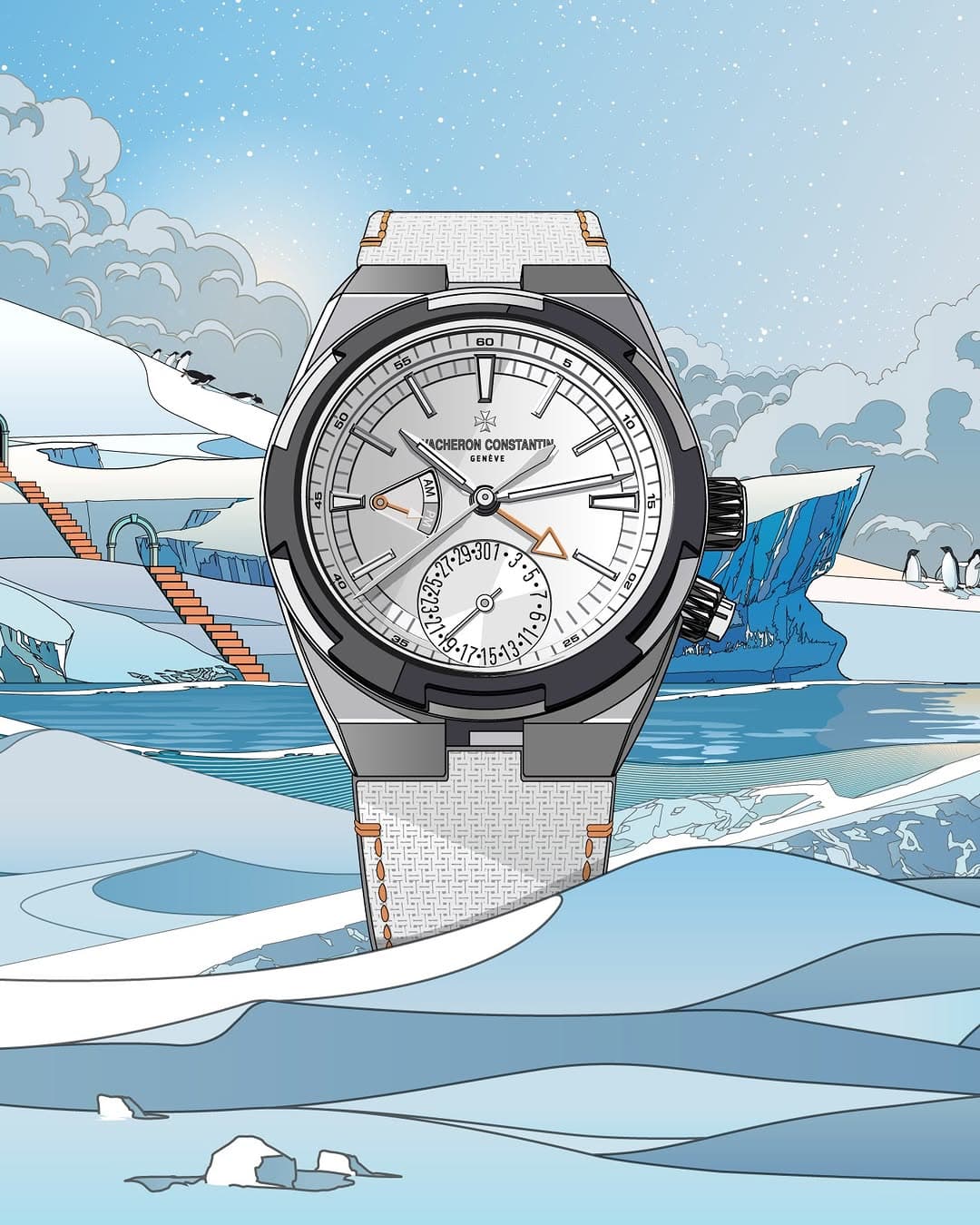
Some watches demand a spotlight; others prefer a story. In Worlds Unfold, the Vacheron Constantin illustrations by artist and illustrator Shan Jiang do what luxury rarely bothers to do anymore—slow down. They don’t sell you time; they stage it. Picture a dial peeking out from a painted horizon like a moon rising over a lacquered city, or a bracelet glinting in a landscape that feels half-Silk Road, half-sci‑fi set design. This is the brand’s “Explore All Ways Possible” theme translated into something more romantic: a passport for the imagination.
There’s a particular pleasure in seeing high horology removed from the sterile acrylic plinth and returned to culture—placed back among architecture, folklore, and human longing. Jiang’s work treats Vacheron Constantin’s novelties not as trophies but as characters. And honestly? That’s the point at which luxury becomes interesting again.
Vacheron Constantin Illustrations as Cultural Cartography
Jiang’s visual worlds hum with detail: saturated skies, precise linework, little flourishes that reward the viewer who lingers (the exact kind of person who understands why a hand-finished movement matters). The watches are seamlessly woven into these scenes—never pasted on, never screamed. It’s the opposite of “content,” and that’s why it works.
Vacheron Constantin has spent nearly three centuries perfecting restraint, and this collaboration understands that brand DNA. It nods to heritage without treating it like a museum placard. If you need a reminder of the maison’s long arc—from Geneva tradition to contemporary daring—the timeline is sitting in plain sight on the brand’s official site: Vacheron Constantin. Jiang simply gives it weather, light, and mythology.
“Explore All Ways Possible”—Without the Usual Noise
The phrase could easily have been a marketing shrug. Instead, these illustrations make it feel like a dare. They propose that innovation isn’t always a new material or a sharper case profile; sometimes it’s a new context. A new way of seeing. The watches live inside poetic landscapes where tradition meets forward motion—where craft isn’t conservative, it’s adventurous.
And yes, there’s something deliciously modern in choosing illustration—an art form with the intimacy of a notebook margin—over hyperreal spectacle. It’s a reminder that fantasy can be more persuasive than “perfect.”
Why This Fusion of Watchmaking and Illustration Feels So Now
We’re living in an era of visual overload, where luxury campaigns chase virality like a nervous habit. Jiang’s work doesn’t chase; it beckons. The compositions are vibrant but never frantic, meticulous but never cold. You can almost hear the hush of a gallery, the soft friction of paper, the private click of a crown being wound.
It’s also culturally literate in a way that feels earned. These aren’t generic “Asian-inspired” gestures (thankfully). They read as layered environments—references that feel lived-in, not borrowed. The worlds are plural, not pasted together, which is why the watches can sit inside them without looking like intruders.
If you’re the kind of reader who likes your luxury with context—history, provenance, a little intellectual bite—you might also enjoy our perspective on quiet luxury and how it’s reshaping taste. And for those who obsess over what makes heritage brands relevant in 2026, our guide to the best luxury watch brands is a satisfying rabbit hole.
A Watch as a Portal, Not a Product Shot
The best fashion imagery has always sold a mood before it sold a hemline—think Irving Penn’s severity, Tim Walker’s theatrical excess, or the hypnotic minimalism of Peter Lindbergh. Jiang applies that same logic to horology: atmosphere first, object second. The watch becomes a portal, an artifact that suggests a life rather than indexing a price tag.
- Narrative density: each scene reads like a chapter, not a backdrop.
- Material seduction: gleam, shadow, and color do the work that macro photography usually claims.
- Emotional pacing: you don’t scroll past; you pause.
Inside the Worlds Unfold Aesthetic: Precision, Poetry, and Play
What elevates Worlds Unfold beyond “brand collaboration” is its discipline. Jiang’s line has conviction; his color feels intentional rather than ornamental. The watches appear as if they belong to the topography—like relics discovered, not props arranged. That sense of discovery is the secret engine of desire.
And for anyone tempted to dismiss illustration as “soft,” consider the rigor behind it. Draftsmanship, perspective, the choreography of detail—these are close cousins to watchmaking. If you want the quick historical reminder of why Vacheron Constantin carries such weight in the first place, its history is a study in endurance and evolution.
The Editorial Take: Luxury Should Risk a Little Wonder
Here’s my gentle provocation: so much of modern luxury is terrified of feeling naïve. Everything must be “elevated,” “sleek,” “disruptive.” Jiang’s dreamscapes argue for something braver—wonder with craft behind it. The kind of wonder that doesn’t cheapen the object; it humanizes it.
If you’ve been craving fashion and accessories that feel like escapism with substance (not just another algorithm-approved aesthetic), this is your cue. And if you’re plotting your next style pilgrimage, our edit of luxury travel destinations pairs nicely with these illustrated itineraries of the mind.
Ultimately, the most persuasive thing about these Vacheron Constantin illustrations is their confidence. They don’t insist. They invite. They let the viewer do what collectors do best: look closely, imagine freely, and decide what’s worth keeping.
Photo Credits
Cover image courtesy of Vacheron Constantin. Additional images courtesy of their respective owners.