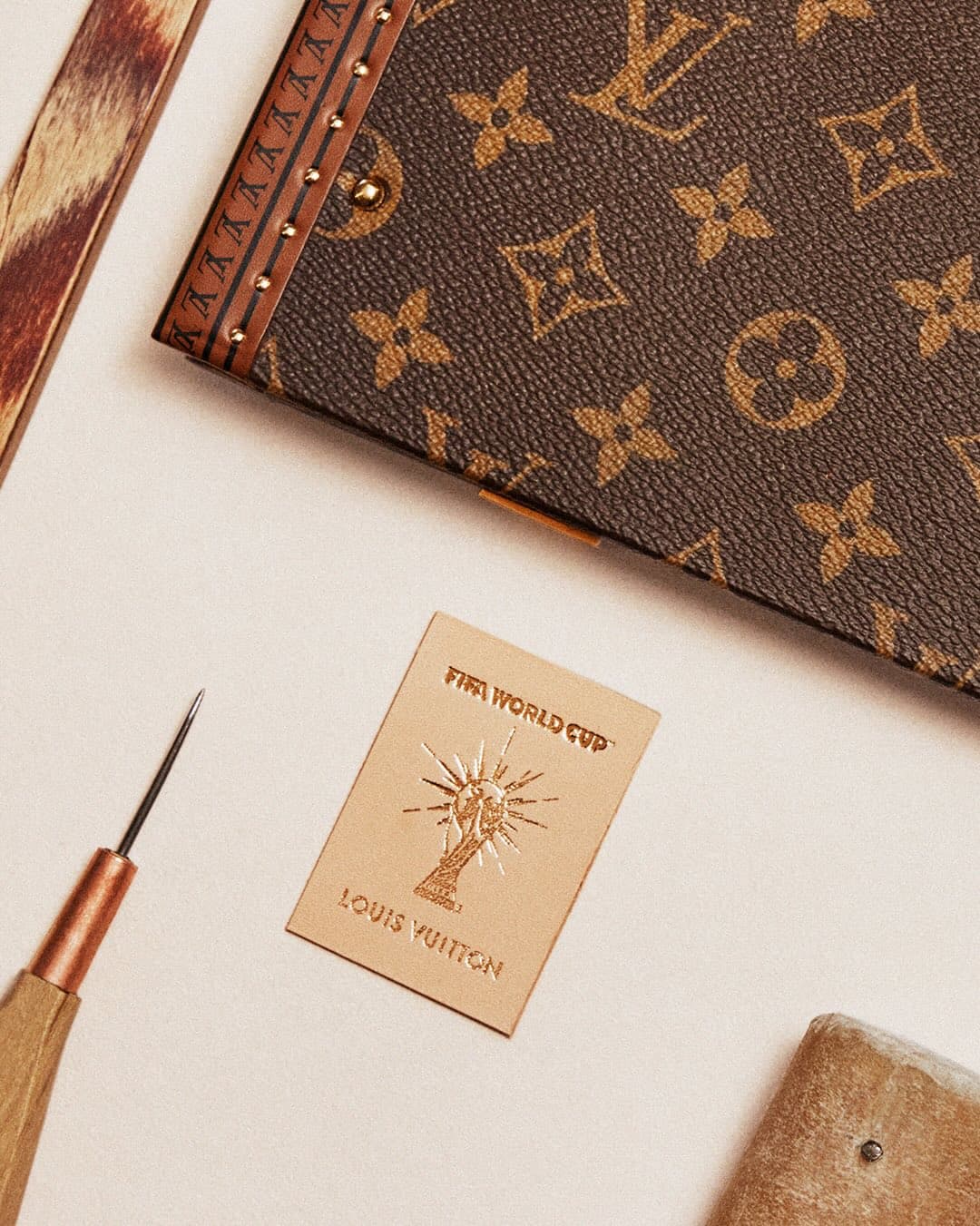
A trophy is never really delivered. It is presented, protected, staged, photographed, angled toward the floodlights. That is why the Louis Vuitton FIFA World Cup 2026 trophy trunk matters: not as merchandise, but as an object designed for the long, ceremonial journey between arrival gates, press risers, and the moment hands meet metal.
Louis Vuitton’s own caption frames it as an “anatomy of victory,” tracing a line “from the first trophy trunk in 2010” to the FIFA World Cup 2026. The dates are part of the story. 2010 is when the House created its first official FIFA World Cup Trophy Trunk. 2026 is when the World Cup expands dramatically, with matches across the United States, Canada, and Mexico.

Louis Vuitton FIFA World Cup 2026 trophy trunk, and why trunks still run the show
For a modern sports mega event, the logistics can feel antiseptic. A trunk cuts through that. It proposes a different tempo, hinges opening slowly, hardware catching the light, the interior constructed around a single job: to hold a specific object safely, predictably, and beautifully, while cameras do their work.
Louis Vuitton’s relationship with the FIFA World Cup Trophy Trunk is not new, and a quick glance at the timeline makes the intention clear. The House first created an official trunk for the FIFA World Cup Trophy in 2010, and FIFA confirmed a renewed partnership with Louis Vuitton ahead of the 2022 tournament. That continuity is exactly what a heritage house sells best: the guarantee that ritual is repeatable at the highest stakes.
From 2010 to 2026: a collaboration built for broadcast
There is a reason the trunk keeps returning at the top of the football calendar. The FIFA World Cup is engineered for widescreen symbolism, and the trophy’s movement, from secure rooms to on stage, is now part of the global choreography. This is where Louis Vuitton’s trunk-making heritage becomes more than an atelier talking point. It becomes a television prop with engineering behind it.
The FIFA World Cup 2026 edition will land in an even louder arena. The tournament will be hosted across three countries and will feature 48 teams. More matches, more venues, more movement, more opportunities for the object that carries the trophy to be filmed, paused on, and posted.
What “defining codes” actually look like
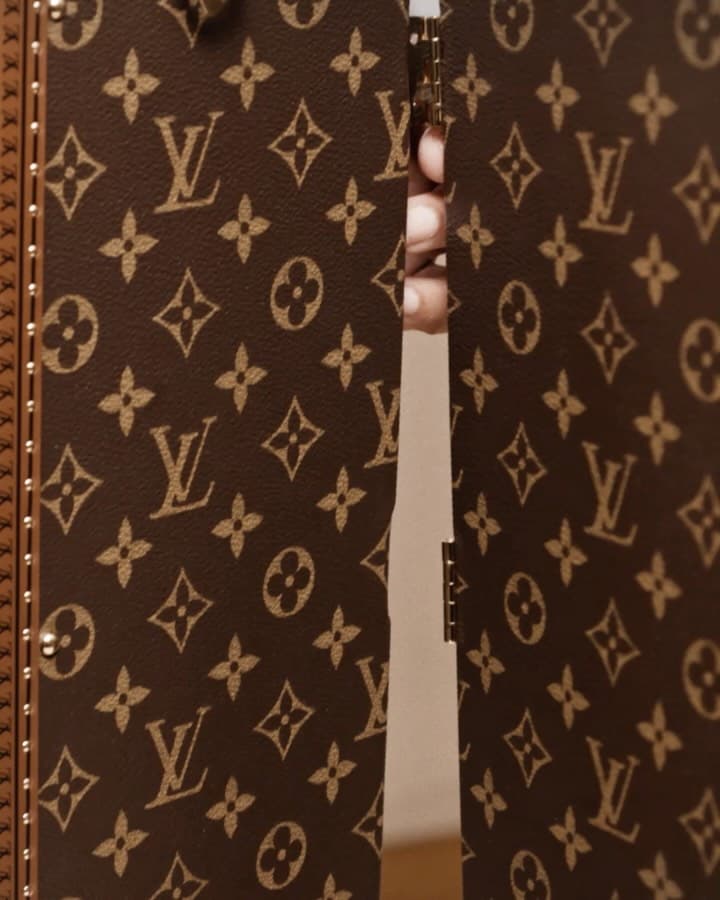
Louis Vuitton tends to speak in codes, but trunks are one place where the craft reads plainly. You see geometry and function first: rigid corners, protective shell, a closure system designed to survive handling. Then comes the House’s signature surface language, which, in these collaborations, is less about fashion fantasy than instant recognition in a crowded visual field.
If you want a wider lens on how sports objects have become luxury objects, consider the way fashion houses now treat stadium moments like runway finales. We have watched the same shift in handbags that are built for paparazzi flash, and in watches designed to win the tightest wrist shot. The Louis Vuitton FIFA World Cup 2026 trophy trunk sits in that ecosystem, but it is closer to industrial design than accessorising.
Where the FIFA World Cup 2026 story goes next
Between now and kick-off, FIFA will roll out the tournament’s visual identity city by city, and brands will fight for every square inch of broadcast space. The trunk will not score goals, but it will appear in the photographs that organise memory: dignitaries, captains, confetti, and the protective shell opened just enough for the camera to understand what is inside.
Louis Vuitton is betting that, in a tournament scaled this large, the ceremony needs anchoring objects. The Louis Vuitton FIFA World Cup 2026 trophy trunk is one of them.
For more on how the House frames the project, see Louis Vuitton’s feature on the FIFA World Cup Trophy Trunk via Louis Vuitton. For the confirmed host countries and tournament expansion details, FIFA’s official overview of the FIFA World Cup 2026 outlines the format.
Photo Credits
Images courtesy of their respective owners.