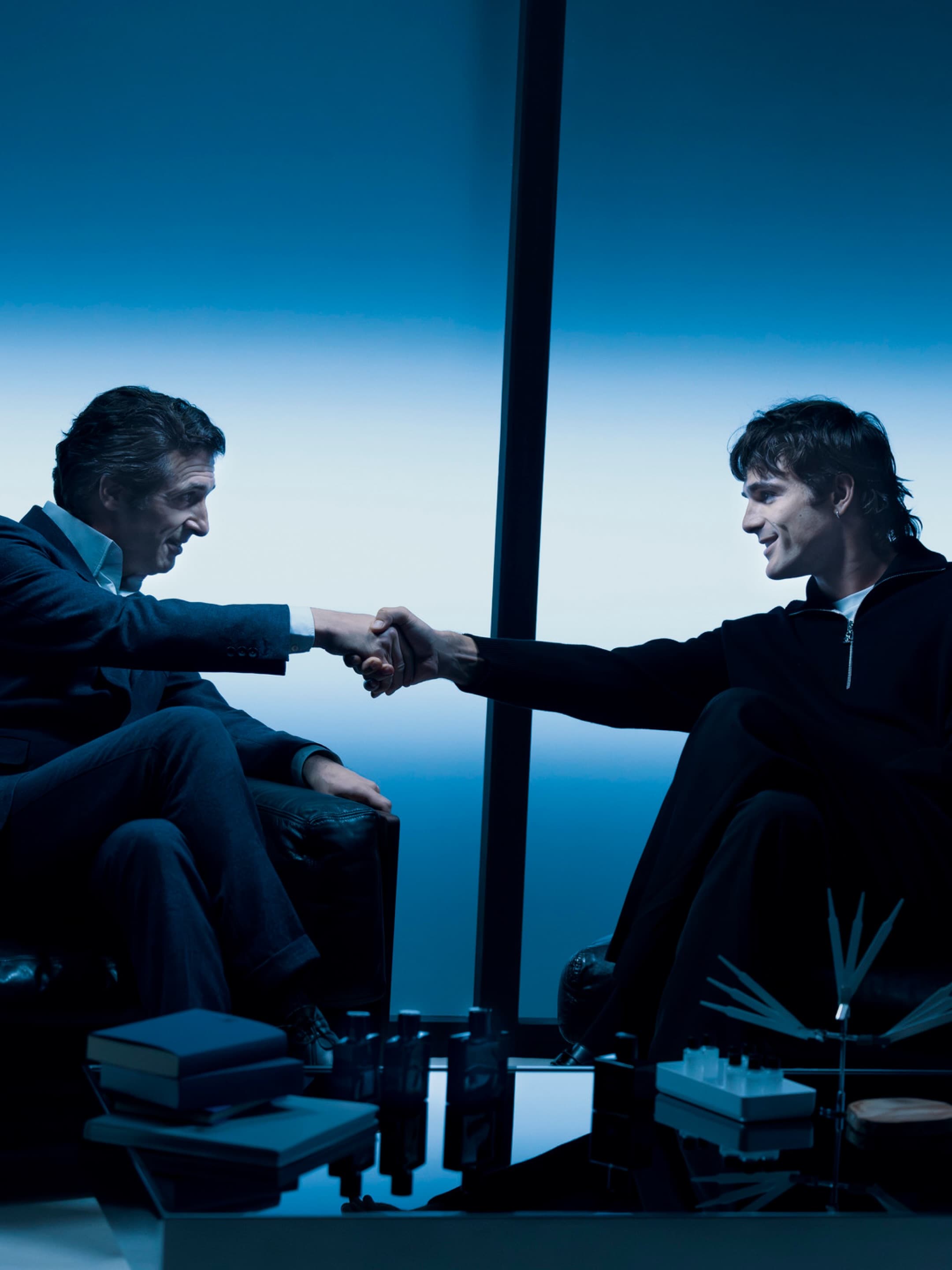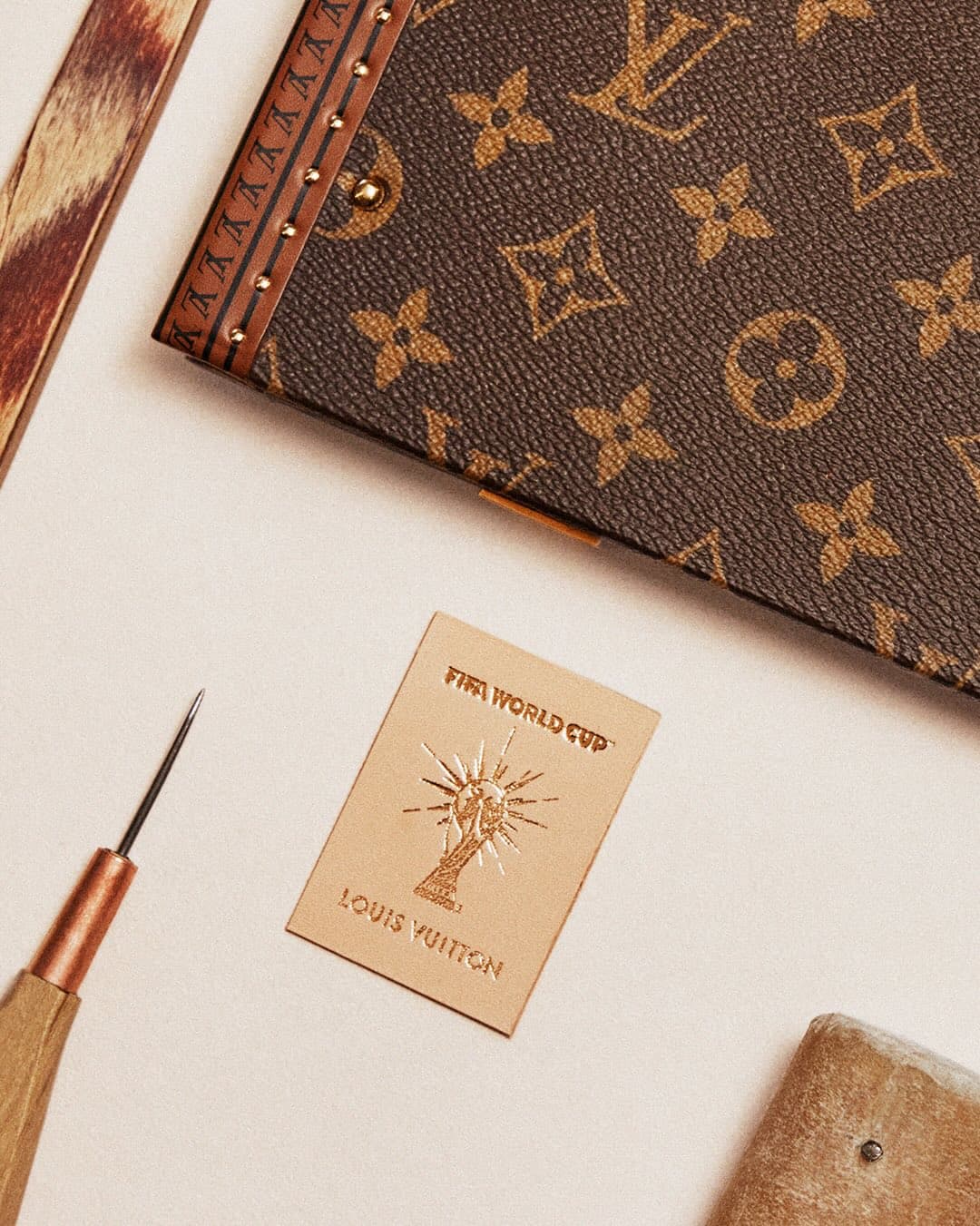
There is a particular theatre to the moment a trophy appears. Not the lift itself, but the seconds before it, when the object is still enclosed, protected, staged. For the FIFA World Cup, that pause has increasingly been framed by a Louis Vuitton trophy trunk, a piece of travel craft turned ceremonial prop. And as the House points toward the FIFA World Cup 2026, the latest chapter is less about novelty than about continuity, a working atelier tradition being asked to perform on the world’s most watched sporting set.
The Louis Vuitton FIFA World Cup trophy trunk, from 2010 to 2026
Louis Vuitton traces this story back to what it calls its first trophy trunk in 2010, a starting point that makes sense in modern luxury terms: the decade when fashion houses began treating sport not as sponsorship, but as narrative infrastructure. The FIFA World Cup trophy trunk has since become a recognizable part of the tournament’s visual language, a container designed to be photographed as much as it is designed to function.
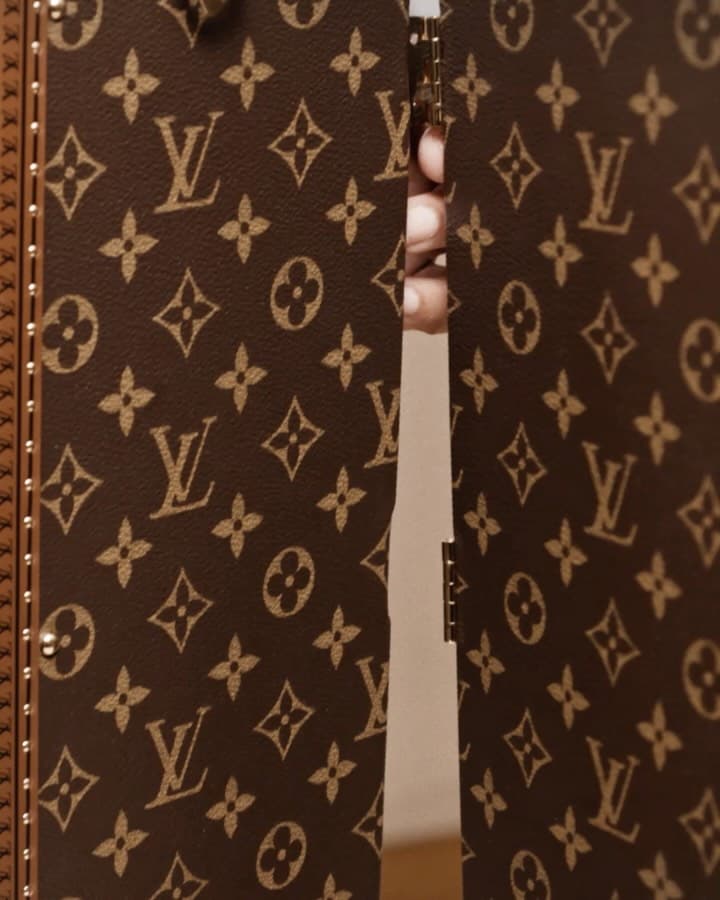
What changes from edition to edition is not the premise but the emphasis. The House’s own caption frames the current focus as “anatomy of victory”, a way of saying: look closer. The seams, the hardware, the handwork, the decisions that make a trunk more than a box. If you follow Louis Vuitton’s official project page, the brand positions this object within its trunk making lineage, with the FIFA World Cup 2026 named as the next waypoint in that evolution.
For readers who want the brand’s version of the making story, Louis Vuitton has published materials around the trophy trunk and the 2026 tie in on its own channels. The line between craft documentation and campaign content is thin, but the details are the point. See Louis Vuitton’s official FIFA World Cup trunk feature via LouisVuitton.com.
Why the object matters more than the logo
A trophy trunk is, on paper, packaging. In practice, it is choreography. The Louis Vuitton FIFA World Cup trophy trunk is meant to move from workshop to transport to presentation without ever dropping its mask, which is why the design needs to signal protection and ceremony at once.
The most compelling part of the House’s current messaging is its insistence on heritage, not as nostalgia, but as a production method. Trunks are among Louis Vuitton’s foundational objects. When they are reimagined for a specific trophy, it forces the brand’s codes to behave under constraint: exact dimensions, specific handling requirements, and a public life that happens mostly under floodlights and cameras.
In that sense, the FIFA World Cup trophy trunk is the sort of luxury item that gains meaning through repetition. You see it briefly, you remember it anyway. It becomes part of the mythology of arrival.
2026 as a stress test for scale
FIFA’s own framing for the FIFA World Cup 2026 is scale, with the tournament set to be hosted across Canada, Mexico, and the United States. That multi host structure raises the bar for everything that travels, including the objects that escort the game’s most symbolic hardware.
FIFA has outlined the 2026 tournament hosting plan in its official overview, including the three host countries. That matters here not as trivia, but as context for why brands want their craft placed at the centre of the spectacle. Reference details directly at FIFA’s official World Cup 2026 page.
What Louis Vuitton is really selling with this trunk
Louis Vuitton is selling time. Not in the abstract sense of heritage slogans, but in the visibly labour intensive logic of made to measure objects: the accumulation of small decisions that are only obvious when something is opened, handled, and photographed up close. The brand’s caption emphasizes “savoir faire” and “defining codes”, which is campaign language, yes, but it is also a reminder that in an era of instant product drops, the slow objects still have a role, especially when the audience is global.
For Louis Vuitton, the FIFA World Cup trophy trunk is a way to make its oldest category legible again, not as museum craft but as a working tool with a job to do. And for the sport, it is another layer of ritual, the moment before the moment, given a monogrammed frame.
If you want to place this in a wider luxury context, our recent look at the new rules of sports adjacent fashion partnerships tracks how houses are turning access, not advertising, into the main asset.
Photo Credits
Images courtesy of their respective owners.