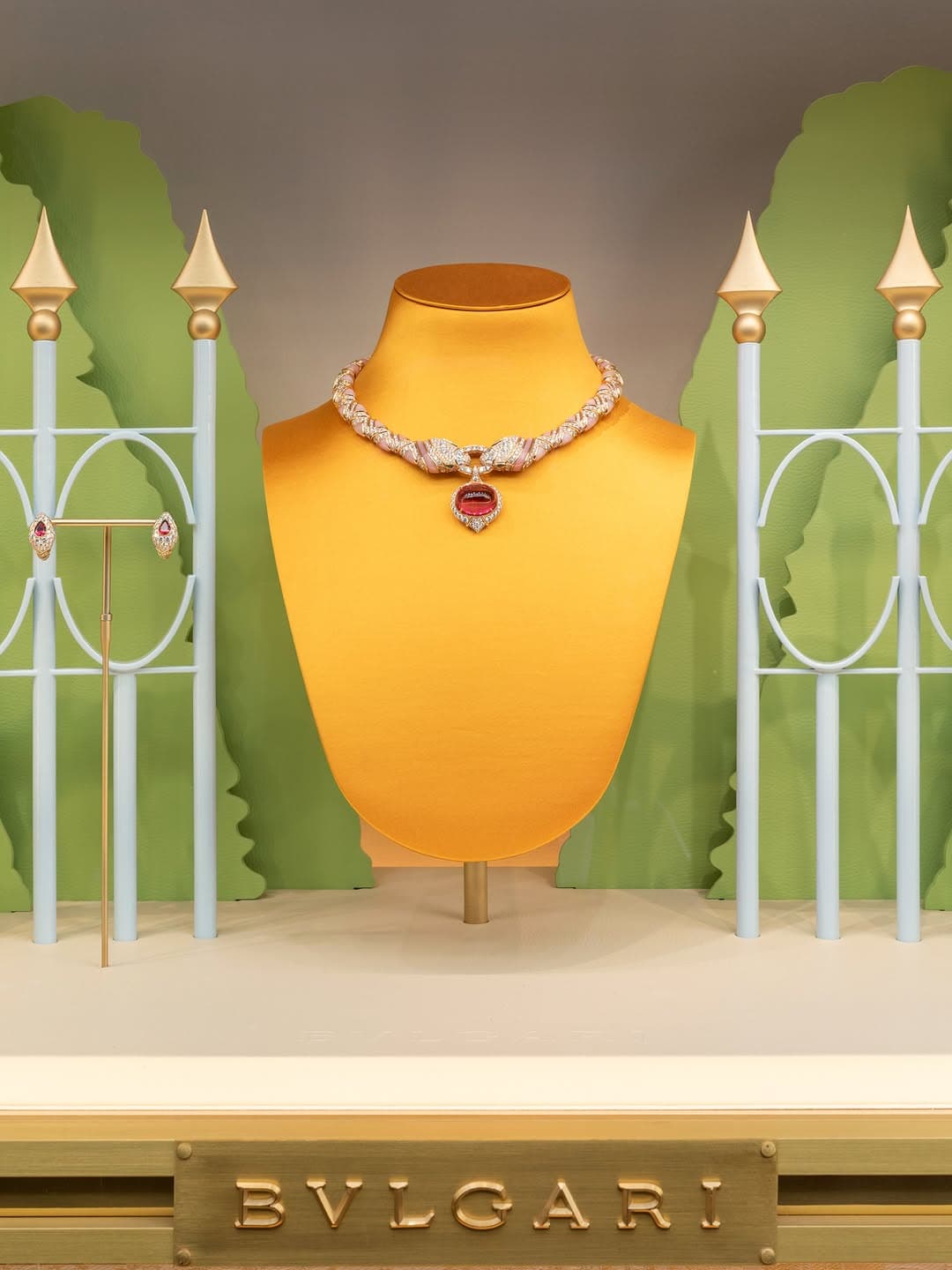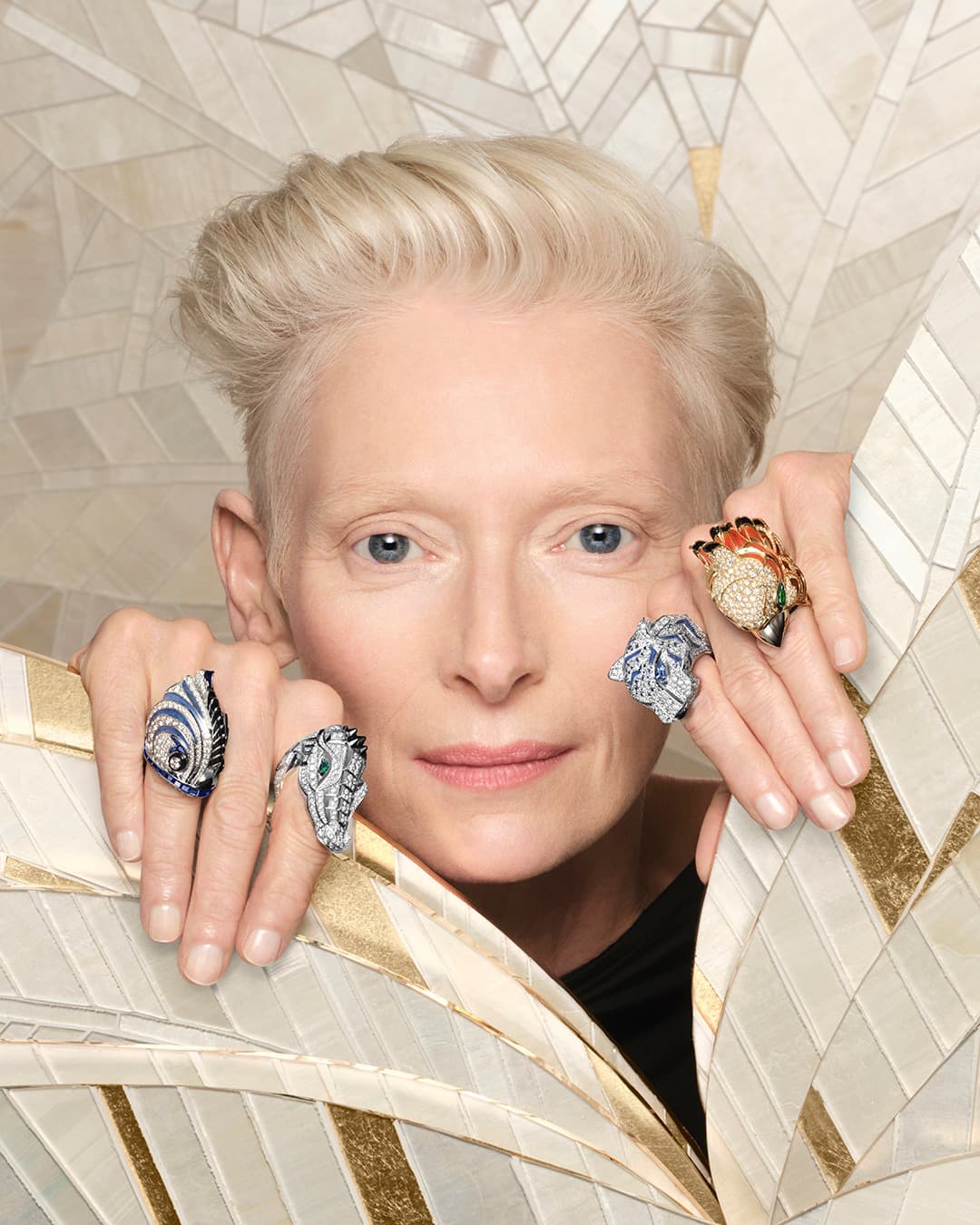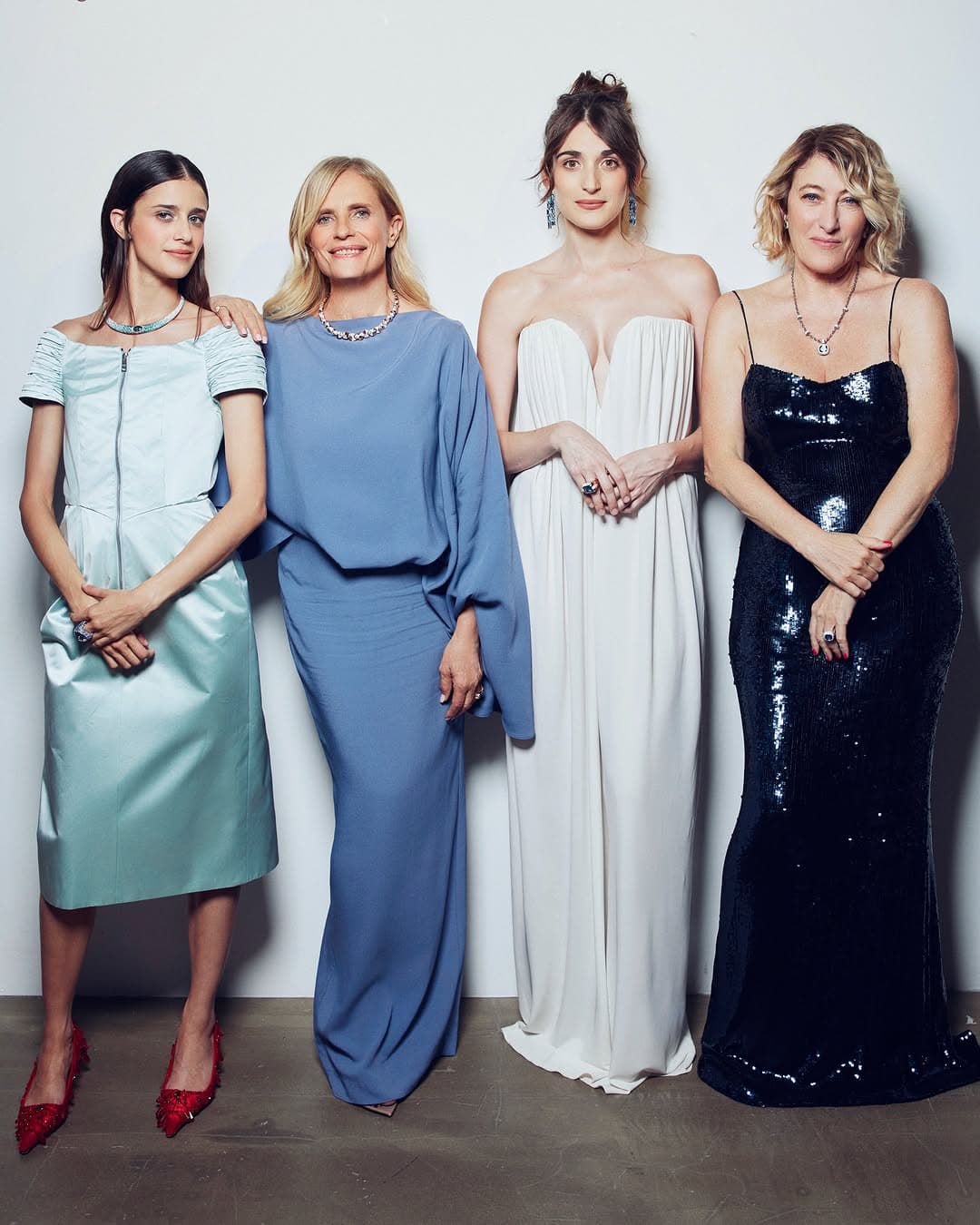
In Paris, the words Pomellato exhibition don’t land like museum shorthand. They feel like an invitation to look closer, to reconsider what we think jewelry is allowed to be, and who it is allowed to belong to. At the Palais de Tokyo, guests and friends of the Maison gathered for the opening of “Pomellato, Le Joaillier Révolutionnaire,” alongside the debut of Pomellato Stile Libero, a new High Jewelry collection that makes a persuasive case for pleasure with backbone. The city outside was doing what Paris does, traffic, cigarette smoke, late light on stone. Inside, the atmosphere turned tactile, gold, color, and a kind of Milanese confidence translated into a Parisian register.
The exhibition, curated by Alba Cappellieri, reads as both cultural document and pointed argument. Pomellato has always been most interesting when it refuses to play meekly in the traditional hierarchy of stones and settings. Here, that refusal is given room to breathe, not as a manifesto pasted on a wall, but as objects you can almost feel warming against skin.

Inside the Pomellato exhibition, Le Joaillier Révolutionnaire
The Palais de Tokyo is an inspired venue for a Maison that has never been afraid of friction. Its vast, concrete modernism makes jewelry look less like treasure and more like design, art, and sometimes, provocation. The Pomellato exhibition moves through the house’s codes with clarity, but not with reverence. This is the point. Pomellato’s revolution was never only about aesthetics, though the silhouettes matter. It was about attitude, a willingness to treat jewelry as something lived in rather than locked away.
You sense it in the way color is handled, not timidly, not as decoration, but as structure. You sense it in the way scale is allowed to flirt with excess, then snap back into a line that feels undeniably wearable. If you care about jewelry as culture rather than consumption, this is the kind of show that sharpens your eye.
Curated by Alba Cappellieri, with intelligence and restraint
There is a particular skill in curating jewelry that doesn’t turn it into either retail theater or sacred relic. Cappellieri threads that needle. The exhibition places Pomellato in conversation with the decades that shaped it, without flattening the brand into a timeline. The result feels considered, like a good essay, precise, opinionated, and quietly persuasive.
For those who want context beyond the room, the Maison’s own history is worth reading alongside the show on Pomellato, and the wider group context is neatly traced through Kering. But in the gallery, the story is told best by the objects themselves, and by the way people lingered, leaning in, then stepping back to take in proportion.
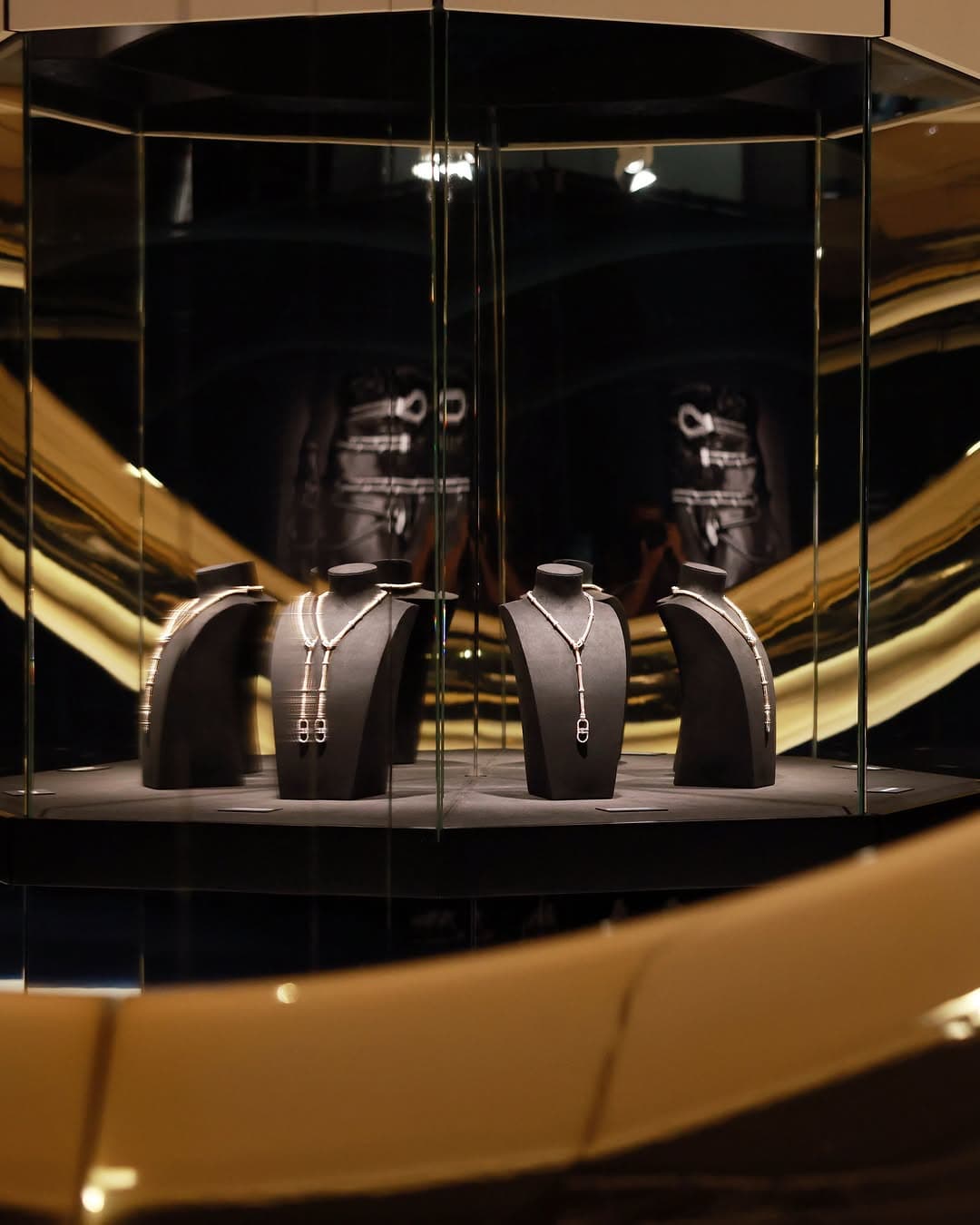
Pomellato Stile Libero, high jewelry that refuses to whisper
If the Pomellato exhibition is the thesis, Pomellato Stile Libero is the fresh paragraph that keeps you reading. High Jewelry often arrives with an expectation of decorum, a kind of polite perfection. Stile Libero does not bother with that. It is bolder in spirit, more kinetic, designed to move with a body and a life, not just pose under lights. There is a freedom in the language, the sense that craft is being used to make something joyful, not merely correct.
What feels modern here is not a gimmick. It is the insistence that precious can still be playful, and that the wearer is not an afterthought. Pieces like these remind you that luxury can mean ease as much as it means rarity.
Why this matters now, not just as a milestone
It would be easy to treat the evening as a brand celebration, a Paris calendar moment, a beautiful room full of beautiful people. But the stronger takeaway is more cultural than social. The show underlines how Pomellato’s idea of luxury has long been attached to autonomy, color worn with confidence, gold that feels like something you reach for reflexively, not something you ask permission to own.
It also lands at a moment when taste feels newly personal again. People are dressing for themselves, choosing objects with emotional charge, and craving design that does not look like a consensus. The Pomellato exhibition, and Stile Libero beside it, speak directly to that appetite.
How to think about Pomellato in 2026, through style, culture, and craft
Pomellato’s best work has always been about balancing refinement with nerve. In Paris, that balance felt particularly clear. Jewelry is never just jewelry, it is memory, mood, and social signal. Pomellato has historically nudged that signal away from inherited rules and toward self possession. The Palais de Tokyo setting only amplified it.
If you are mapping your own luxury interests this season, it is worth pairing this story with our ongoing coverage of Luxury, the designers and collections shaping Fashion, and the exhibitions and ideas we track across Culture. This is where jewelry belongs, in the larger conversation, not on a velvet island.
As for the Pomellato exhibition itself, it leaves you with a satisfying irritation, the kind that lingers after good art. Why should fine jewelry behave? Why should it be quiet? Why should it belong to anyone but the person wearing it?
Photo Credits
Images courtesy of their respective owners.