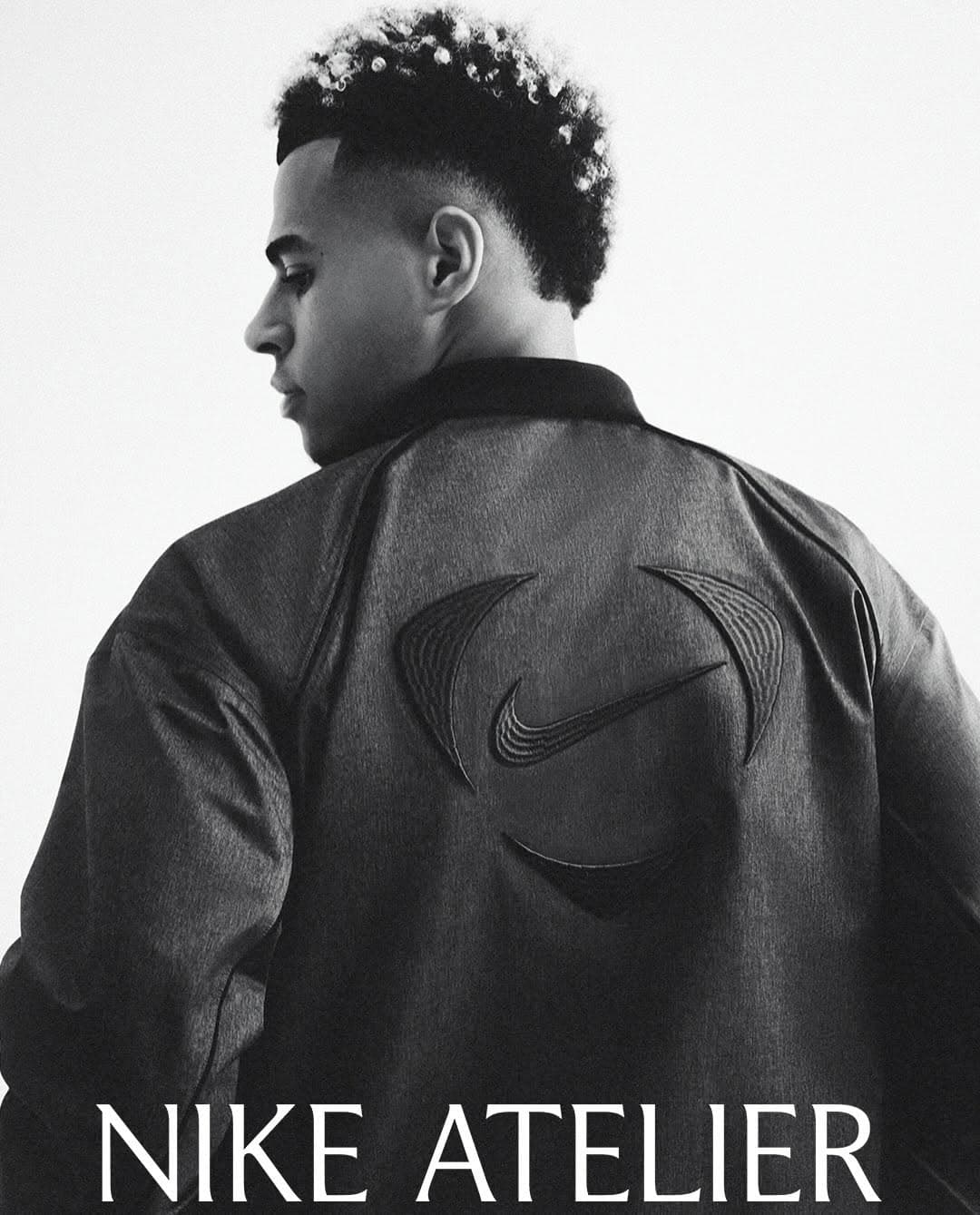
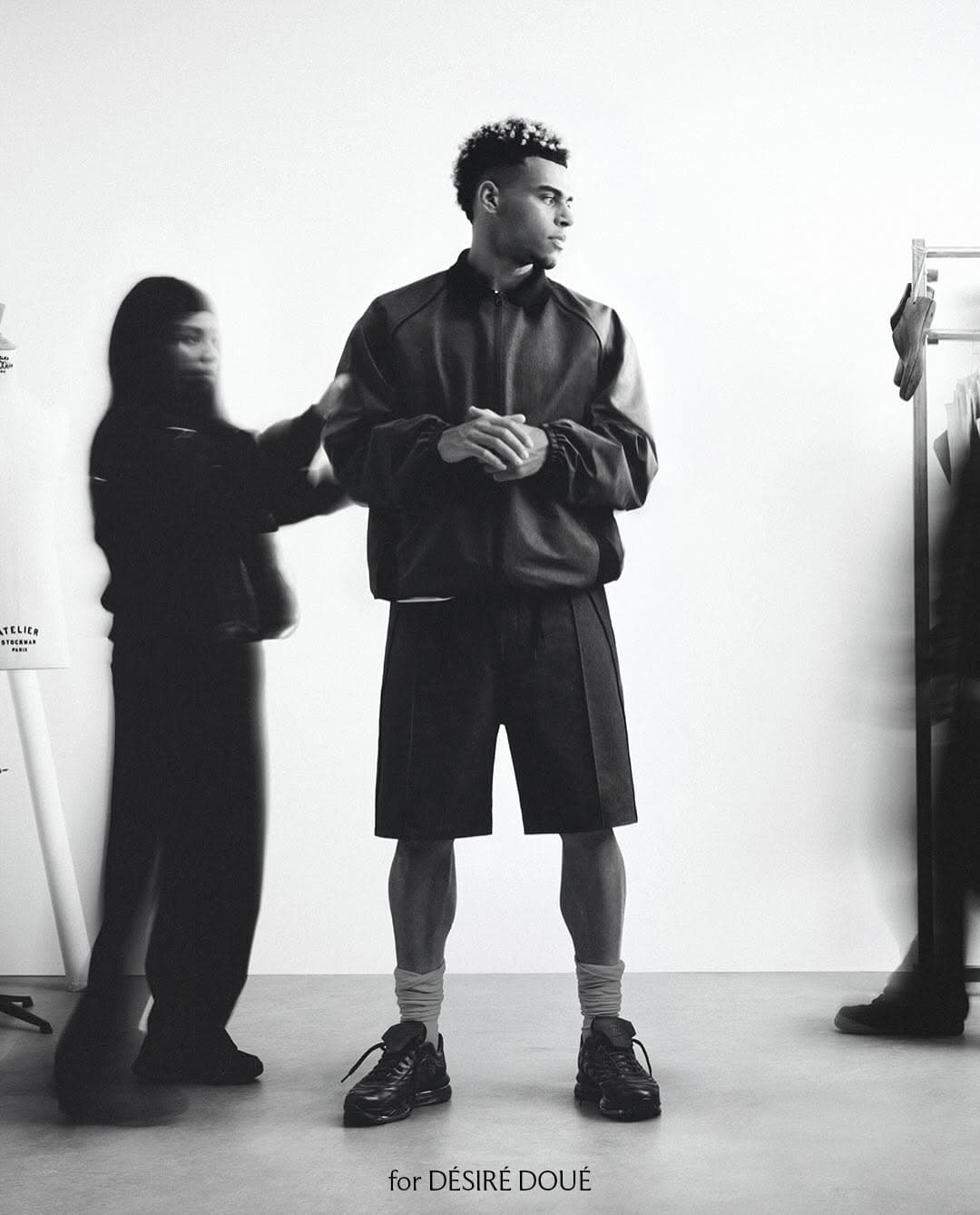
Nike Atelier for Désiré Doué is the kind of phrase that sounds like a marketing line until you clock what it really implies, a major sportswear house treating a teenager’s tournament debut with the reverence of couture. Doué, the French midfielder whose rise has been as swift as it is self possessed, is not being dressed for a red carpet. He is being authored for the pitch, in a one of one expression that reads like a personal signature rather than a simple colourway. In 2026, that distinction matters. Football style is no longer a side story told in the tunnel, it is part of the main text.
Doué’s emergence has been followed closely by anyone who watches Ligue 1 with more than passing interest. He announced himself in earnest at Stade Rennais, then stepped into a brighter glare with his move to Paris Saint Germain. The details shift quickly in modern football, but the through line is consistent: an athlete who plays with imagination, who turns pressure into mischief. That mood is precisely what Nike is attempting to bottle with this Atelier project, a bespoke piece created exclusively for his tournament debut, designed to mirror that mix of creativity and quiet confidence shaping a new generation.
Nike Atelier for Désiré Doué, and the new language of football luxury
If you have been paying attention to the way football has been courting luxury, you can feel the temperature rising. Louis Vuitton’s partnership with major tournaments, Dior’s tailoring of national teams, and the steady pipeline of players into front row seats have reframed the athlete as a cultural protagonist, not merely a performer. Nike, in its own fluent dialect, has long understood that the most persuasive product stories are about identity. Nike Atelier for Désiré Doué lands in that lineage, but with a sharper point of view: the item is not “inspired by” the player, it is built as a one of one extension of him.
Atelier, as a word, carries expectation. It suggests hands, choices, and a kind of deliberateness that resists the churn of seasonal drops. It also invites comparison, and Nike appears comfortable with that. The brand has a history of elevating its football work beyond performance alone, from the mythology of Mercurial to the way it packages players as living moodboards. The Atelier idea feels like a logical next step, less about shouting and more about editing.
What makes a one of one feel personal, not precious
A one of one can sometimes read as a museum piece, beautiful but inert. The more interesting challenge is making something singular that still wants to be used. Nike’s best football design has always been at its strongest when it communicates speed and intent without slipping into sci fi costumery. For Doué’s debut piece, the emphasis is on expression, on that tightrope walk between a tool and a talisman. Think of it as the difference between an outfit and a uniform. One is worn, the other is inhabited.
The project also arrives at a moment when football’s younger cohort is rejecting the idea that seriousness must look austere. They are rebuilding the codes, mixing discipline with play. Doué, whose game is full of sudden angles and sly pauses, is an ideal subject for that thesis. Nike Atelier for Désiré Doué is less about making him look expensive, and more about making his particular energy legible.
The Nike Merc Premium arrival, early July, and why timing matters
While Doué’s one of one is the headline, Nike has also signalled that Nike Merc Premium arrives early July at select doors. That quiet phrasing is its own form of seduction, suggesting scarcity without resorting to theatrics. In practice, it means a tightly controlled retail moment, the kind that tends to ripple through football culture faster than official messaging can keep up. If you have ever watched a boot story spread from academy players to stylists to resale pages in a single weekend, you know the pattern.
Nike’s Mercurial line has long been its shorthand for velocity, a boot with a reputation built on forwards, wingers, and the sort of players who treat space like fabric to be cut. The Premium designation, then, is not merely nicer materials. It is a repositioning, a nudge toward the idea that elite football product can hold its own in the same cultural conversation as luxury footwear, where craft and finish are part of the pleasure.
For context, Nike’s broader football universe is easily traced through the brand’s own channels at Nike Football, where performance language and cultural storytelling increasingly share the same page. The Atelier narrative feels aligned with that, less a one off stunt and more a continuation of how Nike wants football to feel in 2026.
Design, culture, and the tunnel as runway
Football’s pre match walk has become a kind of global street style feed, polished in some cities, raw in others, always watched. What used to be incidental is now studied. Players understand angles, fabrics, the way a jacket falls when you move. They also understand signalling, how to say “I’m locked in” without dressing like an accountant. The tunnel is a runway, yes, but it is also a threshold, a place where the mind clicks from public person to private competitor.
Nike Atelier for Désiré Doué takes that truth and translates it into product language. It suggests that style is no longer separate from sport, and that a tournament debut deserves the same kind of bespoke attention we reserve for major cultural moments. It is hard not to see the influence of Paris here, too, where fashion and football are increasingly entangled, and where Doué now lives under the city’s particular scrutiny.
If you are interested in how sports culture keeps folding into fashion, our Fashion coverage has tracked the shift from collaboration fatigue to more considered, personal storytelling. And for the wider lens on how athletes have evolved into cultural protagonists, the conversation continues in Culture, where the best analysis is rarely about clothes alone.
Why Doué feels like the right protagonist
Doué represents a specific modern charisma, one that is less about dominance and more about composure. Not the chilly kind, the focused kind. He plays like someone who trusts his own timing, which is often what separates talent from authority. That makes him unusually suited to an Atelier framing. Bespoke only works when the subject has a clear point of view. Otherwise it is just decoration.
To understand the ecosystem Doué has stepped into at club level, it is worth looking at Paris Saint Germain itself, a team that has spent the last decade turning football into a cultural export. In that world, what you wear, and why, has a way of becoming part of the narrative whether you intend it or not.
How to read the drop without turning it into a trophy hunt
The most predictable response to any limited release is the scramble, the screenshot, the frantic hunt for “select doors” as if the object is the whole story. But the smarter way to read Nike Atelier for Désiré Doué is as a mood shift. It is Nike telling us that football product can carry authorship, that boots and kits can be treated with the same editorial rigour as a capsule wardrobe. In other words, the brand is betting that the next generation does not just want gear. They want meaning.
That is also why the best audience for this moment is not only players, but designers, stylists, and anyone who understands that sport has become one of the last truly global stages for personal style. If you want to follow how that stage keeps expanding into high visibility luxury, the conversation intersects naturally with our Luxury coverage, where the idea of exclusivity is evolving from price to perspective.
As for Nike Merc Premium arriving early July, consider it the accessible echo of the one of one, not a consolation prize. The best product stories do not ask you to mimic the protagonist. They offer you a way to participate in the same cultural weather.
Photo Credits
Cover image courtesy of Nike. Additional images courtesy of their respective owners.