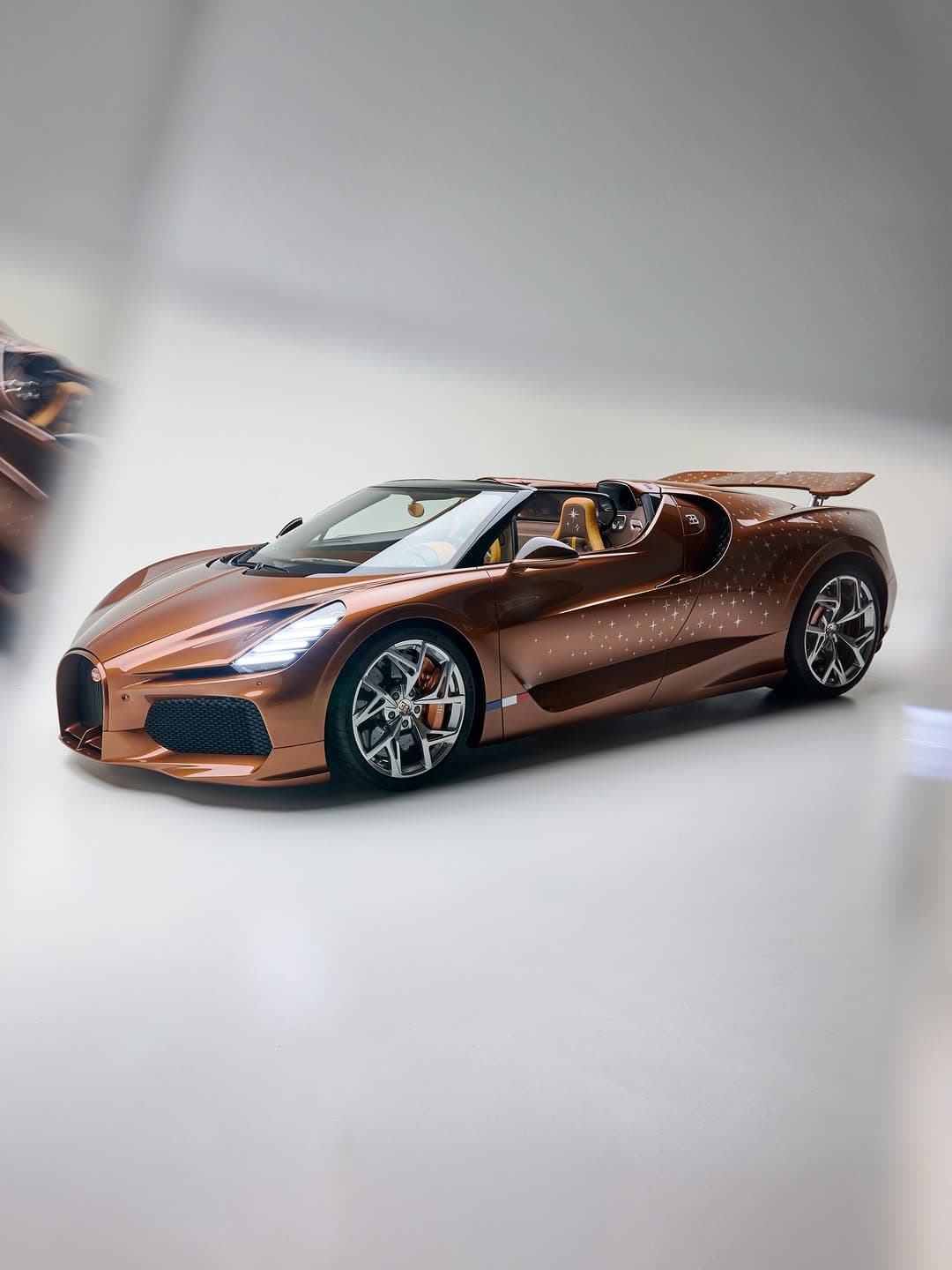
The Bugatti W16 Mistral has always felt like a car designed for the hour when cities soften and the sky turns theatrical. With Le Retour du Jeune Prince, a one off Sur Mesure creation written, quite literally, in moonlight, Bugatti leans into that feeling and makes it the point. This is not a paint and trim exercise. It is a private fable rendered in lacquer, leather, and the kind of patient craft that only reveals itself when you stop trying to be impressed and start looking.
There is a quiet audacity to calling a car a story, then insisting the story be literary. The title nods to a young prince and, inevitably, to Saint Exupéry’s universe, where innocence carries weight and wonder arrives with sharp edges. Here, the reference is handled with restraint. Less costume, more atmosphere. The result is intimate, almost hushed, as if the car were meant to be discovered at midnight rather than unveiled at noon.
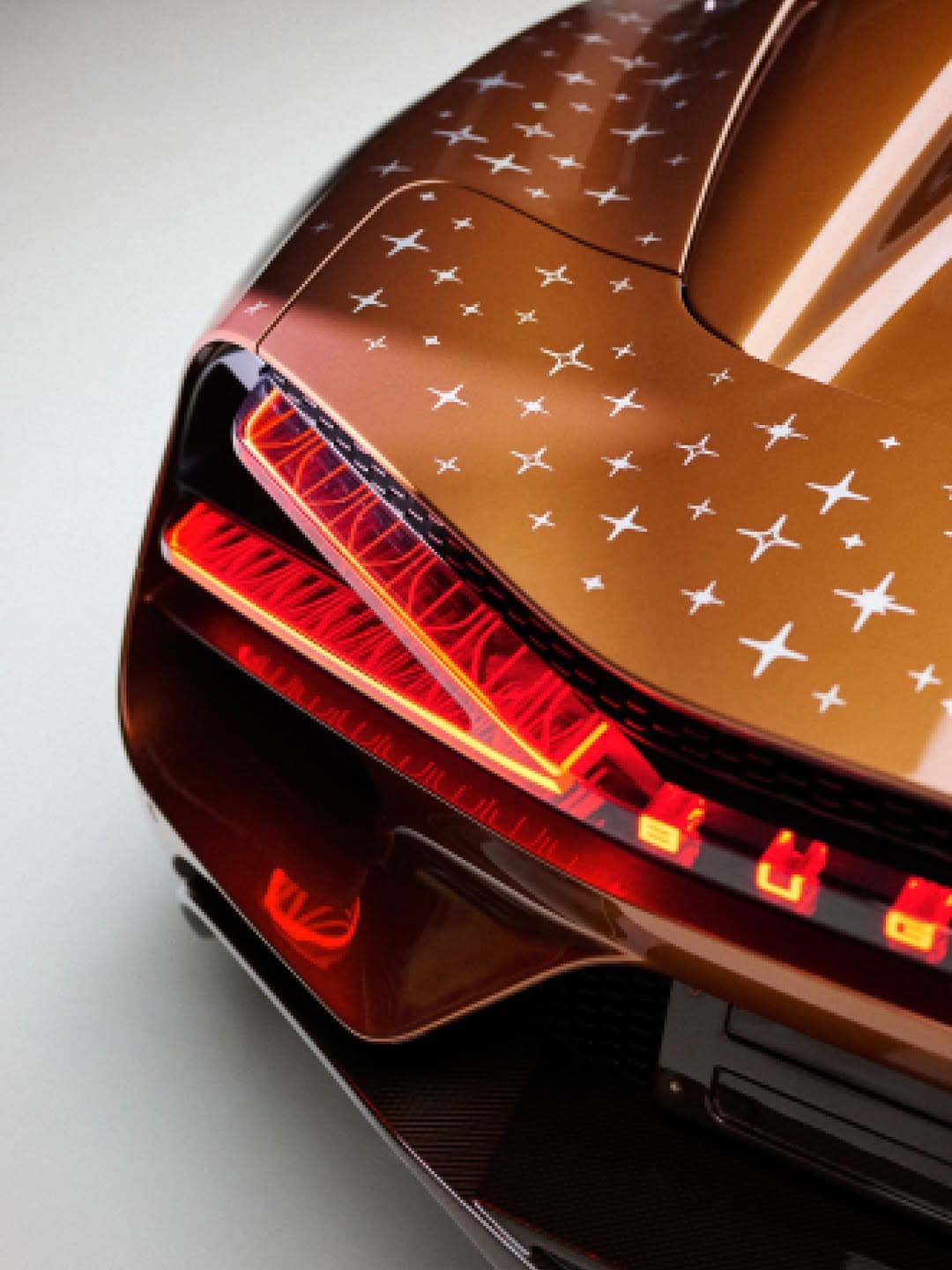
Bugatti W16 Mistral as a story written in moonlight
To understand what Bugatti is doing with Le Retour du Jeune Prince, you have to accept that Sur Mesure is not really about options, it is about authorship. The client does not simply choose. They edit, they commission, they insist. Bugatti, in turn, translates memory into materials, and imagination into surfaces that hold light in particular ways.
Moonlight is a useful metaphor because it is unforgiving. It shows you what is flat, what is overdone, what is merely shiny. It also rewards depth, granularity, a finish that doesn’t scream for attention but still shifts when you move around it. In that sense, the Bugatti W16 Mistral becomes a kind of moving chiaroscuro, a roadster that understands how to be dramatic without being loud.
If you have ever stood in front of a good painting and noticed how the darkest areas are rarely pure black, you will understand the appeal. This car reads like that. It invites you to come closer.
Sur Mesure, where craft behaves like language
Luxury is often confused with abundance. Bugatti’s best work proves the opposite. The pleasure is in the decisions you can feel. The line that ends at exactly the right moment. The texture that refuses to be ornamental.
Bugatti’s Sur Mesure programme, as the marque describes it on bugatti.com, is built for this kind of personal narrative, where the car becomes less a product than a portrait. It is also the rare customization process that makes room for understatement, which is harder, and frankly more expensive, than maximalism.
For readers who appreciate the way an object can hold a cultural reference without turning it into a slogan, Le Retour du Jeune Prince lands with unusual grace. It feels informed by literature, but not trapped by it. The point is not to quote a famous book. It is to capture that particular sensation of returning to a story you loved as a child and realizing it has changed because you have.
Literature, memory, and the theatre of personal expression
There is a reason the idea of a prince works here. The W16 Mistral is a roadster, and roadsters are inherently romantic. They promise exposure, wind, the night air pressing against your collarbone. They also carry a suggestion of departure. You do not drive a car like this to run errands. You drive it to mark a moment, or to make one.
What elevates Le Retour du Jeune Prince is the sense that its narrative is not generic escapism. It is memory shaped into something functional, a machine that still has the nerve to be poetic. That is the difference between customization and creation.
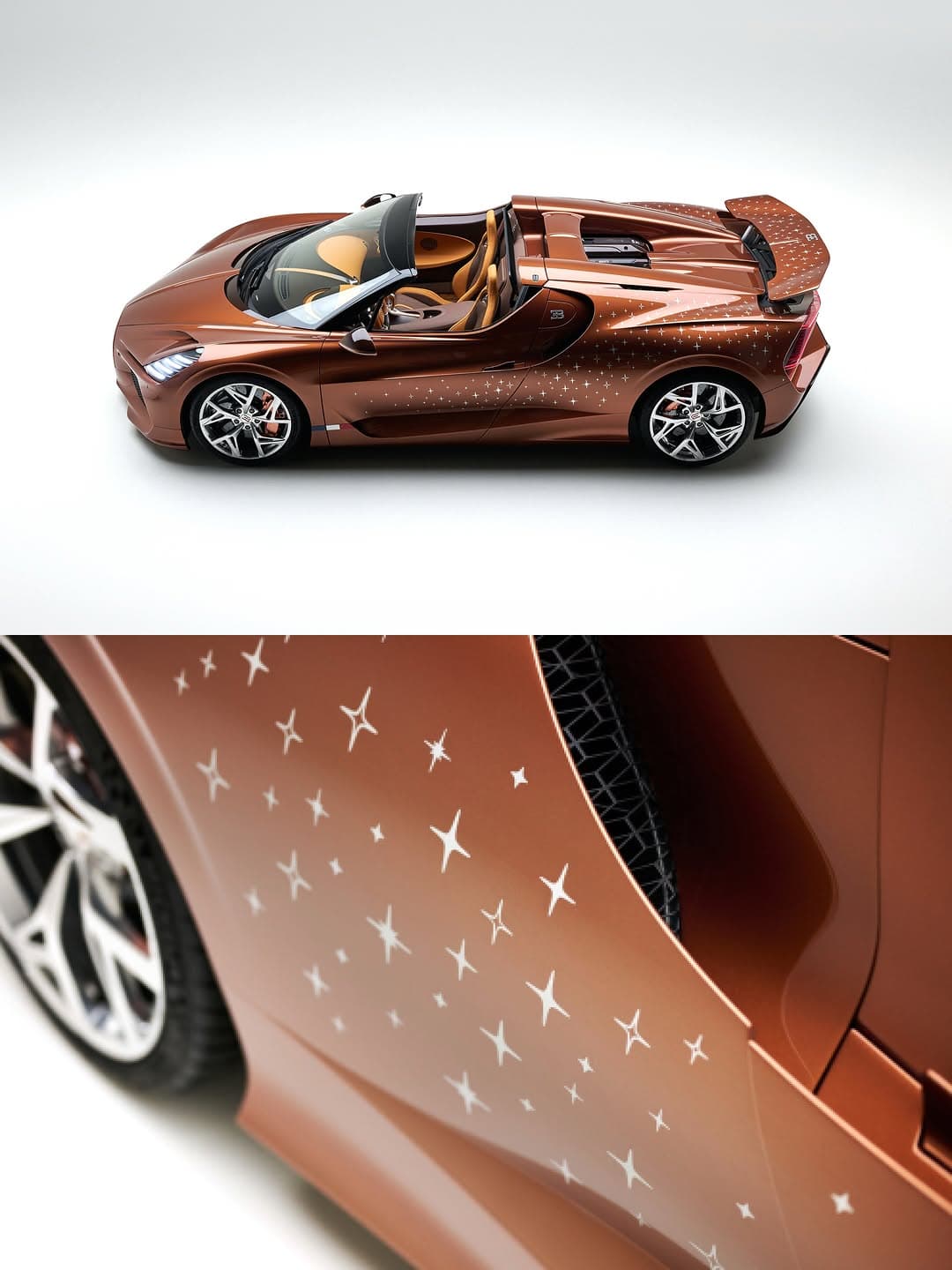
Bugatti has long understood the value of myth, not as marketing, but as continuity. The company’s own history, from Ettore’s early ideals to the modern era, is often told with a kind of reverence that invites comparison to haute couture. If you live for that overlap between cultural meaning and pure object lust, you might also linger in our Luxury pages, or dip into Culture for the references that make these pieces resonate beyond horsepower.
The W16 Mistral, and the end of an era you can hear
Even if you do not care about numbers, it is hard to ignore what the W16 represents. It is a last, lavish punctuation mark in a world increasingly tuned for silence. Bugatti has been candid about the W16’s place in its lineage, and the Mistral’s role as a swan song of sorts. When you read the model’s background on reputable automotive sources such as Top Gear, you see how quickly this kind of engineering becomes history.
That historical tension gives Le Retour du Jeune Prince its emotional charge. It is not merely a beautiful object. It is a beautiful object tied to a vanishing sound, the sort of mechanical music that will soon be available only in chapters, not in new releases.
Why this one off feels rare, even in a world of one offs
The luxury world is crowded with “unique” things that look suspiciously familiar. True singularity is harder to spot, and usually quieter. Here, the theme is coherent. The moon is not a gimmick. It is a discipline. It forces every choice to behave under a specific light, and it keeps the design from drifting into costume.
It is also, crucially, emotionally legible. You do not need to know the owner to understand the impulse. The desire to build a private universe, then let it out for a night drive. The desire to return, older, to a younger self, and to bring proof.
If you find yourself drawn to objects that sit at the intersection of design and desire, our Automobile coverage keeps a close eye on the way cars are becoming the new canvases for collectors who once confined their tastes to watches, fashion, and art.
In the end, the Bugatti W16 Mistral in this Sur Mesure guise does what the best luxury does. It refuses to explain itself too much. It simply exists, specific and complete, like a line of prose you remember years later without knowing why.
Photo Credits
Cover image courtesy of BUGATTI. Additional images courtesy of their respective owners.